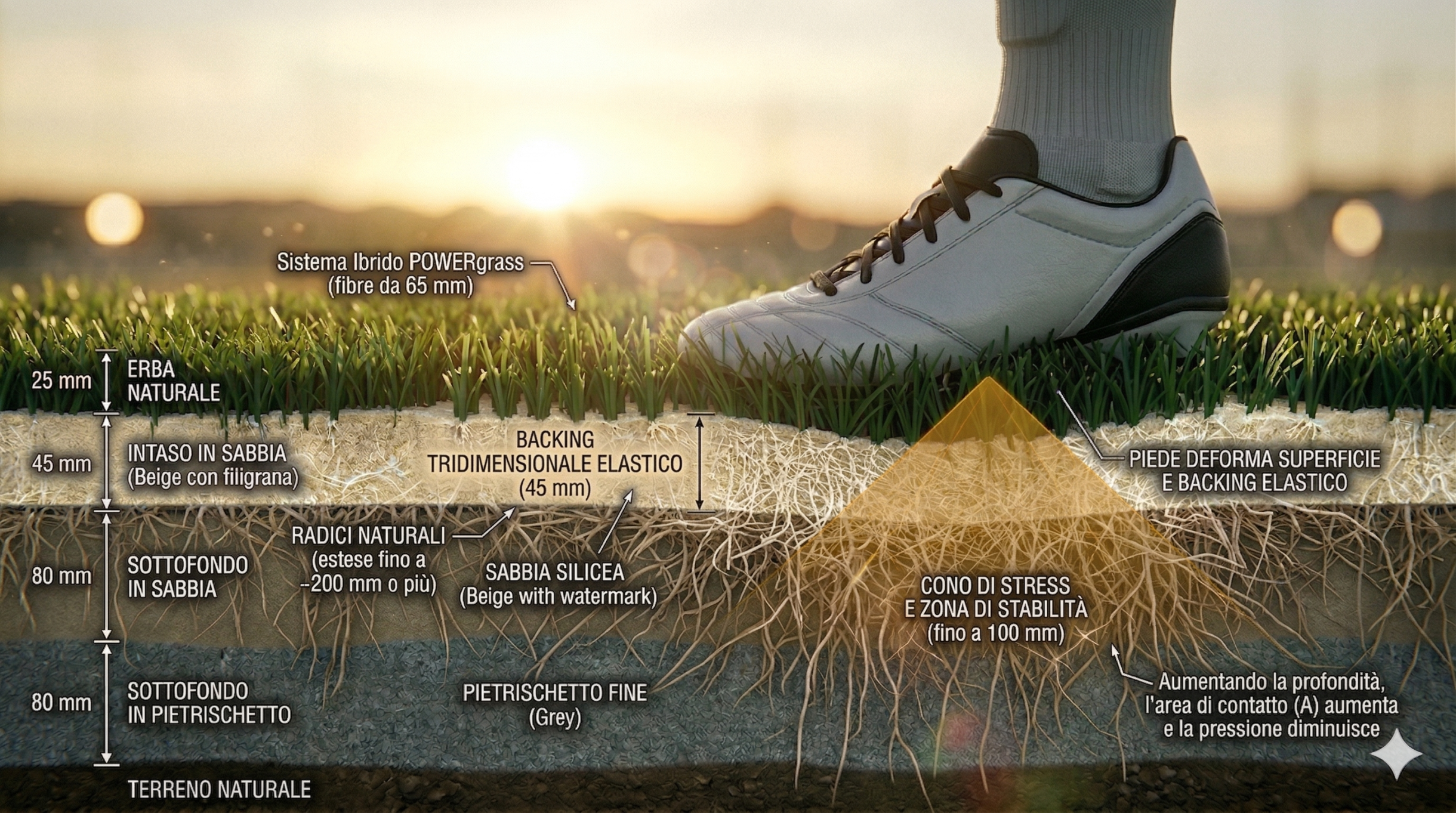
Safe fields
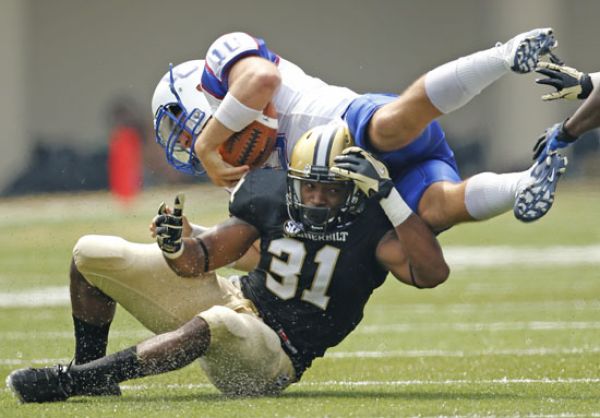
The safety of play between a natural or synthetic hybrid pitch is a topic that has been the subject of several studies over the last 20 years.
We certainly know three things 1) that players love a well-maintained pitch with natural grass, 2) changing the type of pitch between training sessions and matches is more risky and 3) bad weather can carry the infill and broken free fibers of the synthetic turf polluting the water, but can also make a natural pitch unplayable without a good drainage system.
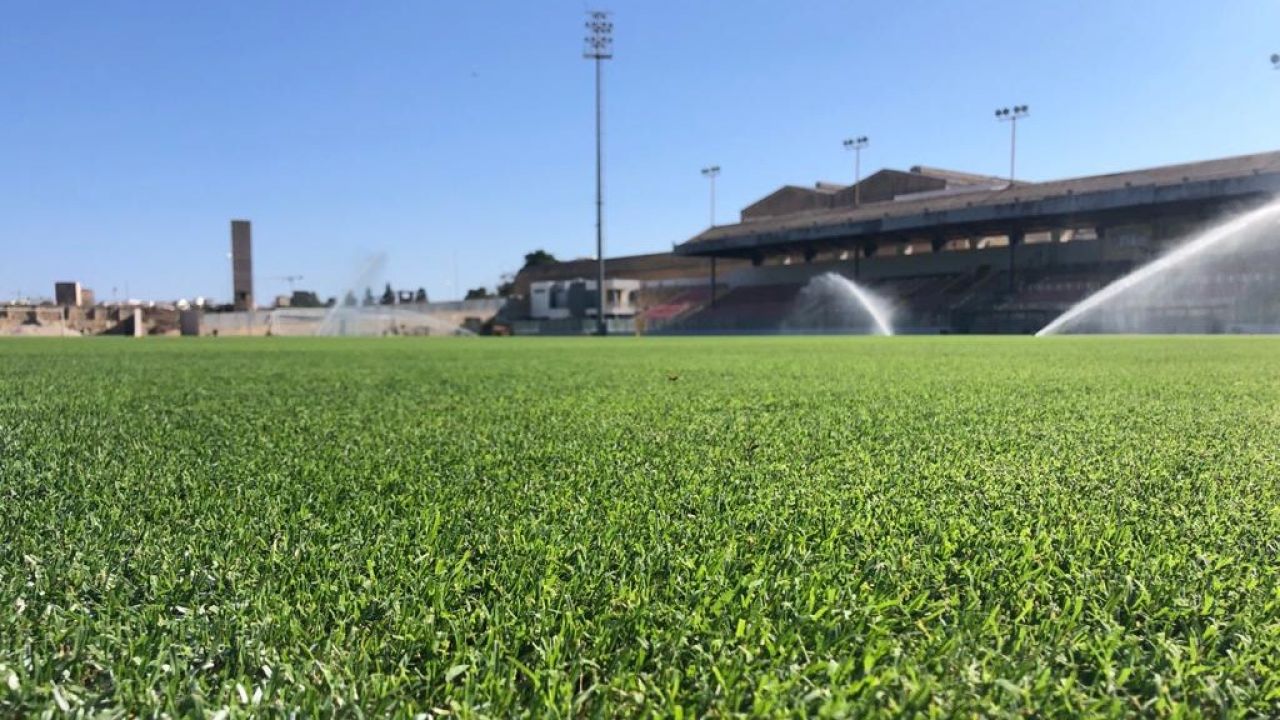
The POWERgrass mixed surface combines the advantages of natural and synthetic grass!
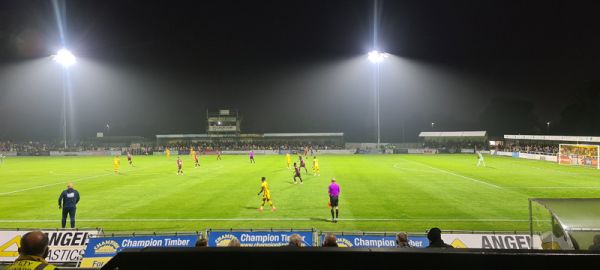
The topic of player safety has been addressed by numerous studies over the years. Some have touted the superiority of natural grass over synthetic turf and sparked an outcry from the industry. Others have indicated that there are no substantial differences and that in some cases synthetic turf is equivalent to natural grass. The industry claims that it is a matter of habit and that future generations, accustomed to playing on synthetic grass, will not complain, but it is only because they will not know how much better it is to play on natural grass.
Villa Stuart in Rome, a clinic specializing in treating players for game-related injuries, claims that players experience muscle problems more when they change the type of sports surface between training on a synthetic pitch and matches in the natural grass stadium.
The problem is complex, but the player's perception matters more than anything else because it is he who must give his best when he feels confident. It is no coincidence that a growing number of professionals categorically deny playing on synthetic grass. In the USA, NFL players have already asked to change synthetic fields to natural grass. In the UK, from the 4th professional category upwards, the game is played exclusively on natural/hybrid grass. In fact, Sutton United FC, in south London, was promoted in 2021 and had the synthetic pitch changed to POWERgrass hybrid grass.
In fact, from 2012 onwards there has been a reversal of the trend because synthetic pitches have not convinced professional players while natural grass ones make the work of groundsmen difficult but this is no longer a problem, being able to have a good hybrid with POWERgrass technology.
The POWERgrass hybrid turf offers the comfort of natural grass!
A synthetic grass field is always better than a natural grass field dotted with holes but, on the other hand, the significant increase in temperature in synthetic flooring during sunny days is indisputable. Reports indicate traditional synthetic grass surface temperatures are up to 35-60°C higher than the surface temperature of natural turf. Surface temperatures of synthetic turf systems have been reported as high as 93°C on a sunny day when the air temperature was 37°C. The researchers concluded that heat transfer from the surface to the athlete's foot provides physiological stress that can result in serious heat-related health problems.
The application of an irrigation system helps, but does not seem to solve the problem completely as the temperature rises to high values after 15-20 minutes. Source Penn State University https://plantscience.psu.edu/
When it is hot, only natural grass offers a comfortable environment for athletes and spectators. Natural grass through the process of transpiration also refreshes the air and the environment like all other plants. During the summer period, if fed correctly previously, through careful management of irrigation water it supports summer thermal stress and increases its ability to refresh the environment by consuming reduced quantities of irrigation water. The POWERgrass technical staff recommends the installation of large storage tanks to be able to store the rainwater filtered by the lawn and collected through the drainage system to be used for irrigation for at least 7-10 days during the drought period.
The standards of natural/hybrid grass playing surfaces
The scientific community over the last 2 decades has developed easy-to-measure quality standards to maintain gaming performance and safety. Once the natural/hybrid pitch has been installed and throughout the competitive season, the playing surface must meet the following requirements:
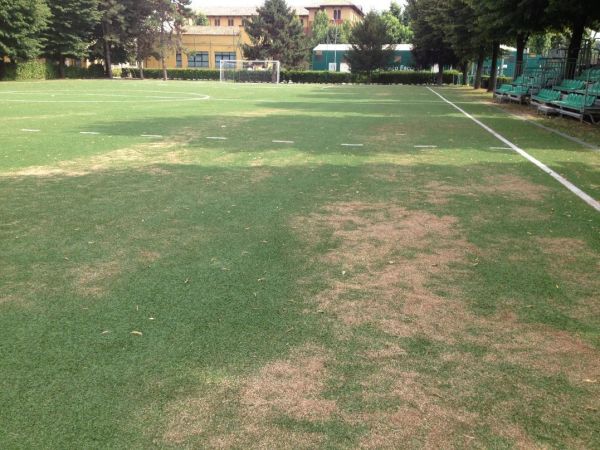
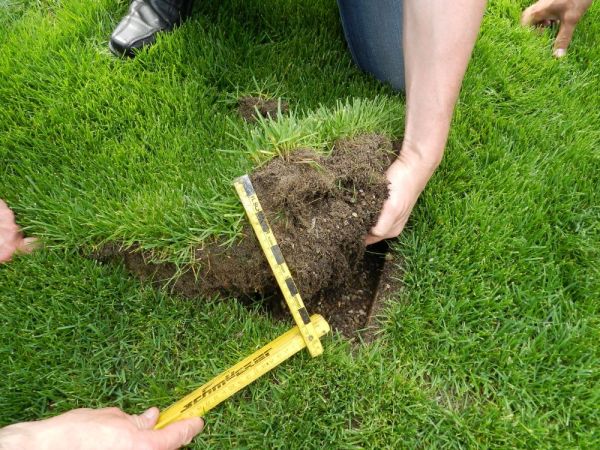
- Playing surface covered for at least 75% by natural or synthetic grass and free of holes with a diameter greater than 50 mm and a depth of 20 mm.
- Uniform leveling of the surface on the pitches compared to the perimeter borders, with continuous slope and without depressions or bumps greater than 20 mm over 6 linear meters from the center of the field towards the playing line, according to the project specifications:
- slope between 0.3 and 0.5% if the field is leveled with four pitches or
- maximum slope 0.6% if the field is level with two pitches.
- Uniform flatness with a tolerance of 10 mm over 3 linear metres.
- Saturated hydraulic conductivity of the growth substrate depending on the intensity of use of the field:
- greater than 150 mm per hour for moderate use, up to 300 hours per year or
- greater than 360 mm per hour, for intensive use, greater than 300 hours per year.
- Bounce and roll of the ball within the limits set by Federal regulations:
- Bounce of the ball from 0.60 m to 1.00 m
- Ball rolling from 4 to 12 m
- Impact absorption in the range of 65-100 G (first impact values) with the 2.25 kg Clegg hammer.
- Surface traction, i.e. the resistance to the rotation force of the notched disc between 35 and 65 N.
- Soil compaction by measuring the penetration resistance of the probe, which must be less than <200 psi (1380 kilopascals).
The POWERgrass hybrid system belongs to the category of hybrids with open support which provide all the above features at competitive prices and requires reduced maintenance compared to any other solution.
Only the POWERgrass hybrid system allows you to maintain the high quality standards that natural grass offers and, at the same time, guarantees a pitch that is always playable, regardless of the weather conditions and in the event that the natural grass gives way.
Please note: for synthetic grass playing fields, the LND approval protocol must be followed for amateur fields or FIFA for entirely synthetic fields.

Insights
Write to Us
For any kind of request write to us.