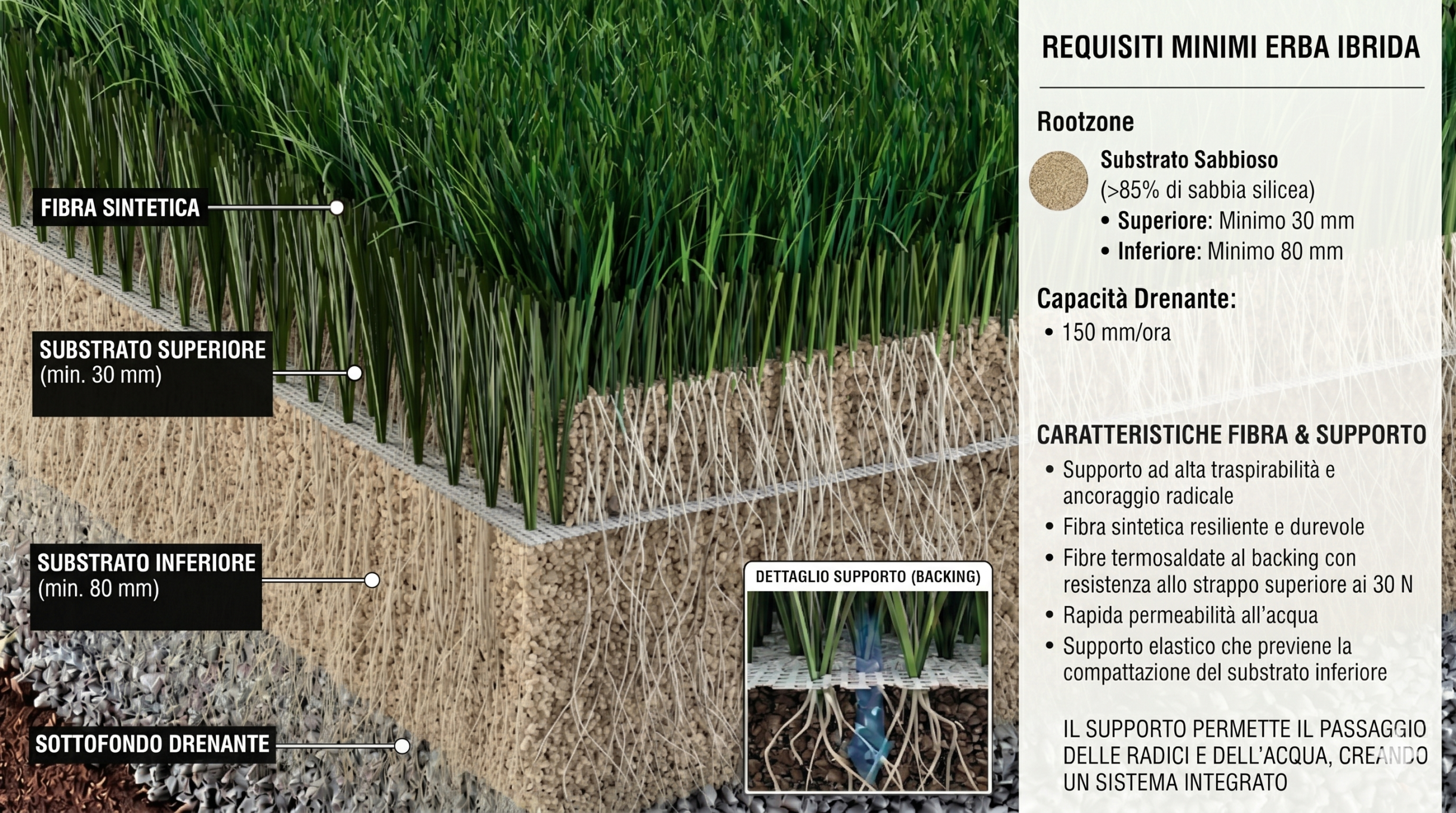
Hybrid grass requirements
To guarantee the effectiveness of a hybrid system, the physiological needs of the natural grass must be respected
Essential requirements for an effective hybrid system
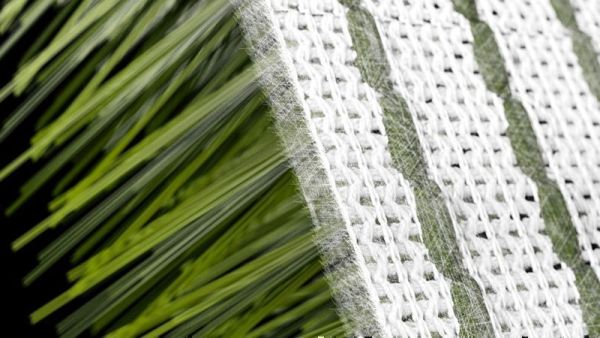
To guarantee the effectiveness of a hybrid system, the physiological needs of the natural grass must be respected. The system must preserve the growth conditions of the natural grass within the synthetic turf. They must be preserved from the first day after sowing, and then in the medium and long term. A good hybrid turf system must have very specific characteristics to preserve the ideal growth conditions of natural grass, therefore, provide the expected usability, performance and playing safety, contain management costs and reduce environmental impact.
Natural turf experts seek to stimulate a rich and deep root system to withstand intensive play and environmental stress, so the presence of artificial turf must not limit the penetration of any support and the growth of roots in depth. The sandy growth substrate must retain a good quantity of capillary water, guarantee air circulation and must not harden easily, because a mechanical resistance higher than 1500 kPa limits the development of the roots; at 3000 kPa the roots stop growing.
Reduction of maintenance costs
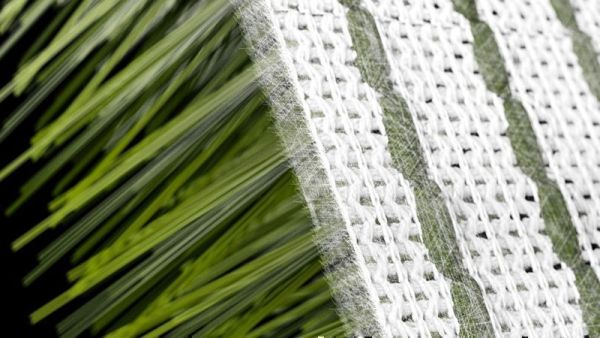
Compared to the natural pitch, the hybrid system significantly reduces maintenance costs because it limits manual work to restore the natural grass turf raised during the match. In effective hybrid fields, maintenance is limited to growing natural grass, taking care not to damage the synthetic turf, so that the system can be renewed several times during its life cycle, without the need for expensive replacement work on the entire system. To this end, three aspects are fundamental:
- The synthetic turf must improve the conditions for the growth of a rich deep root system, providing an anchor point to reduce tearing of the game,
- the synthetic carpet must be resistant to multiple deep aeration and intensive scarification operations, without affecting the structure and functionality of the product, and
- The synthetic turf must allow for easy renewal of the natural grass without removing the turf, damaging its structure or lifting the joints of the artificial grass.
Insights
The perfect FIFA 2026 pitch
In search of excellence in the perfect field, POWERgrass could not be missing! And now with the first results they confirm...
Show moreThe perfect FIFA 2026 pitch
Sport and Suburbs 2026
It is aimed at municipalities with over 5000 inhabitants, also in associated form, with a focus on the recovery of...
Show more