Maintenance
Administrators and managers are terrified of the costs of maintaining natural grass playing fields
Administrators and managers are terrified of the costs of maintaining natural grass playing fields; the task then becomes difficult for the technicians when the weather is rainy but this is no longer a problem for POWERgrass. It is precisely for this reason that we have developed a draining and effective hybrid system with a simple, economical and ecological maintenance method.
Regenerative agriculture teaches how to get the most out of emulating nature
Nature over millennia has established biological links between all beings in the food chain while maintaining a harmonious balance. However, man with the model of intensive agriculture adopted after the war in Italy and around the world had the objective of maximizing yields through the excessive use of chemical fertilizers and pesticides to suppress diseases and pests. These had a devastating effect on the biological activity in the soil which in fact quickly made it almost sterile, demineralizing and washing it away.
A growing number of scholars embrace an innovative plant production model also known as regenerative agriculture. It is a modern cultivation technique that focuses on the balance of natural processes between microorganisms and plants to obtain healthy, quality products. It all depends on the enrichment of the soil with noble organic substance capturing carbon during the photosynthesis process and then also making it available to the microorganisms in the soil.
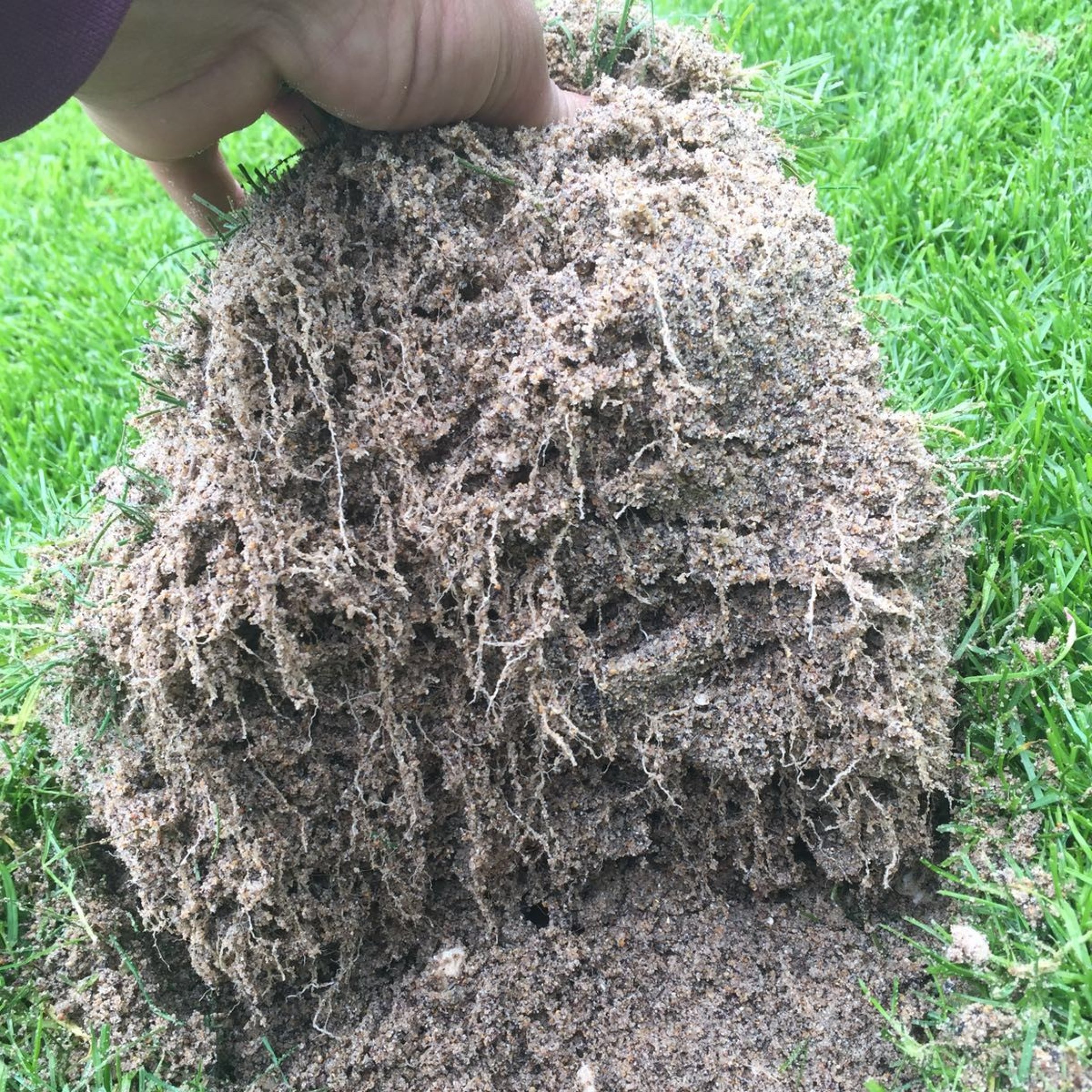
The application of the teachings of regenerative agriculture in the turf of a sports field brings notable benefits where the only limit is that of intensive trampling because it compresses the porosity, altering the physical properties of the soil, limiting the gaseous exchange between the soil and the air. Lightening the soil regularly guarantees the gas exchange (CO2 ⇄ O2) necessary for biological processes. In the draining and well-aerated substrate the microorganisms proliferate and mineralize forms of nutrients inaccessible to the plants. Frequently cutting and allowing the grass residues to settle on the soil, a part of the nutrients they return to the circle thanks to biological activity.
From the point of view of environmental impact, among the advantages of turf cared for in symbiosis with the biological activity in the soil, it can be summarized that a cared for turf:
- quickly absorbsrainwater and prevents it from flowing onto the surface which causes flooding,
- conserves and reuses rainwater for the growth of natural grass because it is retained in the substrate due to capillary forces,
- recharges the aquifers with biologically filtered water, because the excess water is partly dispersed through the drains into the underlying ground and partly is collected in the accumulation tanks for subsequent irrigation reuse,
- sequesters up to 8 times more CO2 from the air than a normal lawn, simply optimizing the photosynthesis process,
- contributes to reducing air temperature to improve comfort for players and spectators and
- captures a greater quantity of fine dust present in the air thanks to greater transpiration,
- produces a greater quantity of oxygen because it is simply the waste from the photosynthesis process.
Only through soil regeneration, can we have a positive environmental impact. Maintaining all green spaces with regenerative agriculture is the only method to combat pollution in our cities. It is everyone's responsibility which pays off in our health by also offering a prestigious aesthetic appearance.
Scheduling and consistent maintenance enhances your sports field and produces savings
Consistency and perseverance throughout the year allows you to maintain a natural/hybrid grass football field in the best conditions at low costs and without surprises that require expensive extraordinary interventions. The strong point of the POWERgrass hybrid system is to reduce maintenance costs because:
- no potholes form so no post-match restoration
- the crowns of the plants and the roots are protected by the hybrid covering, they suffer less stress from the game and abiotic factors recovering easily after each game,
- the substrate does not compact under the backing because it acts as a load distributor,
- water is stored longer under the backing because it evaporates less.
What are the essential interventions
- Frequently cut the grass with a helical machine during the racing season and increase the height during the rest period in the warmer summer months. On sunny days, leave cutting residues on the surface to better preserve water and nutrients.
- Surface aeration. Some helical cutting machines are equipped with various elements to keep the lawn on the surface aerated. Among these, the accessories for raking, the roller with nails and vertical cutting are the most useful for removing the felt and aerating the surface part of the soil. In the POWERgrass hybrid system the intense activity of the players compresses the grass and fibres on the surface and compacts the upper part of the infill. Through these three operations, the fibers are raised and air exchange is obtained which favors biological activity.
- Scarifying the surface up to 3 mmordrag harrowing with thin springs are the most recommended operations just before reseeding during the summer break. They can also be carried out during the season because both affect the ground more and in the case of a hybrid system they are able to lift the fibers better in an upright position but care must be taken not to damage the fibers in the case of a hybrid field.
- Distribute silica sand to improve water infiltration and keep the surface dry and to fill holes from playing activities. The POWERgrass hybrid system consists more of sand and does not form dangerous holes. Furthermore, it does not like sandblasting because the sand tends to "bury" the artificial filaments. Furthermore, grass subjected to intensive use does not tend to form thatch and, furthermore, the carpet does not allow the formation of holes that require sandblasting.
- Drill the soil deeply to eliminate compaction and promote water drainage and deep root development. In excessively clayey soils, make microdrains to facilitate the infiltration of water into the underground layers, easy to achieve with the DrainMaster. In POWERgrass, loosening the soil is possible with Verti-Drain with fine solid tips of 8/12 mm at approximately 80-85° with a slight lifting to penetrate the soil and the backing because the latter is designed to withstand multiple holes without ruining its structure. In any case, ZEOsand soil conditioner is designed to reduce the need to till the substrate frequently and reduce maintenance costs.
- Fertilize with mineral and organic granular products during lawn establishment when biological activity is low, then use easily absorbed liquid fertilizers and bio-stimulants to promote natural grass growth and the development of biological activity in the soil. Please pay attention: excess nitrogen does not make the grass resistant to trampling and susceptible to diseases and insect attacks.
- Sow among the existing sward to integrate plants damaged by playing activity. In the POWERgrass hybrid turf system, use a roller seeder with nails to make holes in the plant substrate and to cover the seeds without damaging the artificial filaments or an alternative light harrow to loosen the slough more.
- Reseeding the holes during the season are strongly recommended to close the holes before the playing activity. In the POWERgrass hybrid cover it is sufficient to reseed the spaces without grass, sacrificing the sandy substrate to bury the seed. In natural grass fields it is often necessary to also integrate a "top-soil" of sand to close the hole or if this is greater than 10 cm in diameter you can opt to replace the mini clods taken from the out area. In the goalkeeper's area, we recommend the use of hybrid POWERgrass turf which is more resistant to trampling, does not form holes and if the grass gives way it is always green and playable.
- Control annual weeds (mono- and dicotyledonous) and couch grass with selective herbicides but remember that the best prevention is the lawn cut frequently and fertilized regularly. In the same way it is possible to prevent fungal diseases by stimulating the immune defenses of plants with the regenerative agriculture method. However, in case of high risk the use of registered pesticides is imperative. In the POWERgrass hybrid system weeds have very little opportunity to grow, as the grass is sown into a selected sandy substrate and does not grow on existing land which is often full of weeds, but weeds may occur in some cases, in windy areas or where the local river sand is not clean.
- Water regularly at long intervals to encourage deep root development. However, during hot summers the grass requires frequent watering almost every day, but it is important that the soil moisture content is kept at a low level: above the "wilting point" to stimulate the reinforcement of the cell membrane and above all to avoid thermal stresses linked to excess humidity in sandy substrates.
- Mark the field with the iGo line markers using non-toxic paint for natural grass based on titanium dioxide.
The POWERgrass synthetic mixed system is designed for heavy use and the time to recover from any damage is always short. Prevention instead of cure is always better, so water management and fertilization should aim to strengthen the plants' resistance to fungal attacks. When the climate is unfavorable for grass growth, consult an expert agronomist to avoid surprises, save your money and avoid a negative environmental impact.
Note: avoid mechanical maintenance operations if the thermometer exceeds 30.5°C and avoid using the lawn with frozen ground. Do not apply liquid treatments when temperatures are above 26°C.
Snow removal
Removing snow from a sports field has never been easier! On natural grass pitches, are the equipment at risk of scoring? In fields with synthetic surfaces, does the snow risk removing the infill during its removal? In the POWERgrass hybrid lawn no worries! By adjusting the snow blower it is possible to remove it early in the morning, to play in the afternoon on the reinforced natural grass, in complete safety and comfort!
on January 13, 2017, in Verbania, a sudden snowfall the day before the match failed to suspend the match! Thanks to the promptness of maintenance technician Salvatore Bianchi and the stability of the POWERgrass hybrid system, it was possible to remove the snow in less than 4 hours the following morning, handing the pitch over to the teams in the early afternoon for finishing before the home match.
Another reason to choose the POWERgrass hybrid system also due to the fact that it is resistant to bad weather (snow, frost, heat, flooding) which can cause serious damage in all other types of fields.

Insights
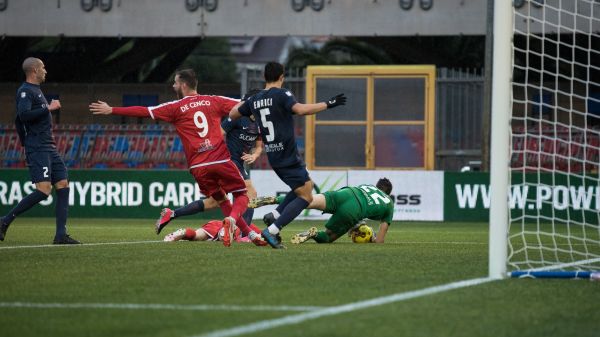
The perfect FIFA 2026 pitch
In search of excellence in the perfect field, POWERgrass could not be missing! And now with the first results they confirm...
Show moreThe perfect FIFA 2026 pitch
Sport and Suburbs 2026
It is aimed at municipalities with over 5000 inhabitants, also in associated form, with a focus on the recovery of...
Show more