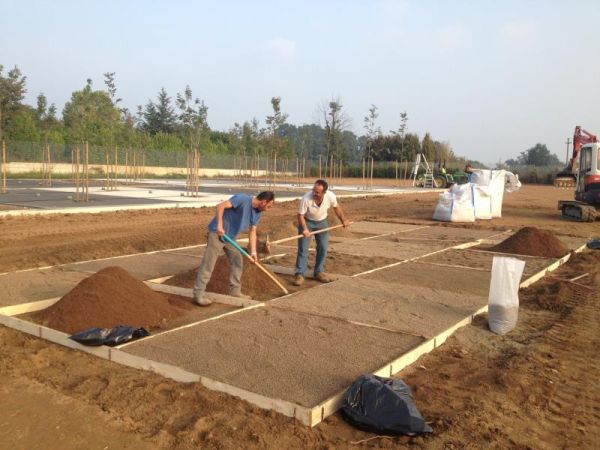
Our experimental test in the Minoprio Foundation has allowed us to test many organic and mineral soil improvers. One of these is natural zeolite. Natural zeolite has been applied to turf in sports fields for over 15 years abroad, integrated into the sandy substrate because it forms turf that is strong, healthy and more resistant to play.
Natural zeolite is an extracted mineral that is applied in crops for its unique porosity and its negative molecular charge. In the growth substrate, Zeolite absorbs water and nutrients offering an ideal habitat for biological activity which guarantees healthy and balanced growth. In industry it is often used as a carrier of nutrients, wetting agents, wet acids, algae extracts etc. for a longer effect.
Zeolite is a natural sponge that absorbs free water in excess which, in addition to keeping the water/air content in balance, mitigates thermal stress to the roots, summer and winter. After heavy precipitation, the sandy substrate becomes saturated with free water thanks to capillary forces; the free water present between the grains of sand significantly increases the thermal conductivity of the sandy substrate and consequently the accumulation of heat in the rhizosphere. In summer, after a heavy rainfall the heat returns and consequently the increase in temperature in the growth substrate is correlated with the increase in humidity precisely because there is a high quantity of free water which heats up: this is the main factor in the death of the plants even before the fungal diseases appear which more often than not are a consequence, i.e. the visual effect but not the main cause. The zeolite within a sandy substrate is able to absorb excess free water like clay, mitigating thermal stress on the roots but, unlike clay, promotes gas exchange and water drainage.
Zeolites, like humus, have a cation exchange capacity (CSC) of between 150-250 meq/100g, therefore, mixing approximately 10% by volume with silica sand increases the fertility of the sandy substrate. Zeolites have selective adsorbent capacities for some nutritional cations, as they can retain ammonium (NH4+) and potassium (K+) ions, mitigating the problem of leaching of these precious nutrients and, at the same time, can release them progressively over time, avoiding excesses. In fact, these ions can be readily exchanged when plant roots need them.
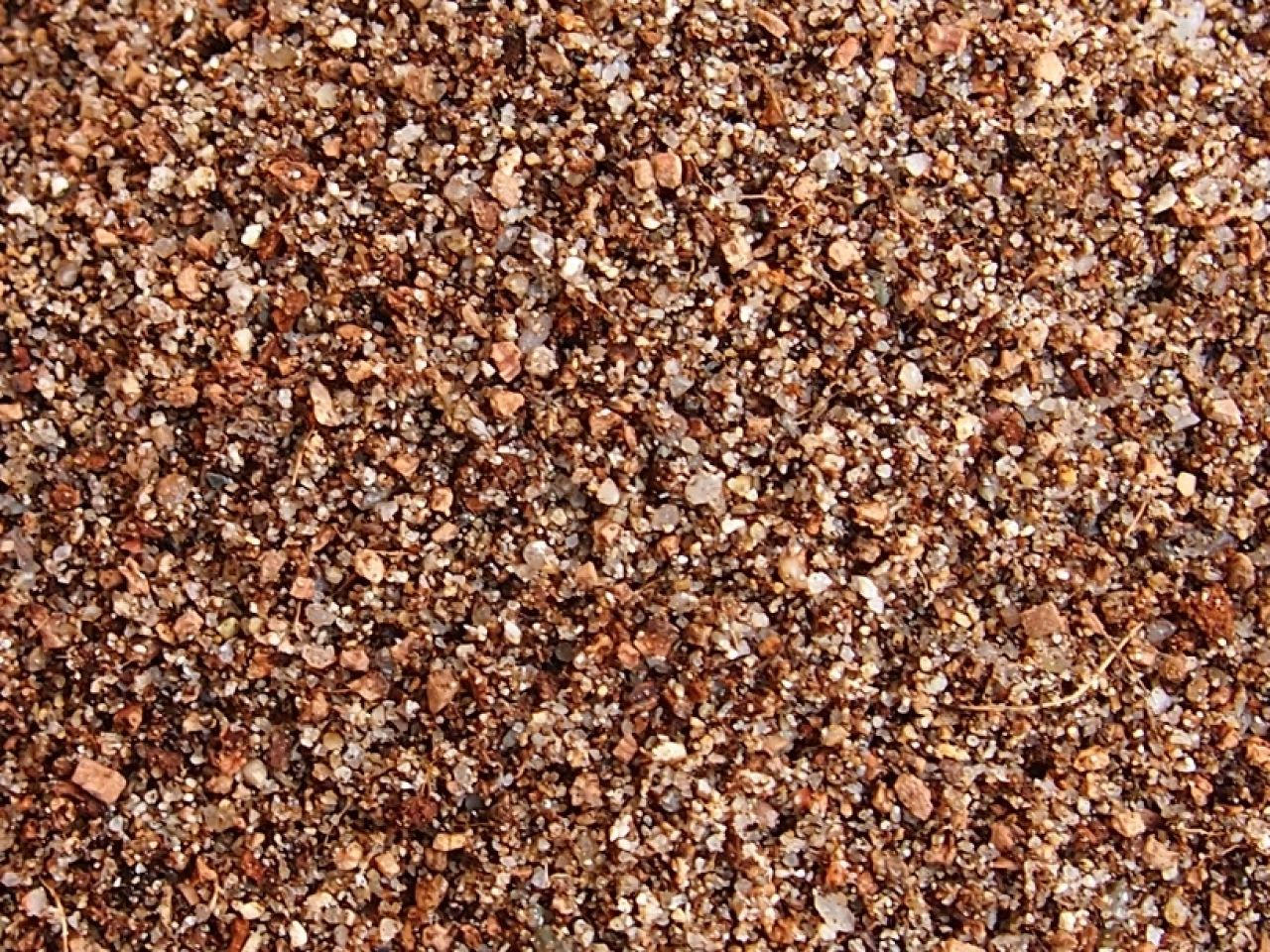
Numerous studies highlight that the symbiotic action of plants with beneficial bacteria and mycorrhizae makes minerals more bioavailable than the direct absorption of nutrients resolved in the aquifer solution, as occurs in soil or in hydroponic cultivation. This synergy is part of the natural biological cycle because plants provide the carbon needed by bacteria and they, on the other hand, release the most bioavailable nutrients at the end of their life cycle which lasts a few hours. Bacteria are able to fix atmospheric nitrogen and mineralize the nutrients present in the soil, and those provided by fertilization, up to 6 times more effectively than the solvent action of water. Mycorrhizae make phosphorus more bioavailable, mitigating the problem of phosphorus immobilization. Zeolites offer an ideal habitat for these microorganisms because air, water and nutrients are present in a balanced way.
The presence of zeolites in the growth substrate therefore contributes directly to the reduction of the leaching of N and K and other elements and indirectly, by providing hospitality to the microorganisms in its infinite cavities, because it transforms them into the form of organic complexes, more bioavailable, increasing the efficiency of the nutrients present in the fertilizers and those in the soil.
The use of zeolite at the plant or in top-dressing may take a few years to amortize the cost based on fertilizer savings alone. However, it makes it possible to reduce the overall cost of ordinary maintenance and the risks of extraordinary interventions following thermal stress which favors the development of diseases.
Our technical staff is the first group that has used zeolites in Italy since 2016 in hybrid sports fields, in all its installations and since then our partners and even competitors are used to using it. Our technicians were able to observe that by integrating vermicompost and balancing nourishment and humidity, zeolite is the best ally to avoid thermal stress throughout the summer.
During sowing, the presence of zeolite in the growth substrate favors germination thanks to the better effectiveness of the action of water, nutrients and rapid development of the microbiome.
The best quality and highest % content of zeolite is provided by Clinoptilolite. Its internal structure is very open offering a larger surface area but, at the same time, has a strong physical resistance to crushing. A smaller amount of zeolite is present in Phillipsite and its structure is less resistant while an even smaller amount with an even weaker structure is provided by Cabasite. However, CSC appears to be very similar to all three. When selecting zeolite you must pay attention to the presence of dust and above all to the mechanical resistance of the mineral so that it can resist more.
Our experimental test in the Minoprio Foundation has allowed us to test many organic and mineral soil improvers. One of these is natural zeolite. Natural zeolite has been applied to turf in sports fields for over 15 years abroad, integrated into the sandy substrate because it forms turf that is strong, healthy and more resistant to play.
Natural zeolite is an extracted mineral that is applied in crops for its unique porosity and its negative molecular charge. In the growth substrate, Zeolite absorbs water and nutrients offering an ideal habitat for biological activity which guarantees healthy and balanced growth. In industry it is often used as a carrier of nutrients, wetting agents, wet acids, algae extracts etc. for a longer effect.
Zeolite is a natural sponge that absorbs free water in excess which, in addition to keeping the water/air content in balance, mitigates thermal stress to the roots, summer and winter. After heavy precipitation, the sandy substrate becomes saturated with free water thanks to capillary forces; the free water present between the grains of sand significantly increases the thermal conductivity of the sandy substrate and consequently the accumulation of heat in the rhizosphere. In summer, after a heavy rainfall the heat returns and consequently the increase in temperature in the growth substrate is correlated with the increase in humidity precisely because there is a high quantity of free water which heats up: this is the main factor in the death of the plants even before the fungal diseases appear which more often than not are a consequence, i.e. the visual effect but not the main cause. The zeolite within a sandy substrate is able to absorb excess free water like clay, mitigating thermal stress on the roots but, unlike clay, promotes gas exchange and water drainage.
Zeolites, like humus, have a cation exchange capacity (CSC) of between 150-250 meq/100g, therefore, mixing approximately 10% by volume with silica sand increases the fertility of the sandy substrate. Zeolites have selective adsorbent capacities for some nutritional cations, as they can retain ammonium (NH4+) and potassium (K+) ions, mitigating the problem of leaching of these precious nutrients and, at the same time, can release them progressively over time, avoiding excesses. In fact, these ions can be readily exchanged when plant roots need them.
Numerous studies highlight that the symbiotic action of plants with beneficial bacteria and mycorrhizae makes minerals more bioavailable than the direct absorption of nutrients resolved in the aquifer solution, as occurs in soil or in hydroponic cultivation. This synergy is part of the natural biological cycle because plants provide the carbon needed by bacteria and they, on the other hand, release the most bioavailable nutrients at the end of their life cycle which lasts a few hours. Bacteria are able to fix atmospheric nitrogen and mineralize the nutrients present in the soil, and those provided by fertilization, up to 6 times more effectively than the solvent action of water. Mycorrhizae make phosphorus more bioavailable, mitigating the problem of phosphorus immobilization. Zeolites offer an ideal habitat for these microorganisms because air, water and nutrients are present in a balanced way.
The presence of zeolites in the growth substrate therefore contributes directly to the reduction of the leaching of N and K and other elements and indirectly, by providing hospitality to the microorganisms in its infinite cavities, because it transforms them into the form of organic complexes, more bioavailable, increasing the efficiency of the nutrients present in the fertilizers and those in the soil.
The use of zeolite at the plant or in top-dressing may take a few years to amortize the cost based on fertilizer savings alone. However, it makes it possible to reduce the overall cost of ordinary maintenance and the risks of extraordinary interventions following thermal stress which favors the development of diseases.
Our technical staff is the first group that has used zeolites in Italy since 2016 in hybrid sports fields, in all its installations and since then our partners and even competitors are used to using it. Our technicians were able to observe that by integrating vermicompost and balancing nourishment and humidity, zeolite is the best ally to avoid thermal stress throughout the summer.
During sowing, the presence of zeolite in the growth substrate favors germination thanks to the better effectiveness of the action of water, nutrients and rapid development of the microbiome.
The best quality and highest % content of zeolite is provided by Clinoptilolite. Its internal structure is very open offering a larger surface area but, at the same time, has a strong physical resistance to crushing. A smaller amount of zeolite is present in Phillipsite and its structure is less resistant while an even smaller amount with an even weaker structure is provided by Cabasite. However, CSC appears to be very similar to all three. When selecting zeolite you must pay attention to the presence of dust and above all to the mechanical resistance of the mineral so that it can resist more.
Our experimental test in the Minoprio Foundation has allowed us to test many organic and mineral soil improvers. One of these is natural zeolite. Natural zeolite has been applied to turf in sports fields for over 15 years abroad, integrated into the sandy substrate because it forms turf that is strong, healthy and more resistant to play.
Natural zeolite is an extracted mineral that is applied in crops for its unique porosity and its negative molecular charge. In the growth substrate, Zeolite absorbs water and nutrients offering an ideal habitat for biological activity which guarantees healthy and balanced growth. In industry it is often used as a carrier of nutrients, wetting agents, wet acids, algae extracts etc. for a longer effect.
Zeolite is a natural sponge that absorbs free water in excess which, in addition to keeping the water/air content in balance, mitigates thermal stress to the roots, summer and winter. After heavy precipitation, the sandy substrate becomes saturated with free water thanks to capillary forces; the free water present between the grains of sand significantly increases the thermal conductivity of the sandy substrate and consequently the accumulation of heat in the rhizosphere. In summer, after a heavy rainfall the heat returns and consequently the increase in temperature in the growth substrate is correlated with the increase in humidity precisely because there is a high quantity of free water which heats up: this is the main factor in the death of the plants even before the fungal diseases appear which more often than not are a consequence, i.e. the visual effect but not the main cause. The zeolite within a sandy substrate is able to absorb excess free water like clay, mitigating thermal stress on the roots but, unlike clay, promotes gas exchange and water drainage.
Zeolites, like humus, have a cation exchange capacity (CSC) of between 150-250 meq/100g, therefore, mixing approximately 10% by volume with silica sand increases the fertility of the sandy substrate. Zeolites have selective adsorbent capacities for some nutritional cations, as they can retain ammonium (NH4+) and potassium (K+) ions, mitigating the problem of leaching of these precious nutrients and, at the same time, can release them progressively over time, avoiding excesses. In fact, these ions can be readily exchanged when plant roots need them.
Numerous studies highlight that the symbiotic action of plants with beneficial bacteria and mycorrhizae makes minerals more bioavailable than the direct absorption of nutrients resolved in the aquifer solution, as occurs in soil or in hydroponic cultivation. This synergy is part of the natural biological cycle because plants provide the carbon needed by bacteria and they, on the other hand, release the most bioavailable nutrients at the end of their life cycle which lasts a few hours. Bacteria are able to fix atmospheric nitrogen and mineralize the nutrients present in the soil, and those provided by fertilization, up to 6 times more effectively than the solvent action of water. Mycorrhizae make phosphorus more bioavailable, mitigating the problem of phosphorus immobilization. Zeolites offer an ideal habitat for these microorganisms because air, water and nutrients are present in a balanced way.
The presence of zeolites in the growth substrate therefore contributes directly to the reduction of the leaching of N and K and other elements and indirectly, by providing hospitality to the microorganisms in its infinite cavities, because it transforms them into the form of organic complexes, more bioavailable, increasing the efficiency of the nutrients present in the fertilizers and those in the soil.
The use of zeolite at the plant or in top-dressing may take a few years to amortize the cost based on fertilizer savings alone. However, it makes it possible to reduce the overall cost of ordinary maintenance and the risks of extraordinary interventions following thermal stress which favors the development of diseases.
Our technical staff is the first group that has used zeolites in Italy since 2016 in hybrid sports fields, in all its installations and since then our partners and even competitors are used to using it. Our technicians were able to observe that by integrating vermicompost and balancing nourishment and humidity, zeolite is the best ally to avoid thermal stress throughout the summer.
During sowing, the presence of zeolite in the growth substrate favors germination thanks to the better effectiveness of the action of water, nutrients and rapid development of the microbiome.
The best quality and highest % content of zeolite is provided by Clinoptilolite. Its internal structure is very open offering a larger surface area but, at the same time, has a strong physical resistance to crushing. A smaller amount of zeolite is present in Phillipsite and its structure is less resistant while an even smaller amount with an even weaker structure is provided by Cabasite. However, CSC appears to be very similar to all three. When selecting zeolite you must pay attention to the presence of dust and above all to the mechanical resistance of the mineral so that it can resist more.