Sustainable fields
When you are called to choose between the different types of highly usable grass playing fields, the evaluation can be complex
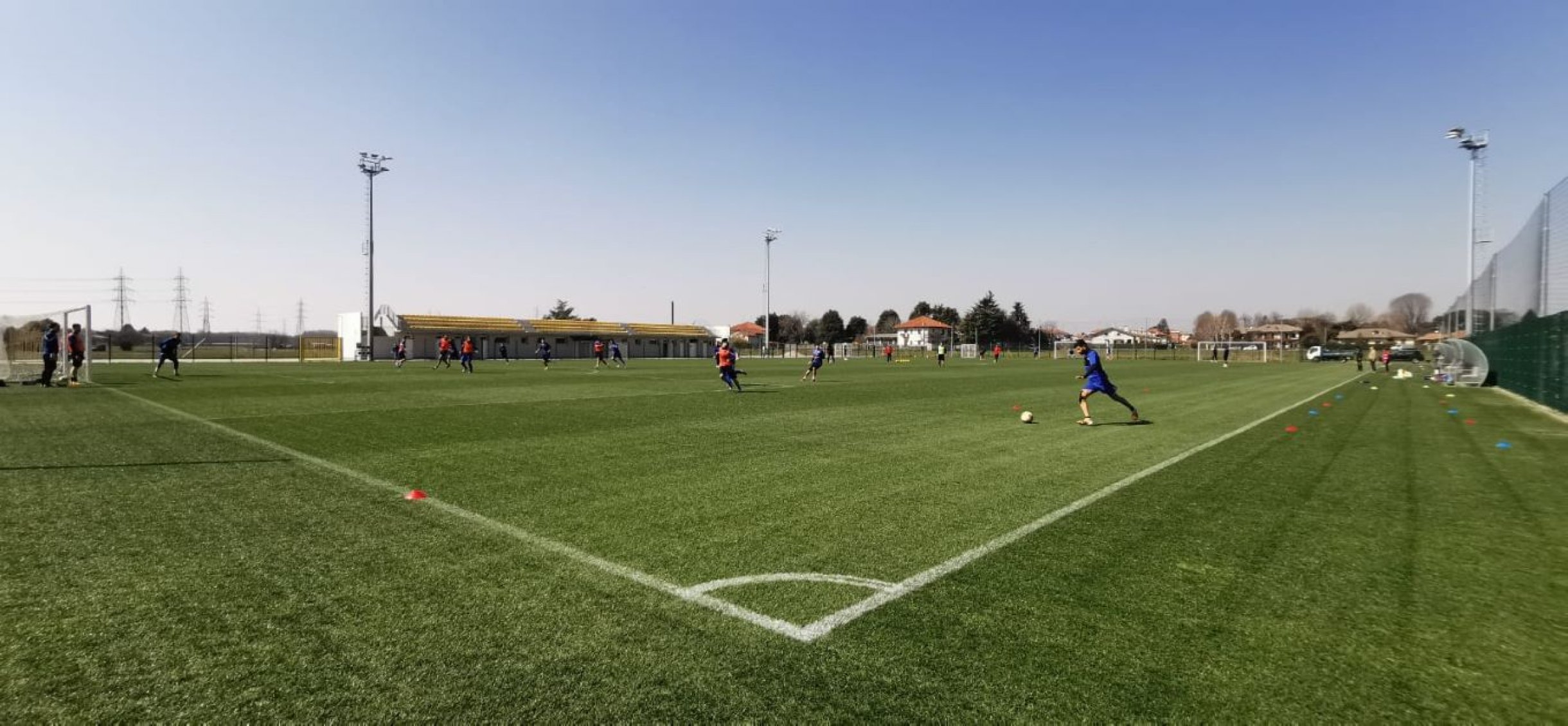
When you are called upon to choose between the different types of highly usable grass playgrounds, the evaluation can be complex and lead to costly mistakes if you are not aware of recent environmental regulations and the increased costs of disposing of non-recyclable plastic waste. A sustainable pitch must have a significant positive impact on at least one of the six environmental objectives, not damage the other five and respect minimum social guarantees.
Green fields area of interest
Natural grass fields are part of the Public Equipped Green Area (VPA) and must play their part in mitigating the impact of excessive construction on the environment. There is no doubt that natural fields on agricultural land cannot contribute much to the environment if they are heavily exploited and poorly maintained. A key indicator concerns the limit of hours of play which, depending on the climate and type of terrain, can vary from 4 to 8 hours per week that the course can withstand with modest maintenance, otherwise mud forms and the course quickly becomes impassable and full of dangerous holes.
The lack of culture and economic resources for maintenance and the excessive playing load on some fields convinced investors that the construction of synthetic fields with rubber filling was the best solution to all the problems related to the management of the fields. By removing kids from pitches degraded by mud, public opinion also became convinced that playing on synthetic pitches was the best solution for kids, but professional players have repeatedly spoken out against it due to game safety issues. It is very difficult to understand the issue of safety on synthetic pitches and the debate has been going on for several years, but what is certain is that a growing number of professional players now prefer well-maintained natural hybrid pitches. Since 2012 there have been numerous courses with hybrid systems that have received positive opinions from professional players and today there are few effective hybrid systems when the number of hours of play is between 20 and 30 hours per week.
In parallel, with the recent update of the REACH regulation, rubber infill from synthetic pitches will no longer be allowed starting from 17 October 2031. Furthermore, starting from 2021, a ban on the export of ecotoxic plastic to third world countries has been introduced, which do not have adequate protocols for waste management. This legislation has led to a significant increase in disposal costs for the synthetic pitch fillers removed, an effect already felt in 2022. Finally, the environmental objectives have become part of the procurement code and consequently must be an integral part of any future public and private work.
In other words, each project will have to demonstrate that it has made the most effective choice with the lowest possible environmental impact, which in the best case scenario does not significantly damage any of the environmental objectives and which possibly becomes sustainable. Obviously, where it is not possible to do otherwise, the compensatory works deemed necessary during the development of the environmental impact assessment (EIA) of the project must be included.
The green taxonomy and Eco-Sustainability requirements
The “Taxonomy for Sustainable Finance” was developed to promote private sector investment in green and sustainable projects as well as help achieve the objectives of the European Green Deal (climate neutrality by 2050).
1. It must provide a substantial contribution to one of the six environmental objectives.
.2. It must not cause significant harm to any of the other environmental objectives (DNSH).
3. It must respect the minimum social guarantees.
THE VALUE OF MONITORING AND REPORTING
To evaluate the effectiveness of interventions, it is necessary to collect data and monitor the results before the design phase, during the construction phase and subsequently in the use and maintenance phase, therefore it is necessary to identify the most relevant sustainability indicators and have tools to:
- Automate, share and publish data on a web platform accessible from a browser to facilitate the collection and management of the necessary data.
- Measure and certify the impacts of projects, objectives and territories.
- Customize simple solutions that can evolve in line with needs.
The problems of rubber in synthetic fields
Before using SBR rubber as an infill on synthetic grass pitches, three different factors must be evaluated, which will inevitably tip the scales towards a different choice:
- the REACH regulation which came into force on 17 October 2023, with the aim of reducing the dispersion of microplastics in the environment prohibits the marketing of rubber for synthetic pitches. On the ECHA website in answer in FAQ 4 we read that: The ban applies after 8 years, to give owners and managers of facilities time to adopt alternatives and to ensure that the majority of existing sports facilities reach the end of their life cycle. The intention of the legislator is to remove rubber from the fields by 16 October 2031, as indicated in point (53) of the annex, so anyone who builds a synthetic field today, at least if he does not intend to change the rubber infill before the deadline, must take alternatives into consideration:
- synthetic carpet with 60 mm high fibers and sand infill + vegetable organic matter to be replenished and aerated often and high water consumption;
- synthetic carpet with h50 mm fibres,draining matand sand + vegetable organic infill, with higher performance and less need for replenishment, but with a mattress effect for playing;
- hybrid carpet with h60 mm fibres, with sand/zoelite backing and infill in which natural grass grows, with professional performance that requires constant but reduced maintenance.
- the continuous increase in the costs of disposing of sand and rubber present in the infill of synthetic fields. From 2020 to 2023 the cost of landfilling has gone from 20 to 75 cents per kg and transport must be organized in ADR because the rubber of post-use tires is dangerous (excessive presence of zinc). One square meter of infill for a synthetic pitch contains approximately 25 kg of sand and 14 kg of rubber, which is difficult to separate at the end of its life cycle; 39 kg/m2 will therefore have to be disposed of or recovered.
- the presence of zinc in vulcanized rubber increases significantly after 21 days of exposure to laboratory reagents, reaching well beyond the 3 mg/lt limit set by the World Health Organization. This is what one study on rubber granules used as infill for synthetic grass, published on 30 May 2022 in the MDPI Journal of Basel. It is believed that such a release concentration is due to the increase in the surface area of the granulated rubber which is much greater than that of the whole tyre. That is, any post-use rubber clot from tires should be treated as hazardous waste.
Tab. 2 Concentration of metals released from SBR granules.
|
Item and dimensions |
Concentration (mg · L−1) |
Limitations (WHO, Environmental Criteria 221) |
|
|
24 hours |
21 days |
||
|
B (249.77 nm) |
0 |
0.231 |
0.5 |
|
Ba (455.40 nm) |
0.021 |
0.056 |
0.7 |
|
Fe (259.94 nm) |
0 |
0.059 |
- |
|
Mn (257.61 nm) |
0 |
0.113 |
0.4 |
|
Yes (251.61 nm) |
0 |
2,271 |
- |
|
Zn (206.20 nm) |
0.273 |
7.041 |
3 |
Attachments

Related topics

Environmental benefits
6 points of merit on our fields
Heat islands
Mitigation and green contribution
Foliar fertilization
What it is, design and application
Write to Us
For any kind of request write to us.