Regenerative Agriculture
ORGANIC cultivation does not convince farmers because they feel deprived of products and methods to safeguard production and income
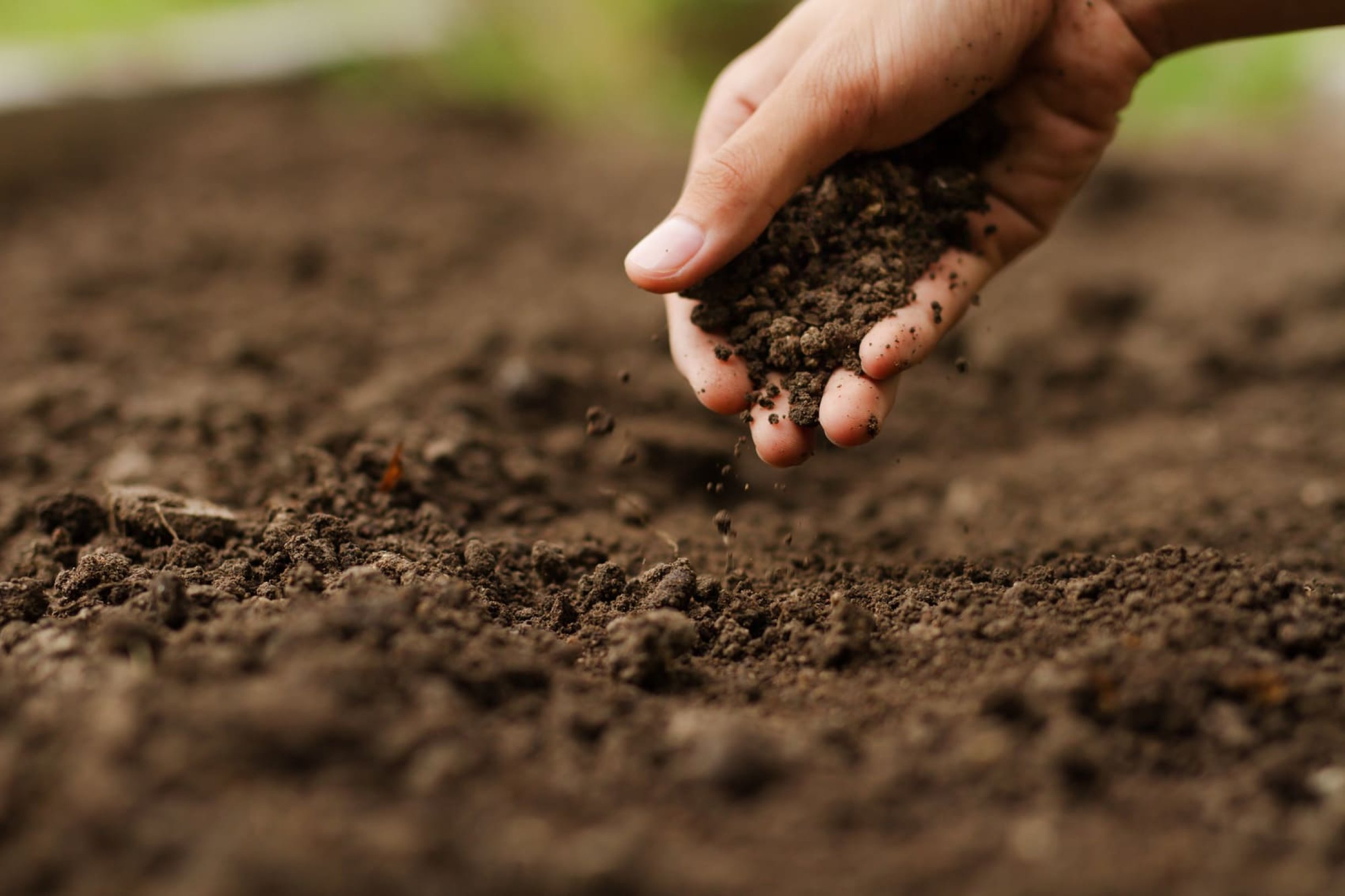
ORGANIC cultivation does not convince farmers because they feel deprived of the products and methods to safeguard production and income but even intensive agriculture has proven incapable of providing long-term answers. The multi-year use of synthetic fertilizers and pesticides nullifies the profits and over time deprives the soil of its natural biological activity, leading to its exhaustion. Furthermore, the nutritional value of food is very poor and consumers do not appreciate fruit and vegetables because they even lack flavour. Soil deprived of its biological activity functions as an inert substrate and produces "synthetic food" very similar to that produced by hydroponic agriculture. Over the last 16 years, the regenerative agriculture method has demonstrated that we can produce healthy food with natural flavor, increasing quantity and business income.
The principles of regenerative agriculture
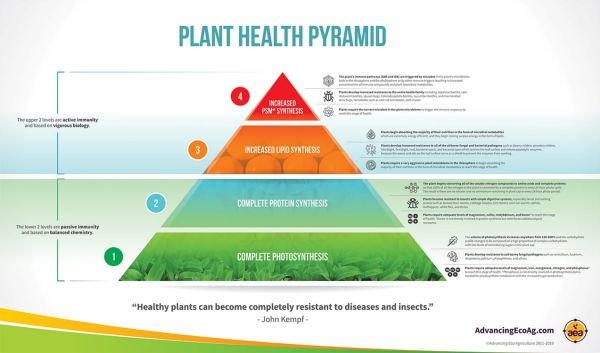
It is known that in intensive agriculture plants exploit a small part of the potential of chlorophyll photosynthesis because they absorb only a small part of the nutrients present in the soil and fertilizers (estimated at most 20%). The optimization of chlorophyll photosynthesis is the central point of regenerative agriculture through the method of "feeding plants to regenerate the soil" which is more effective than the method of intensive agriculture which aims to "fertilize the soil to feed the plants". The greater the photosynthesis activity, the greater the production of carbohydrates which are partly transported from the roots into the soil through the root exudates, offering the food necessary to nourish the biological activity of the soil. Around the roots (rizosfera), the presence of a light layer of water is sufficient to develop a biological activity, rich in movement and nutritional exchanges. They are precisely the rizobacteria and the mycorrhizae the ideal miners to promote the mineralization of the elements present in nature. These microorganisms take in carbon provided by plants and other necessary minerals from water, air and soil to complete their life cycle. Depending on the species, bacteria have a life cycle of a few days, at the end of which they give the plants nutrients in a noble organic form, easy to absorb and without consuming energy as instead happens with the mineral absorption of synthetic fertilizers. In fact, it is a symbiosis that has existed since life has existed on earth because microorganisms need plants to supply themselves with carbon. In short, it is the plants that contribute most to the formation of the soil (pedogenesis) where biological activities take place and without the plants the soil would be decaying rock that is easy to wash away.
Turf maintenance with the regenerative agriculture method.
The application of the teachings of regenerative agriculture in the turf of a sports field brings notable benefits because it involves the more appropriate use of mineral nutrients and biological phyoseactivators and the reduction of the use of pesticides, until their complete elimination. The growth of turf for sports use has as its main limitation the intensive trampling because it compresses the porosity, altering the physical properties of the soil, limiting the gaseous exchange between the soil and the air. However, by aerating the surface and lightening the soil regularly, the gas exchange (CO2 ⇄ O2) necessary for biological processes is guaranteed. In the draining and well-aerated substrate the microorganisms proliferate and mineralize forms of nutrients inaccessible to plants, both those present in the soil and those supplied with fertilizers.
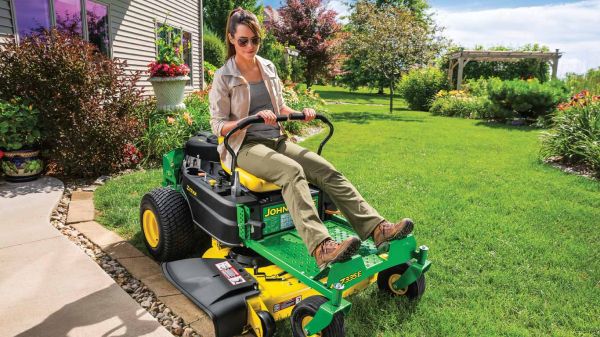
First of all, it must be considered that cutting tall grass by removing more than 1/3 of the total height has negative consequences on the growth of the grass. The cut grass must be removed and taken to composting plants because otherwise the excess deposited on the surface would form thatch. It reduces the gaseous exchange between the soil and the air and furthermore, together with the grass, nutrients are also removed which must be replenished with synthetic fertilizers which often have a negative effect on biological activity.
Incorrect management of grass cutting is often observed in public parks, cutting the grass when it is too tall and, to make matters worse, it is left to dry on the surface, thinking of bringing nutrients back into the soil and reducing water for irrigation. In reality, this reduces the cost of cutting because the grass is damaged and it often takes months to recover. The cut grass is too long, it oxidizes and much of the nitrogen is dispersed into the atmosphere instead of returning to the soil. In addition to marring the grass cut above 1/3 of its height, the excess cutting residue becomes thatch and suffocates the roots and biological activity in the soil; it becomes an attraction of insects and mosquitoes as if we were in a rice field. The aesthetic aspect leaves people wanting to go elsewhere and the presumed saving on the cutting frequency has a negative impact on the functionality of the park and on people's health.
What to do: start cutting the grass at least once a week on sunny days. By cutting the natural grass frequently and leaving the cutting residues on the surface, they are decomposed in a very short time without forming thatch. Part of the water together with the minerals present in the grass and part of the nitrogen (highly volatile) return to the soil. Frequent cutting favors the formation of a dense coat that is more resistant to trampling and, moreover, it is the best natural "herbicide" because weeds have no space to germinate. Carrying out approximately 35 cuts per year without harvesting will keep the cost of the operation low and will preserve the ecosystem in the city's green areas, offering better aesthetic value.
Consult our experts on how to apply the teachings of regenerative agriculture to have a sustainable ecosystem that promotes health and employment on site. The HEALgreen method requires a small initial investment for the purchase or rental of tools and an educational period for professionals but, once understood, everything becomes easy, economical and eco-sustainable.

Related topics

Environmental benefits
6 points of merit on our fields
Heat islands
Mitigation and green contribution
Foliar fertilization
What it is, design and application