Natural vs Synthetic

  • Published 28/02/2024   Novità
  •  by POWERgrass

Athletes' falls and slips are part of the game.
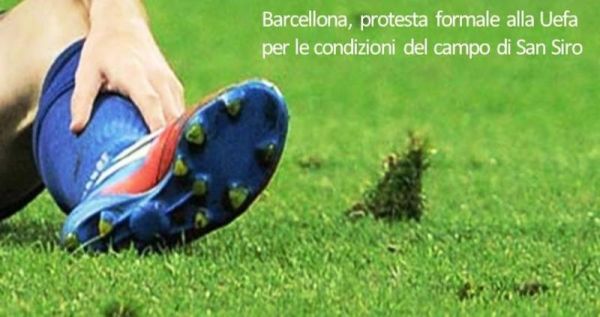
Natural grass fields, with adequate maintenance, are still considered the ideal sports surface for the majority of players thanks to a better interaction of the studs with the surface. However, there are risks if the roots are not well anchored to the ground, if there are dangerous holes or if water drainage is inadequate. Ankle sprains can occur when grass roots are not strong enough and grass clods rise. In February 2012, Barcelona made a formal protest to UEFA over the conditions of the San Siro stadium where new natural grass turf had been laid a few days earlier. The transplantation of natural grass turf is not decisive and involves numerous risks also from a logistical point of view because it is often done out of season. Sod transplanting also requires intensive maintenance to get the grass rooted in the new site. In professional stadiums, clods of grass with a thickness of 40 mm are preferred in order to be able to play immediately and it is almost impossible to get them to root because the correct ventilation of the root system is lacking despite making holes frequently.
Synthetic grass fields are not the best solution for playing safely

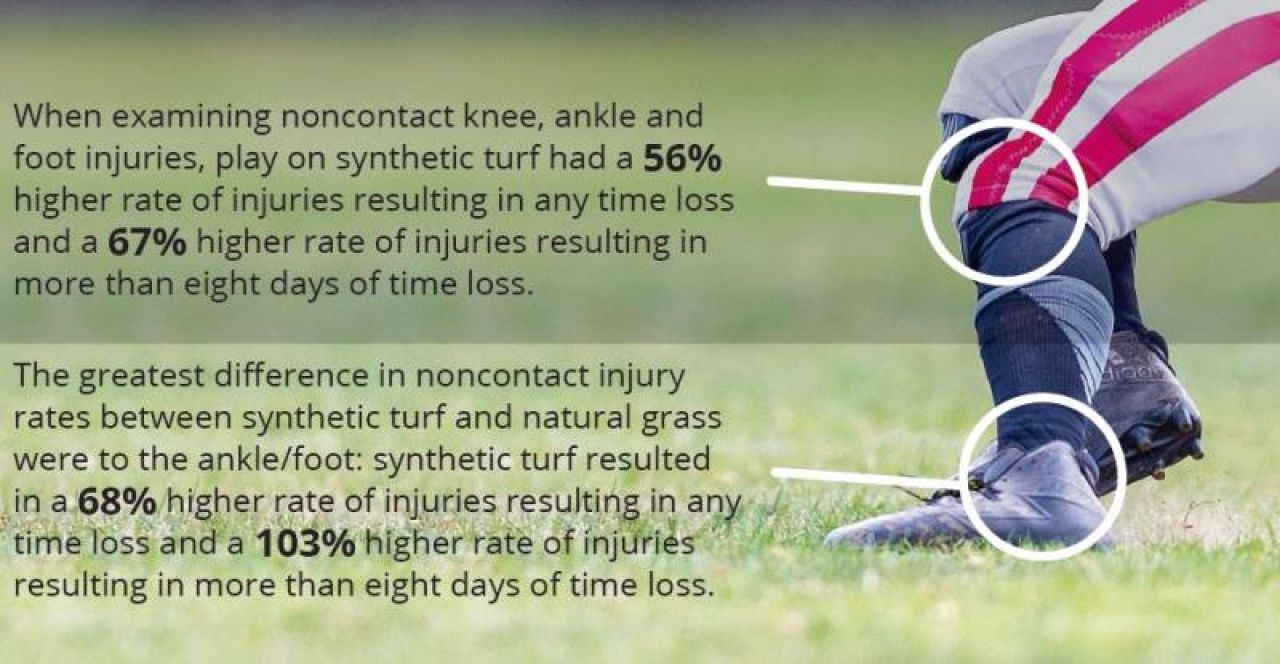
A study recently published in the American Journal of Sports Medicine showed that NCAA Division II and III soccer players are 63% more likely to have anterior cruciate ligament (ACL) injuries and NCAA Division I soccer players are nearly 3 times more likely to have posterior cruciate ligament (PCL) injuries when playing on synthetic turf compared to natural grass.

Recent research published in the American Journal of Sports Medicine found that between 2012 and 2016, among elite NFL athletes, there were 16 percent more lower-body injuries on artificial turf compared to natural grass. If all NFL games played on artificial turf were played on turf during the study period, 319 fewer lower-body injuries would be expected.

Abrasions on the skin are often noted in synthetic flooring. Furthermore, the fear of falling prevents most athletes from playing with peace of mind. We observe a different game because they tend to pass the ball first, instead of "playing" it and sliding goals are quite rare. A study in the USA has shown that burns on synthetic grass increase significantly above the 30°C of sports flooring; the same study demonstrated that synthetic grass pavement is even hotter than asphalt and exceeds 70°C. Source www.aces.nmsu.edu

Most players feel pain in the spine due to the return of energy from synthetic flooring.

The greatest often hidden danger is the accumulation of excessive heat on sports flooring which causes premature fatigue and risks of heat exhaustion as well as obviously abrasions on the skin in the event of falls. Heat exhaustion is the most commonly observed heat-related condition in active populations ranging from athletes to hikers. It is defined as the inability to continue exercise during heat due to cardiovascular failure (not enough blood pumped to the heart) and energy depletion that may or may not be associated with physical collapse. Cardiovascular failure refers to when the heart has difficulty providing sufficient oxygenated blood to all working organs and muscles and is aggravated by dehydration through extreme sweating without replacing fluids during exercise. Heat exhaustion is one of the most common conditions reported in hot climates.

The POWERgrass hybrid pitch offers a pitch without holes and better grip

POWERgrass hybrid grass is able to significantly increase player safety! The ideal prerogatives for playing safely are when the surface has excellent traction in the range of 30-65 N and is soft in the range of 65-85G measured with the 2.25 kg Clegg's hammer. POWERgrass makes it easier to maintain the surface in these optimal ranges for playing, because its backing is soft and protects the roots, promoting in-depth development and preventing compaction of the substrate underneath the backing. The playing surface remains soft and supports a greater number of games, before intensive use requires mechanical loosening. Compaction is limited in the substrate above the backing, therefore it is easier to keep the surface soft with a simple passage of a nailed roller.

  Tags 

Natural vs Synthetic

marketingCleat166-IT2

Athletes' falls and slips are part of the game.

  • 28/02/2024
  • Italgreen Landscape

Natural grass fields, with adequate maintenance, are still considered the ideal sports surface for the majority of players thanks to a better interaction of the studs with the surface. However, there are risks if the roots are not well anchored to the ground, if there are dangerous holes or if water drainage is inadequate. Ankle sprains can occur when grass roots are not strong enough and grass clods rise. In February 2012, Barcelona made a formal protest to UEFA over the conditions of the San Siro stadium where new natural grass turf had been laid a few days earlier. The transplantation of natural grass turf is not decisive and involves numerous risks also from a logistical point of view because it is often done out of season. Sod transplanting also requires intensive maintenance to get the grass rooted in the new site. In professional stadiums, clods of grass with a thickness of 40 mm are preferred in order to be able to play immediately and it is almost impossible to get them to root because the correct ventilation of the root system is lacking despite making holes frequently.
Synthetic grass fields are not the best solution for playing safely

A study recently published in the American Journal of Sports Medicine showed that NCAA Division II and III soccer players are 63% more likely to have anterior cruciate ligament (ACL) injuries and NCAA Division I soccer players are nearly 3 times more likely to have posterior cruciate ligament (PCL) injuries when playing on synthetic turf compared to natural grass.

Recent research published in the American Journal of Sports Medicine found that between 2012 and 2016, among elite NFL athletes, there were 16 percent more lower-body injuries on artificial turf compared to natural grass. If all NFL games played on artificial turf were played on turf during the study period, 319 fewer lower-body injuries would be expected.

Abrasions on the skin are often noted in synthetic flooring. Furthermore, the fear of falling prevents most athletes from playing with peace of mind. We observe a different game because they tend to pass the ball first, instead of "playing" it and sliding goals are quite rare. A study in the USA has shown that burns on synthetic grass increase significantly above the 30°C of sports flooring; the same study demonstrated that synthetic grass pavement is even hotter than asphalt and exceeds 70°C. Source www.aces.nmsu.edu

Most players feel pain in the spine due to the return of energy from synthetic flooring.

The greatest often hidden danger is the accumulation of excessive heat on sports flooring which causes premature fatigue and risks of heat exhaustion as well as obviously abrasions on the skin in the event of falls. Heat exhaustion is the most commonly observed heat-related condition in active populations ranging from athletes to hikers. It is defined as the inability to continue exercise during heat due to cardiovascular failure (not enough blood pumped to the heart) and energy depletion that may or may not be associated with physical collapse. Cardiovascular failure refers to when the heart has difficulty providing sufficient oxygenated blood to all working organs and muscles and is aggravated by dehydration through extreme sweating without replacing fluids during exercise. Heat exhaustion is one of the most common conditions reported in hot climates.

The POWERgrass hybrid pitch offers a pitch without holes and better grip

POWERgrass hybrid grass is able to significantly increase player safety! The ideal prerogatives for playing safely are when the surface has excellent traction in the range of 30-65 N and is soft in the range of 65-85G measured with the 2.25 kg Clegg's hammer. POWERgrass makes it easier to maintain the surface in these optimal ranges for playing, because its backing is soft and protects the roots, promoting in-depth development and preventing compaction of the substrate underneath the backing. The playing surface remains soft and supports a greater number of games, before intensive use requires mechanical loosening. Compaction is limited in the substrate above the backing, therefore it is easier to keep the surface soft with a simple passage of a nailed roller.

Condividi su

Categorie

Tags

Archivio


Natural vs Synthetic

Novità / 28/02/2024

Athletes' falls and slips are part of the game.

Natural grass fields, with adequate maintenance, are still considered the ideal sports surface for the majority of players thanks to a better interaction of the studs with the surface. However, there are risks if the roots are not well anchored to the ground, if there are dangerous holes or if water drainage is inadequate. Ankle sprains can occur when grass roots are not strong enough and grass clods rise. In February 2012, Barcelona made a formal protest to UEFA over the conditions of the San Siro stadium where new natural grass turf had been laid a few days earlier. The transplantation of natural grass turf is not decisive and involves numerous risks also from a logistical point of view because it is often done out of season. Sod transplanting also requires intensive maintenance to get the grass rooted in the new site. In professional stadiums, clods of grass with a thickness of 40 mm are preferred in order to be able to play immediately and it is almost impossible to get them to root because the correct ventilation of the root system is lacking despite making holes frequently.

Synthetic grass fields are not the best solution for playing safely

A study recently published in the American Journal of Sports Medicine showed that NCAA Division II and III soccer players are 63% more likely to have anterior cruciate ligament (ACL) injuries and NCAA Division I soccer players are nearly 3 times more likely to have posterior cruciate ligament (PCL) injuries when playing on synthetic turf compared to natural grass.

Recent research published in the American Journal of Sports Medicine found that between 2012 and 2016, among elite NFL athletes, there were 16 percent more lower-body injuries on artificial turf compared to natural grass. If all NFL games played on artificial turf were played on turf during the study period, 319 fewer lower-body injuries would be expected.

Abrasions on the skin are often noted in synthetic flooring. Furthermore, the fear of falling prevents most athletes from playing with peace of mind. We observe a different game because they tend to pass the ball first, instead of "playing" it and sliding goals are quite rare. A study in the USA has shown that burns on synthetic grass increase significantly above the 30°C of sports flooring; the same study demonstrated that synthetic grass pavement is even hotter than asphalt and exceeds 70°C. Source www.aces.nmsu.edu

Most players feel pain in the spine due to the return of energy from synthetic flooring.

The greatest often hidden danger is the accumulation of excessive heat on sports flooring which causes premature fatigue and risks of heat exhaustion as well as obviously abrasions on the skin in the event of falls. Heat exhaustion is the most commonly observed heat-related condition in active populations ranging from athletes to hikers. It is defined as the inability to continue exercise during heat due to cardiovascular failure (not enough blood pumped to the heart) and energy depletion that may or may not be associated with physical collapse. Cardiovascular failure refers to when the heart has difficulty providing sufficient oxygenated blood to all working organs and muscles and is aggravated by dehydration through extreme sweating without replacing fluids during exercise. Heat exhaustion is one of the most common conditions reported in hot climates.

The POWERgrass hybrid pitch offers a pitch without holes and better grip

POWERgrass hybrid grass is able to significantly increase player safety! The ideal prerogatives for playing safely are when the surface has excellent traction in the range of 30-65 N and is soft in the range of 65-85G measured with the 2.25 kg Clegg's hammer. POWERgrass makes it easier to maintain the surface in these optimal ranges for playing, because its backing is soft and protects the roots, promoting in-depth development and preventing compaction of the substrate underneath the backing. The playing surface remains soft and supports a greater number of games, before intensive use requires mechanical loosening. Compaction is limited in the substrate above the backing, therefore it is easier to keep the surface soft with a simple passage of a nailed roller.

Pubblicato il 31 Mar, 2026