Innovation
POWERgrass is an innovative hybrid grass system resulting from profound know-how
Today we can say with certainty that it is the first truly hybrid system that favors a balanced coexistence between natural and synthetic grass to support intensive play and reduce maintenance, with numerous mutual benefits. During the development of the system, we created original solutions that produced 5 invention patents which certify the innovation and our research commitment. Over 30 installations are proof of effectiveness.
The value of a patent
A patent is worth more than a PhD because it is not just a scientific study; the patent certifies an innovative solution to a technical problem. 
In 2011, Dr. Niko Sarrisidentified the solution that would soon change the way sports fields were and are built. Despite his twenty years of experience in the field of natural and artificial grass fields, he had to face countless problems and overcome numerous challenges to arrive at the POWERgrass hybrid system.
Dr. Sarris, aware of the value of his achievement, will present the first application for a European patent at the beginning of 2012 in the EPO (European Patent Office).
A year later he will submit patent application to WIPO (World International Patent Office) for the extension to the rest of the World introducing new features and an alternative solution with the Woven grass production method, also re-registered at the EPO.
At the beginning of 2014 he will present a third patent, son of the first, to protect a further feature that he discovered during his research.
Towards the end of 2017 it presented the fourth patent for welding fibers to the mesh with the innovative LC-HM (Linear Coating Hot Melt) method which will subsequently also be used for the production of recyclable synthetic grass. In November 2020 Sarris will present the fifth improvement patent which also includes the machinery developed for this purpose.
Patents certify that an idea is new and that it solves a technical problem but successful installations are the proof of effectiveness. Disseminating this solution is our mission but, often interests are conflicting and the competition, in the absence of equivalent solutions, tends to denigrate the novelty or copy without having the know-how but, when there is proof of effectiveness of the systems being compared it is difficult to deny the evidence.
Sarris has always embraced those who want to understand how his innovation works and recently, in a public debate on Linkedin, at the provocation of an internationally renowned competitor, he made himself available to any comparison or test as long as it is done objectively with the "double blind" method, but he did not want to risk it.
Sarris is not motivated by the speculative exploitation of his inventions but would like to see them become a beacon for doing business in a more equitable way among the various social classes, in balance with the environment, emulating nature. Much of his know-how is published on this site and is available free of charge to anyone.
The state of the art of hybrid systems and how they compare to synthetic grass
Hybrid lawns are nothing new. The first system was patented in 1990 in Holland and soon after in 1993, another was patented in the United States. In Italy they were used several times in the San Siro stadium, in Novara, in Genoa and in the Bergamo stadium as well as in some training fields of important teams such as Milan at the beginning of the century.
By developing the POWERgrass hybrid lawn system we had to compare ourselves with the state of the art of other existing systems, understand the limitations, propose a new solution and evaluate the technical advantage it produces. Consequently, in our research we had to study the characteristics of all the systems already present which, from a theoretical point of view, would be suitable for strengthening natural grass.
The main objective of hybrid systems is to increase the resistance to wear and tear of natural grass turf. In our research we have identified 3 hybrid systems which have had some success, but limited to clubs with high spending budgets because the cost of installation and subsequent maintenance is high.
One of the most obvious aspects, yet underestimated by many, is thatgrass does not willingly grow on traditional synthetic turf. It would seem like an impossible symbiosis and for this very reason there is the belief that hybrid systems do not keep what they promise and in some cases are real "rip-offs". Some hybrid systems work in the early period, but the advantages quickly fade. In other cases, the lawn goes into crisis as soon as it reaches the desired density and the weather conditions are no longer favorable for growth. Very often, the surface becomes too hard or asphyxiated for the grass which struggles to grow because it encounters high mechanical resistance or because the root does not breathe. The density of the surface thins out quickly and the cushioning effect is lost: players complain about the hardness of the pitch which causes ligament problems.
Maintaining the balance to encourage the growth of the lawn within the synthetic grass often becomes an arduous and complex job, causing the spending budget to increase drastically. Technicians are forced to often use the Verti-Drain to break up the sandy plant layer, reseed and fertilize repeatedly.
Experience has taught us that in past systems, with the same maintenance, the growth conditions of the lawn are less favorable so the grass tends to give way quickly precisely because the bottom quickly becomes hard. However, the stability of the surface is greater and the planarity is very often impeccable because no dangerous holes form. These are the reasons that arouse interest in further research and development of more effective solutions.
The reinforcement of natural grass has been studied by only a few subjects in the world because it requires in-depth skills from two opposite worlds, that of natural grass and that of synthetic grass. The scientific community is disinterested because excessive specialization in a specific topic often causes us to lose the overall vision of the whole.
Finally, the exponential expansion of synthetic turf fields from 2004 to today has not aroused an economic interest in thinking of something different. In the common imagination, synthetic grass would have provided a definitive answer regarding intensive use, player safety and reduced maintenance.
POWERgrass solves!
The POWERgrass hybrid system has overcome all the limitations of the old hybrid systems, improving the growth conditions within a specifically designed synthetic grass compared to an application with the same substrate without reinforcement. The natural grass thus increases resistance to wear and tear while at the same time protecting the synthetic grass from the sun's UV rays.
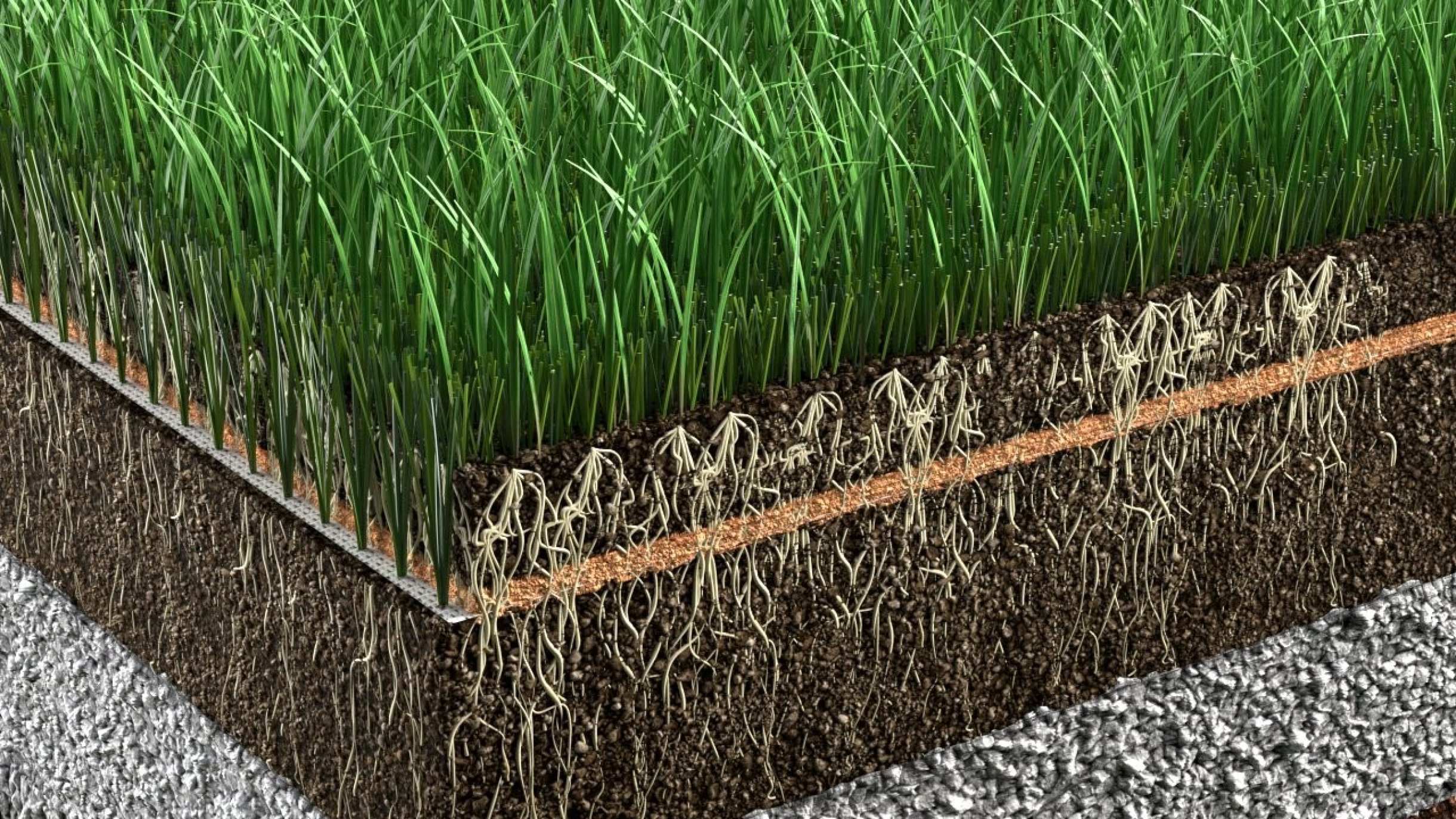
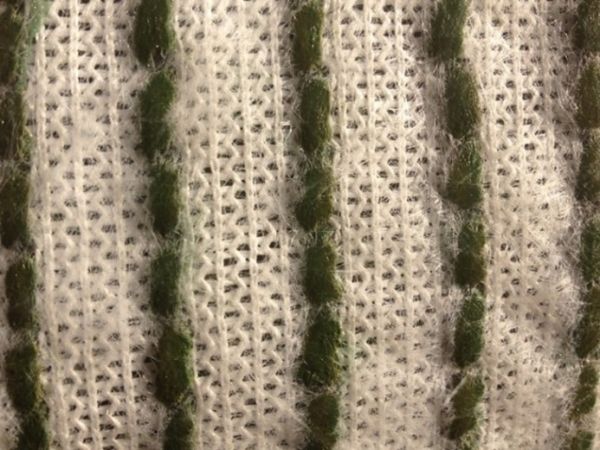
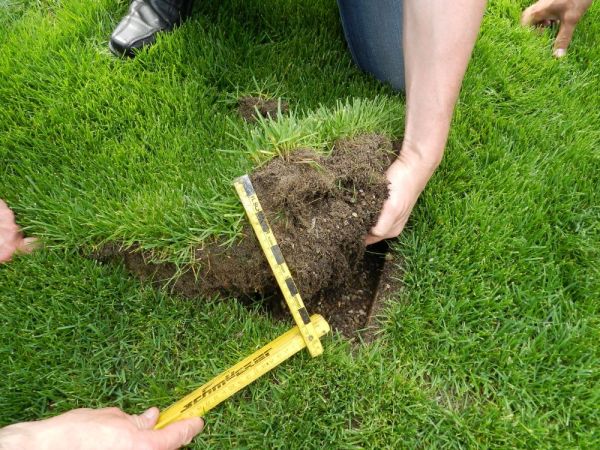
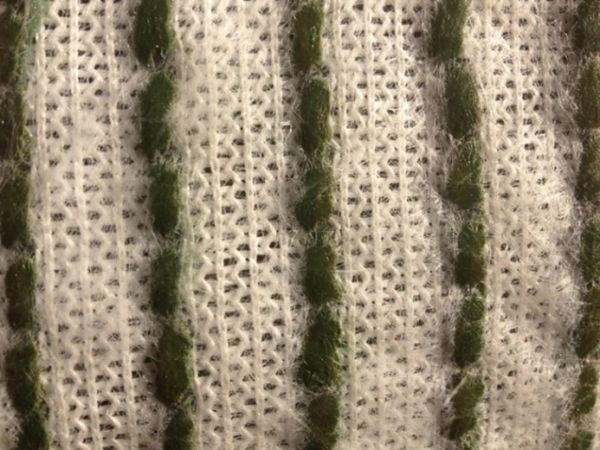
The POWERgrass hybrid system consists in the use of synthetic grass with an ad hoc, non-biodegradable, draining and breathable support over the entire surface. The three-dimensional structure of the support, where the artificial yarns are well fixed, forms numerous interconnected pores that allow the roots of the lawn to breathe, penetrate and grow even below the artificial support, in the sandy plant substrate.
Characteristics, more unique than rare, differentiate this hybrid grass from all existing mixed or reinforced grass systems!
The POWERgrass project is not just an alternative to other hybrid systems that aim to strengthen the grass to play a few more hours during the playing season, without tearing up the clumps of grass in professional stadiums.
The POWERgrass project, while maintaining the gaming prerogatives that professionals love, aims to offer a playing field for over 1000 hours a year which corresponds to the market demand of almost all amateur clubs and professional training fields, and this is possible thanks to an innovation that combines more unique than rare characteristics, the subject of four invention patents, which allow:
- increase the lawn's resistance to wear and maintain the planar surface without holes, by fixing ("tuft lock") of strong and resistant synthetic fibers to the support (backing) which allow the fibers to be harrowed and protrude 20-30 mm onto the surface during clogging with the growth substrate; the fibers protruding on the surface aggregate the sandy substrate and protect the crowns of the natural grass plants from the players' cleats;
- triple the resistance to tearing of the clods, because the roots penetrate the backing and are anchored from the first growth period; this is possible because air circulation is ensured by an open, uniform support with a 3D structure, so the macro-pores are interconnected at different angles while, at the same time, the size and shape of the spaces prevent the sand from penetrating the backing, avoiding clogging and hardening of the support;
- double the multi-year durability, because the support is not biodegradable and is made from a special mesh that does not fray if punched by the tips of a Verti-Drain, to withstand multiple maintenance operations such as: deep aeration, grooming, removal of thatch, reseeding, fresh renewal of the natural covering etc.; if the turf is maintained regularly, the POWERgrass system is estimated to last over 20 years;
- improving playing comfort by providing a softer surface for players and improving the growth conditions of the sandy substrate which compacts less so that, in combination with the greater resistance to wear and tear of the grass clods, reduce maintenance interventions because the support is elastic and very soft and reduces surface hardness; at the same time the integration of gentle cork into the sand layer will reduce the specific weight of the substrate and favor gas exchange, water retention, rainwater infiltration, the softness of the sports surface and further reduce the compaction of the substrate.
The optimization of natural resources: sand, cork, zeolites and compost
The natural grass growing substrate is made from silica sand, which complies with USGA standards. In Italy sand is present near rivers and other sites where it is possible to extract it naturally.
In central Italy there is a mineral containing zeolite, an excellent mineral soil improver, and the production of compost is widespread throughout the peninsula. By mixing soil improvers with silica sand, it is possible to form a substrate suitable for lawn cultivation and resistant to trampling.
In the system, gentle cork grains are laid on top of the hybrid turf backing to soften the playing surface, reduce compaction and provide an insulating effect.

Insights
Write to Us
For any kind of request write to us.