
Precautions
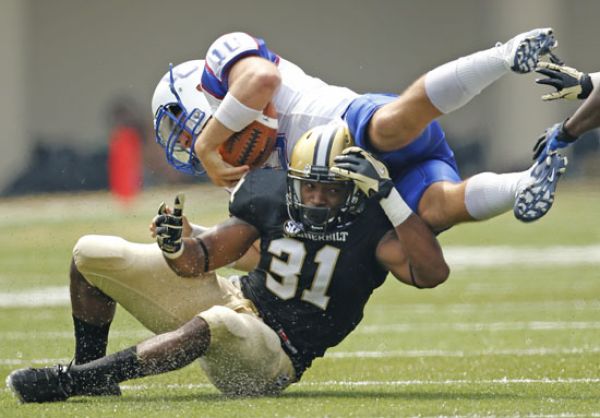
During the vegetative period, the POWERgrass natural lawn supports up to 7 hours of play per day, without suffering any particular damage
During the vegetative period, the natural POWERgrass lawn supports up to 7 hours of play per day, without suffering any particular damage, but it is advisable to reduce activity during the winter period, when the natural grass is dormant because it can slowly thin out, even if the fibres, present in high quantities, can guarantee a playable surface. POWERgrass mitigates the temperature change and protects the roots, thanks to its backing and greater biological activity, but playing on frozen ground must be avoided to avoid causing significant damage to the lawn and to preserve the health of the players.

General indications
If the climate is extreme, it is recommended to integrate a heating system in the root zone or cover the field with a non-woven geotextile during frosty nights and until late morning the following day, if the temperature is expected to be below -5°C for several hours during the night. If the frost persists even during the day, it is best to keep covered and suspend sporting activities.
For playing and training fields dedicated to professionals, it must be considered that athletic preparation begins a month earlier than for amateurs. In Italy, in the month of August and until mid-September we have high daytime and nighttime temperatures due to the growth of microthermal plants (Lolium Perenne, Poa Pratensis and Festuca Arundinacea) and the double stress of heat and intensive play can cause damage to the turf; therefore, it is best to use the field early in the morning to avoid excessive stress on the turf. If it is necessary to use it intensively with temperatures above 25°C, we recommend sowing macrotherms such as Bermudagrass (Cynodon Dactylon) or Paspalum Vaginatum if you find yourself in the presence of saline water.
It seems banal but it is worth repeating that the grass is resistant and recovers quickly in the POWERgrass hybrid system, as long as the game is distributed over the entire field. Therefore any static training is prohibited and you must move around the field every day, changing the training area. For example, stationary “skips” are extremely intensive on natural grass which can give way after a few hours. Concentrated training sessions should be arranged in different areas of the pitch each day, such as goalkeeper training, short passes of the ball, etc.
The person in charge of using the field must collect each object at the end of training and move the reference pins to different areas of the field the following day to distribute the weekly game load over the entire surface of the field. Where it is not possible to have a dedicated area for goalkeeper training, it is necessary to use movable goals, to be moved every day, to preserve the area of fixed goals, which are best used only for matches.
Resistance during the season and durability depends on the maintenance of the natural lawn
Also taking care not to cause damage to the synthetic turf.The balanced nourishment, combined with frequent interventions of raking for surface cleaning, light digging up to the backing to alleviate soil compaction and periodic localized reseeding of the most damaged areas, make it possible to mitigate and compensate for the stress of intensive play. Cultivation according to the HEALgreen method, together with careful water management for irrigation, allows you to maintain soil conditions in the range favorable for the roots and mitigate thermal stress. In this way, it is possible to reduce the need for specialist maintenance during the summer break and reduce overall maintenance costs and water consumption.
The correct use of the field and constant maintenance favors a rich and homogeneous lawn coverage, almost all year round. In this way, the natural lawn covers and protects the synthetic turf, which is not exposed to the sun as much and does not undergo the aging of the synthetic fibers by UV rays, especially in summer when the sun is stronger and hotter.
The lifespan of POWERgrass is therefore estimated at at least 20 years of intensive use, with some precautions regarding maintenance interventions to avoid irreversible damage to the backing and synthetic fibres.
Operations prohibited or to be carried out by POWERgrass technicians
For indicative but not exhaustive purposes, some prohibited operations are indicated, operations that must be followed by POWERgrass technicians and alternative cultivation solutions.
You must avoid aggressive scarifying with fixed or mobile blades. Furthermore, it is necessary to avoid repeated top-dressing which bury the synthetic fibers and consequently, the crowns of natural grass seedlings are not protected. Sandblasting, on natural lawns, usually serves to level the surface and close the small holes that players form in the playing field. This does not happen in POWERgrass, because we have never seen the need for top dressing.
Do not use disc seeders which can cut the fibres, but those with conical nails which tend to move the fibers together with the lawn. For obvious reasons, coring with empty punches and deep cuts with spikers are not permitted to prevent the artificial support from being excessively damaged. The grass roots tend to weld the cut back together, but there is a risk of lifting the sod along with the artificial grass during the operation.
For the Returfing operation, i.e. the removal of the natural grass together with the earth deposited on the surface and the reseeding from scratch every 3-4 years, consult exclusively the authorized POWERgrass technicians, under penalty of forfeiture of the system's 12-year warranty.
A very beneficial operation that POWERgrass strongly recommends is the frequent passage with the nail roller which penetrates the first 30-35 mm of the surface to alleviate compaction above the backing. Furthermore, the mechanical raking keeps the surface clean by removing the dirt that players generate from intensive play.
It is also possible to use the Verti-Drain periodically with thin 8 or 12 mm diameter nails, to loosen the soil in depth and make it more draining and softer. This operation is particularly suitable when the weather is excessively rainy.
For grass cutting use helical machines and generally follow the HEALgreen maintenance program, periodically consulting POWERgrass technicians.


Write to Us
(*)Hai bisogno di maggiori informazioni? Per qualsiasi tipo di necessità, scrivici.