Heat islands
Heat islands are urbanized areas that experience higher temperatures than peripheral areas.
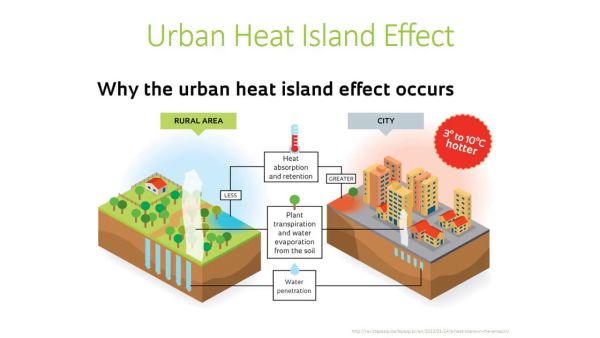
Structures such as buildings, roads and other infrastructure absorb and re-radiate the sun's heat more than natural landscapes such as forests and bodies of water. Urban areas, where these structures are highly concentrated and greenery is limited, become "islands" of higher temperatures than peripheral areas. Daytime temperatures in urban areas are approximately 0.50-4°C higher than temperatures in peripheral areas, and nighttime temperatures are approximately 1-3°C higher. A POWERgrass hybrid field of 8 thousand m2 manages to lower the temperature by 1°C for an equivalent volume of 372 apartments of 100 m2 or by 5°C for an equivalent volume of 75 apartments of 100 m2.
What are heat islands
The heat island phenomenon accelerates evaporation, increases energy consumption and air conditioning demand in the summer months, and puts pressure on urban ecosystems. Furthermore, it can contribute to increased levels of air pollution and greenhouse gas emissions. This phenomenon can have a significant impact on human health, leading to an increased risk of heart and respiratory diseases, as well as the risk of heat stroke and high temperatures for long periods.
To combat heat islands in the city, it is important to increase vegetation and improve the reflectivity of roofs and pavements. Green plants, trees and roofs not only provide shade, but also absorb and release moisture, reducing the surrounding temperature. Likewise, reflective materials on roofs and pavements can help reflect the sun's heat, reducing the amount of heat absorbed by the urban context.
Causes of heat islands
Thermal islands are formed due to several factors:
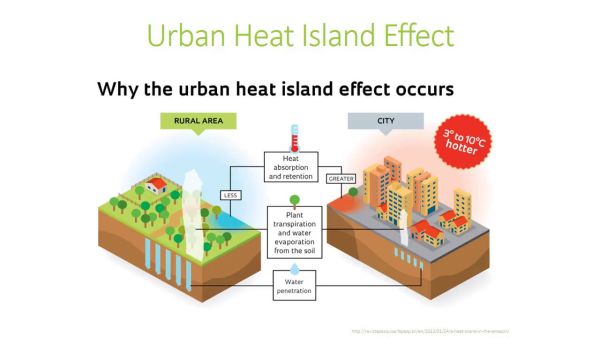
- Reduction of natural landscapes in urban areas. Trees, vegetation and bodies of water tend to cool the air by providing shade, transpiring water from plant leaves and evaporating surface water. Hard, dry surfaces in urban areas - such as rooftops, sidewalks, streets, buildings and parking lots - offer less shade and moisture than natural landscapes and therefore contribute to higher temperatures.
- Properties of urban materials. Conventional man-made materials used in urban environments, such as pavements or roofing, tend to reflect less solar energy, and absorb and emit more heat from the sun than trees, vegetation and other natural surfaces. Often, heat islands form during the day and become more pronounced after sunset due to the slow release of heat from urban materials.
- Urban geometry. The size and layout of buildings within a city influence wind flow and the ability of urban materials to absorb and release solar energy. In highly developed areas, surfaces and structures obstructed by nearby buildings become large thermal masses that cannot easily release their heat. Cities with many narrow streets and tall buildings become urban canyons, which can block natural wind flow that would bring cooling effects.
- Heat generated by human activities. Vehicles, air conditioning units, buildings and industrial plants all emit heat into the urban environment. These sources of human-generated, or anthropogenic, heat can contribute to heat island effects.
- Weather and Geography. Calm, clear weather conditions result in more severe heat islands by maximizing the amount of solar energy that reaches urban surfaces and minimizing the amount of heat that can be carried away. In contrast, strong winds and cloud cover suppress heat island formation. Geographical features can also influence the heat island effect. For example, nearby mountains can block wind from reaching a city, or create wind patterns that pass through a city.
Characteristics of heat islands
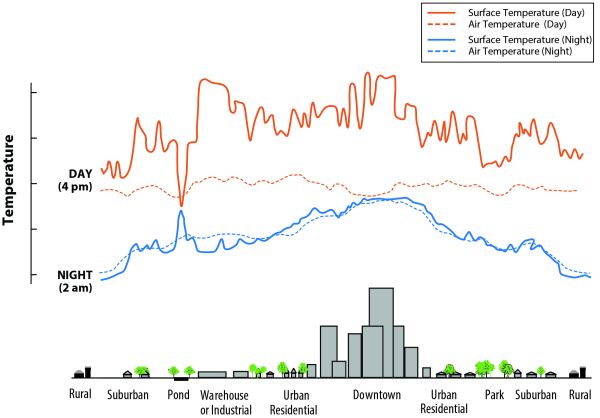
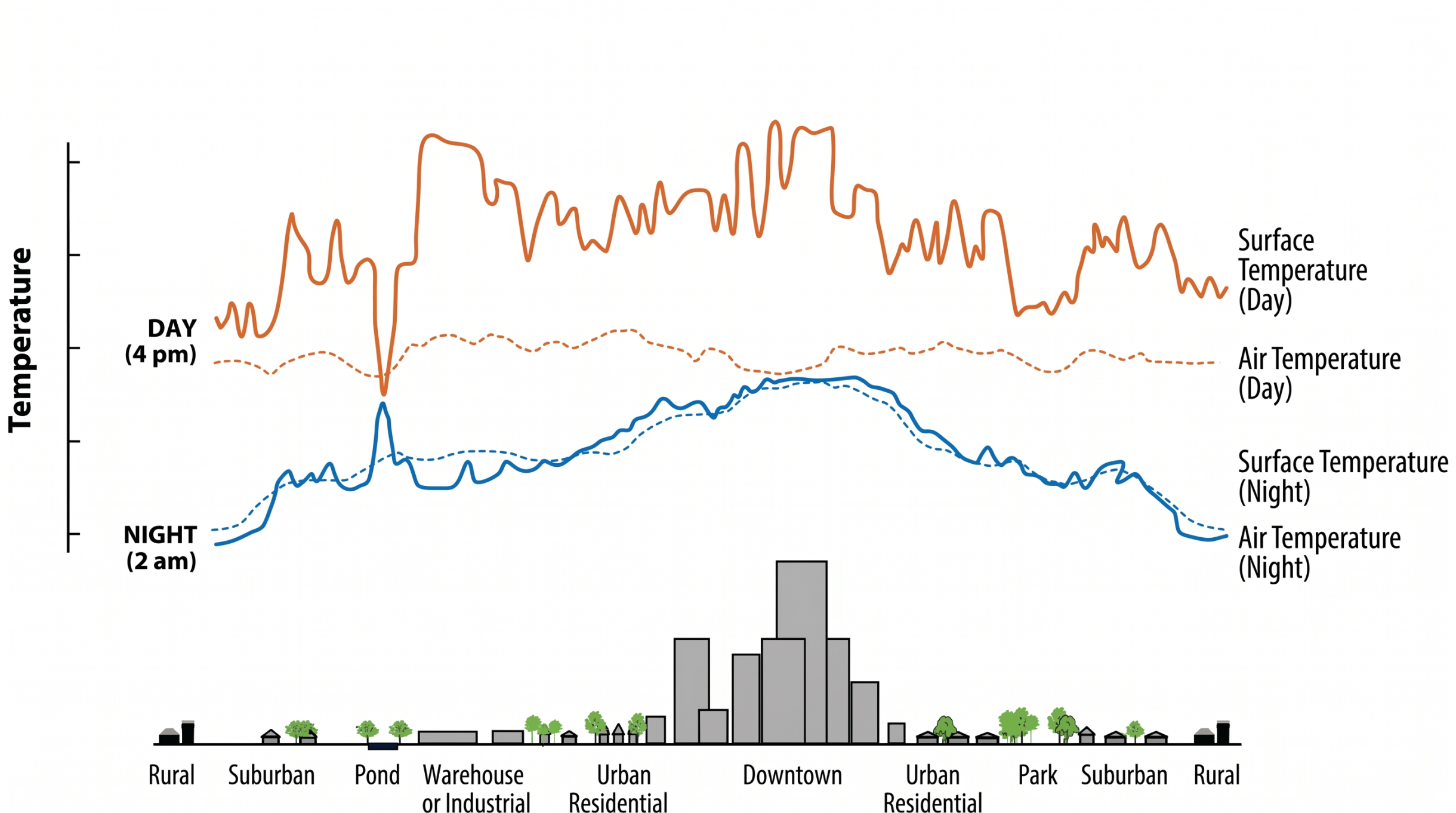
Heat islands are usually measured by the temperature difference between cities compared to surrounding areas. Temperature can also vary within a city. Some areas are hotter than others due to the uneven distribution of buildings and sidewalks that absorb heat, while other spaces remain cooler thanks to trees and vegetation. These temperature differences constitute intra-urban heat islands. In the heat island effect diagram, urban parks, ponds and residential areas are cooler than city center areas.
Surface temperatures vary more than atmospheric air temperatures during the day, but are usually similar at night. The dips and peaks in temperature at the surface of the pond area show how the water maintains a nearly constant temperature day and night because it does not absorb the sun's energy in the same way as buildings and paved surfaces. Parks, open land and bodies of water can create cooler areas within a city. Temperatures are generally lower on suburban-rural borders than in central city areas.
In general, temperatures are different on the surface of the earth and in the atmospheric air, higher up in the city. For this reason, there are two types of heat islands: surface heat islands and atmospheric heat islands. These differ in the ways in which they form, the techniques used to identify and measure them, their impacts and, to some extent, the methods available to cool them.
- Surface Heat Islands. These heat islands form because urban surfaces such as streets and roofs absorb and emit heat to a greater extent than most natural surfaces. On a hot day with a temperature of 33°C, conventional roofing materials can reach temperatures as much as 33°C higher than air temperatures. Surface heat islands tend to be more intense during the day when the sun is shining.
- Atmospheric Heat Islands. These heat islands form due to warmer air in urban areas compared to colder air in suburban areas. Atmospheric heat islands vary much less in intensity than surface heat islands.
Impact of heat islands
High temperatures resulting from heat islands can affect a community's environment and quality of life in many ways. Increased energy consumption, high emissions of air pollutants and greenhouse gases, compromising human health and comfort and even the quality of drinking water.Increased energy consumption
Heat islands generate a generalized rise in temperature which can have worrying consequences for the health of individuals, especially for the elderly, children, or people with chronic diseases. Prolonged or intense exposure to heat can in fact cause heat stroke, dehydration or worsen existing conditions such as cardiovascular or respiratory diseases.
High temperatures at night are also particularly problematic as they interfere with the body's normal thermoregulation during sleep. The heat at night can cause sleep disturbances, tiredness during the day, but in general serious repercussions on the quality of life and psycho-physical well-being of people.
Another aspect not to be overlooked is the increase in energy demand for cooling internal environments. During heat waves, increased consumption can cause power outages, with all the associated inconveniences. Furthermore, the constant use of air conditioning equipment can generate conditions of thermal discomfort, for example cancer when entering or leaving air-conditioned environments.
High emissions of air pollutants and greenhouse gases
As described above, heat islands increase electricity demand in the summer. Electricity companies typically rely on fossil fuel power plants to meet much of this demand, which in turn leads to increased emissions of air pollutants and greenhouse gases.
These pollutants are harmful to human health and also contribute to complex air quality problems such as the formation of ground-level ozone (smog), fine particulate matter, and acid rain. The increased use of fossil fuel-fired power plants also increases emissions of greenhouse gases, such as carbon dioxide, which contribute to global climate change.
In addition to their impact on energy-related emissions, elevated temperatures can directly increase the rate of ozone formation at ground level. Ground-level ozone forms when nitrogen oxides and volatile organic compounds react in the presence of sunlight and heat. If all other variables are equal, such as the level of precursor emissions in the air and the speed and direction of the wind, more ozone will form at ground level as the environment becomes sunnier and warmer.
Compromising human health and comfort
Heat islands contribute to higher daytime temperatures, reduce nighttime cooling and increase air pollution levels. These factors, in turn, contribute to heat-related deaths and heat-related illnesses such as general discomfort, difficulty breathing, heat cramps, heat exhaustion, and non-fatal heat stroke.
Heat islands can also accentuate the impact of natural heat waves, which are periods of abnormally hot and often humid weather. Sensitive populations are particularly at risk during these events.
- The elderly are among the most vulnerable to extreme heat events. Many physiological, psychological and socio-economic factors contribute to this danger. Older people are more likely to be in poor health, to be less mobile and more isolated, to be more sensitive to heat and to live on low incomes.
- Young children tend to be more susceptible to extreme heat due to their smaller size and other characteristics. Their faster breathing rate for their body size, time spent outdoors, and their developing respiratory systems make them more likely to suffer from aggravated asthma and other lung diseases caused by air pollution from ozone and smog, which usually increases during heat waves.
- Low-income populations are at greater risk of heat-related illnesses due to poor housing conditions, including lack of air conditioning and small living spaces, and insufficient resources to find alternative shelter during a heat wave.
- People who spend their working hours outdoors are more prone to conditions such as heat exhaustion and heat stroke. They have higher exposures to ozone air pollution and heat stress, especially if work activities involve great physical effort.
- People in poor health, including those with chronic conditions, disabilities, mobility limitations, and those taking certain medications, are vulnerable to extreme temperatures. People with diabetes, physical impairments and cognitive deficits are particularly at risk during heat waves.
Excessive heat events, or sudden and dramatic increases in temperature, are particularly dangerous and can result in above-average mortality rates. From 2004 to 2018, the Centers for Disease Control and Prevention recorded 10,527 heat-related deaths in the United States, an average of 702 per year. These numbers include deaths where heat was the primary cause and deaths where heat was a contributing cause.
Compromised water quality
High temperatures on sidewalk and roof surfaces can heat storm runoff, which flows into storm drains and raises the temperature of the water as it is released into streams, rivers, ponds and lakes. Water temperature affects all aspects of aquatic life, particularly the metabolism and reproduction of many aquatic species. Rapid temperature changes in aquatic ecosystems resulting from warm runoff water can be particularly stressful, and even fatal, to aquatic life.
One study found that urban streams are warmer on average than streams in forested areas, and that temperatures in urban streams increased more than 4°C during small storms due to runoff water heated by urban materials.
Green infrastructure is an option for cooling storm runoff and improving water quality. May include the use of downspout disconnects, rain gardens, plant boxes, bioswales, permeable paving, green streets and alleys, green car parks and green roofs; as well as land conservation efforts.
Source: Learn About Heat Islands | US EPA

Related topics
Environmental benefits
6 points of merit on our fields


Heat islands
Mitigation and green contribution

Foliar fertilization
What it is, design and application
Write to Us
For any kind of request write to us.