Field experience

Studies, research and experiments, systems or methods, have no value if they do not take place in a context of regular use: direct experience allows us to understand and prevent problems.
  • Published 28/02/2024   Attività
  •  by POWERgrass

Our experience ... is part of one of the most important sciences

Studies, research and testing of a product, system or method do not have much value if they do not take place in a context of regular use in a specific environment where, in addition to climatic variables, there are economic ones and above all technical-organisational ones. It is precisely the direct experience in multiple real situations that allows us to understand and prevent problems and adopt the most suitable solutions from a functional and maintenance point of view to meet the expectations of our customers.


Agronomy is a multidisciplinary field that deals with the application of scientific principles to agriculture. Agronomy includes aspects studied by disciplines such as biology, chemistry, physics, geology, pedology, ecology, economics, sociology, ethics, engineering, landscaping and design. In practical terms it is the set of techniques and technologies that are used to make the results of economic activities that use such knowledge more efficient and effective. Agronomy, as a science, also deals with the study of the consequences resulting from the abuse of certain cultural techniques. Wanting to formulate a complete and exhaustive definition of agronomy, it can be defined as: "applied science, which studies, adopts and applies knowledge, methods and technologies aimed at optimizing the yield of crops by acting on various production factors in order to improve the quality of products using appropriate technologies that are compatible with the environment, economically valid and which do not cause damage to the health of final consumers". The study and practical application of scientific knowledge deriving from different fields therefore give agronomy the importance of a applied technology. The application of agronomic techniques also requires - on a practical-operational level - knowledge of the basic principles of experimentation and research.

From the idea... to the experimentation.
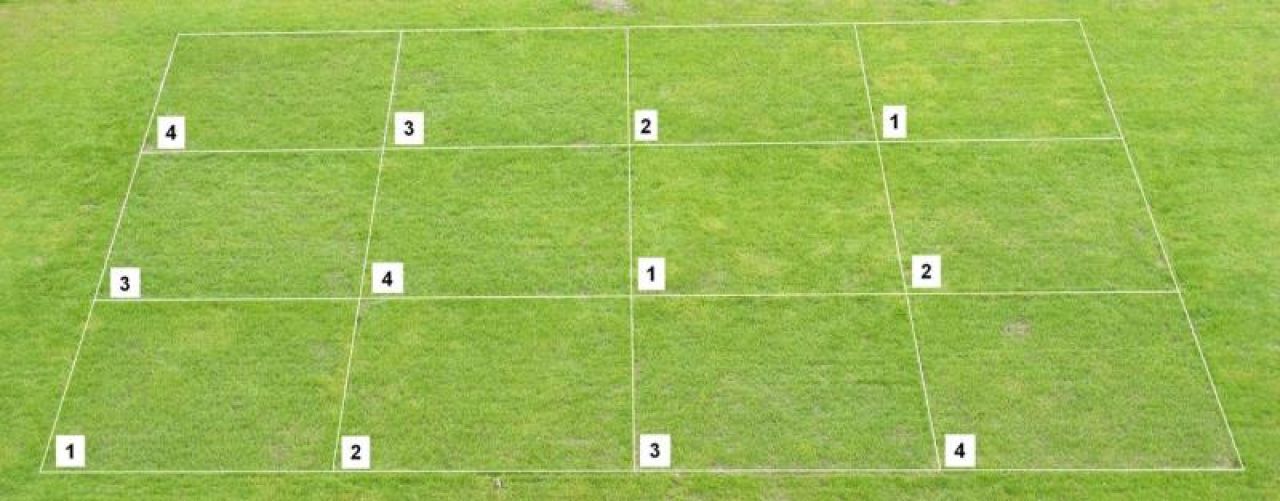
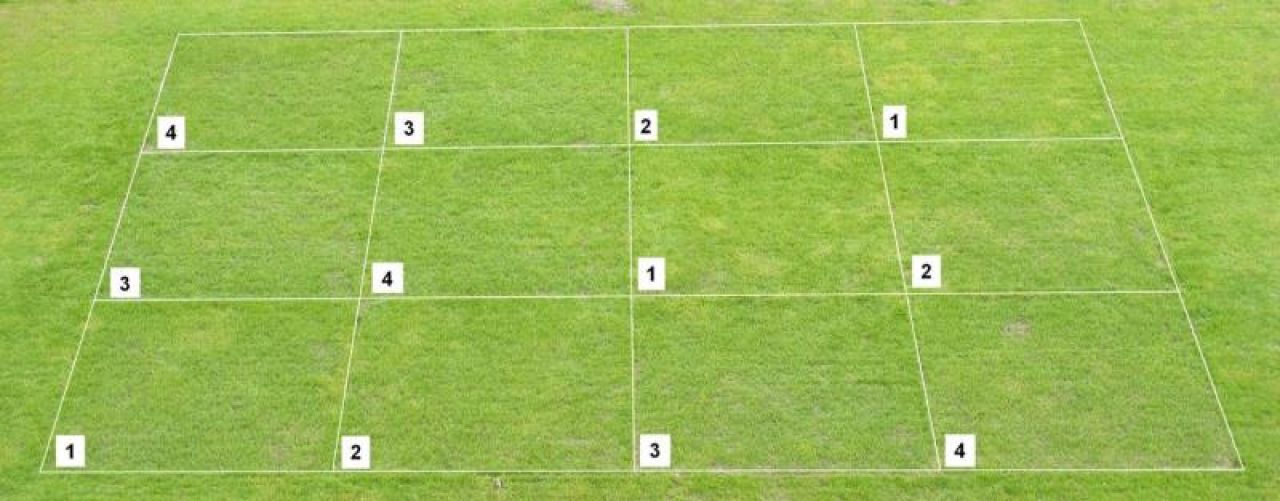
Enthusiastic, yes, but not naïve. Aware of the difficulties of coexistence between natural grass and synthetic grass in long-standing systems, we have experimented with multiple solutions to verify the behavior of the natural lawn over the course of the season. The results confirm the rule: if the roots breathe, they grow deep and the lawn is in excellent health.

After the first tests carried out in his company, Dr. Niko Sarris, by chance, was able to identify two types of supports suitable for creating a hybrid system, which would allow the roots to pass through them. Amazed by the first results, Sarris understood the value of the discovery and started tests in experimental fields in Germany and Italy. After a short period of growth, the area was subjected to the passage of the roller with cleats, to simulate the player's tread and after a few weeks the effectiveness of the idea was found.

Despite Sarris' studies, extensive experience and the luck of this unexpected discovery, his technical skills did not allow him to understand why. In search of answers, he confronted theProf. Claudio Di Prisco, professor of Civil, Environmental and Territorial Engineering at the Polytechnic of Milan who teaches Geotechnics for territorial defense. Professor Di Prisco was a beacon for Sarris, he explained to him the concepts and strength links between the various fabrics and nonwovens available in industry and applications in geotechnics and thus it was easier to identify those compatible for the growth of grass.
  Tags 

Field experience

powergrassAaa_Test_1166-IT1_1

Our experience ... is part of one of the most important sciences

  • 28/02/2024
  • Italgreen Landscape

Studies, research and testing of a product, system or method do not have much value if they do not take place in a context of regular use in a specific environment where, in addition to climatic variables, there are economic ones and above all technical-organisational ones. It is precisely the direct experience in multiple real situations that allows us to understand and prevent problems and adopt the most suitable solutions from a functional and maintenance point of view to meet the expectations of our customers.


Agronomy is a multidisciplinary field that deals with the application of scientific principles to agriculture. Agronomy includes aspects studied by disciplines such as biology, chemistry, physics, geology, pedology, ecology, economics, sociology, ethics, engineering, landscaping and design. In practical terms it is the set of techniques and technologies that are used to make the results of economic activities that use such knowledge more efficient and effective. Agronomy, as a science, also deals with the study of the consequences resulting from the abuse of certain cultural techniques. Wanting to formulate a complete and exhaustive definition of agronomy, it can be defined as: "applied science, which studies, adopts and applies knowledge, methods and technologies aimed at optimizing the yield of crops by acting on various production factors in order to improve the quality of products using appropriate technologies that are compatible with the environment, economically valid and which do not cause damage to the health of final consumers". The study and practical application of scientific knowledge deriving from different fields therefore give agronomy the importance of a applied technology. The application of agronomic techniques also requires - on a practical-operational level - knowledge of the basic principles of experimentation and research.

From the idea... to the experimentation.

Enthusiastic, yes, but not naïve. Aware of the difficulties of coexistence between natural grass and synthetic grass in long-standing systems, we have experimented with multiple solutions to verify the behavior of the natural lawn over the course of the season. The results confirm the rule: if the roots breathe, they grow deep and the lawn is in excellent health.

After the first tests carried out in his company, Dr. Niko Sarris, by chance, was able to identify two types of supports suitable for creating a hybrid system, which would allow the roots to pass through them. Amazed by the first results, Sarris understood the value of the discovery and started tests in experimental fields in Germany and Italy. After a short period of growth, the area was subjected to the passage of the roller with cleats, to simulate the player's tread and after a few weeks the effectiveness of the idea was found.

Despite Sarris' studies, extensive experience and the luck of this unexpected discovery, his technical skills did not allow him to understand why. In search of answers, he confronted theProf. Claudio Di Prisco, professor of Civil, Environmental and Territorial Engineering at the Polytechnic of Milan who teaches Geotechnics for territorial defense. Professor Di Prisco was a beacon for Sarris, he explained to him the concepts and strength links between the various fabrics and nonwovens available in industry and applications in geotechnics and thus it was easier to identify those compatible for the growth of grass.

Condividi su

Categorie

Tags

Archivio


Field experience

Attività / 28/02/2024

Our experience ... is part of one of the most important sciences

Studies, research and testing of a product, system or method do not have much value if they do not take place in a context of regular use in a specific environment where, in addition to climatic variables, there are economic ones and above all technical-organisational ones. It is precisely the direct experience in multiple real situations that allows us to understand and prevent problems and adopt the most suitable solutions from a functional and maintenance point of view to meet the expectations of our customers.


Agronomy is a multidisciplinary field that deals with the application of scientific principles to agriculture. Agronomy includes aspects studied by disciplines such as biology, chemistry, physics, geology, pedology, ecology, economics, sociology, ethics, engineering, landscaping and design. In practical terms it is the set of techniques and technologies that are used to make the results of economic activities that use such knowledge more efficient and effective. Agronomy, as a science, also deals with the study of the consequences resulting from the abuse of certain cultural techniques. Wanting to formulate a complete and exhaustive definition of agronomy, it can be defined as: "applied science, which studies, adopts and applies knowledge, methods and technologies aimed at optimizing the yield of crops by acting on various production factors in order to improve the quality of products using appropriate technologies that are compatible with the environment, economically valid and which do not cause damage to the health of final consumers". The study and practical application of scientific knowledge deriving from different fields therefore give agronomy the importance of a applied technology. The application of agronomic techniques also requires - on a practical-operational level - knowledge of the basic principles of experimentation and research.

From the idea... to the experimentation.

Enthusiastic, yes, but not naïve. Aware of the difficulties of coexistence between natural grass and synthetic grass in long-standing systems, we have experimented with multiple solutions to verify the behavior of the natural lawn over the course of the season. The results confirm the rule: if the roots breathe, they grow deep and the lawn is in excellent health.

After the first tests carried out in his company, Dr. Niko Sarris, by chance, was able to identify two types of supports suitable for creating a hybrid system, which would allow the roots to pass through them. Amazed by the first results, Sarris understood the value of the discovery and started tests in experimental fields in Germany and Italy. After a short period of growth, the area was subjected to the passage of the roller with cleats, to simulate the player's tread and after a few weeks the effectiveness of the idea was found.

Despite Sarris' studies, extensive experience and the luck of this unexpected discovery, his technical skills did not allow him to understand why. In search of answers, he confronted theProf. Claudio Di Prisco, professor of Civil, Environmental and Territorial Engineering at the Polytechnic of Milan who teaches Geotechnics for territorial defense. Professor Di Prisco was a beacon for Sarris, he explained to him the concepts and strength links between the various fabrics and nonwovens available in industry and applications in geotechnics and thus it was easier to identify those compatible for the growth of grass.

Pubblicato il 31 Mar, 2026