How many times do you hear about ordinary and extraordinary maintenance? The same terms also apply when dealing with tax incentives, renovation bonuses and urban planning concessions. However, the law has never made any effort to define these terms precisely. And so, the boundaries between the two types of "maintenance" are sometimes uncertain and ambiguous, so much so that they often give rise to arguments that result in court cases. Let us then try to clarify the aspects of these hypotheses, which are extremely different also in terms of effects.
In construction, ordinary maintenance consists of repair, renovation and replacement of building finishes (doors, windows, floors). The interventions necessary to integrate or maintain the efficiency of existing technological systems, such as, for example, the electrical or heating system, are also considered "ordinary maintenance".
The guide text for identifying which works fall within ordinary maintenance and which ones fall within the other categories (extraordinary maintenance, restoration and conservative rehabilitation, building renovation) is the Consolidated Building Law. This legislation clarifies that this category includes building repair work (for example, replacement of tiles in the roof) and maintenance of efficiency (for example repair of the electrical system or replacement of the boiler).
On the other hand, in general, when an element of innovation is added to the simple replacement of a component, we move from ordinary maintenance to extraordinary maintenance. Thus, for example, anyone who replaces the old boiler with a new condensing model carries out extraordinary maintenance. Furthermore, any intervention on the walls falls under extraordinary maintenance.
On the contrary, they are ordinary maintenance interventions, the replacement of doors, fixtures, floors and bathroom fixtures.
The construction category of extraordinary maintenance includes the works and modifications necessary to renew, through replacement, even structural parts of the buildings. The creation and integration of toilet and technological services is also classified as extraordinary maintenance.
Extraordinary maintenance is a category of building interventions between ordinary maintenance and renovations. Unlike ordinary maintenance, "extraordinary" maintenance must always contain an element of innovation.
Let's take an example: if you decide to replace the windows in your home with a new model but identical to the previous one, it falls under ordinary maintenance; on the contrary, if the new window is made of different material (from wood to PVC, for example) the intervention becomes extraordinary maintenance. However, when you intervene in a more incisive way by creating new spaces (for example by adding a balcony), or by changing the intended use of a property (from home to office), you go beyond the threshold of extraordinary maintenance and fall into other categories (restoration or conservative renovation or building renovation).
The guiding legislation for identifying the exact building category is the Consolidated Building Act. However, state regulations must be integrated with regional laws and building regulations, which from an urban planning point of view can intervene and modify the authorizations necessary for some interventions.
Continuing to give some concrete examples: the renovation of bathrooms can be classified as extraordinary maintenance if, in addition to the simple replacement of bathroom fixtures or tiles, it also includes some innovations, such as, for example, moving partitions or widening a door. Extraordinary maintenance also includes the replacement of windows with changes to the shape, the installation of elevators, and the repair, with innovations, of the facade.
In principle, all energy saving interventions also fall into this category. Among others, for example, the replacement of a boiler with a condensing model, the installation of solar thermal panels for the production of hot water or photovoltaic panels, the renovation of the attics with innovations.
In turf maintenance plans, the distinction is often made between ordinary and extraordinary maintenance simply based on the frequency of interventions which is completely inadequate for a whole series of reasons. In the past, the decompaction of the soil in natural fields took place at the end of the championship together with additional reseeding and sandblasting to restore the parts damaged by playing activity but this was fine on lawns cultivated in soil and used twice a month for official matches. This distinction is also due to the fact that amateur football clubs, due to a lack of skills and means of cultivation, were not able to carry out the work directly so they had to rely on specialized companies.
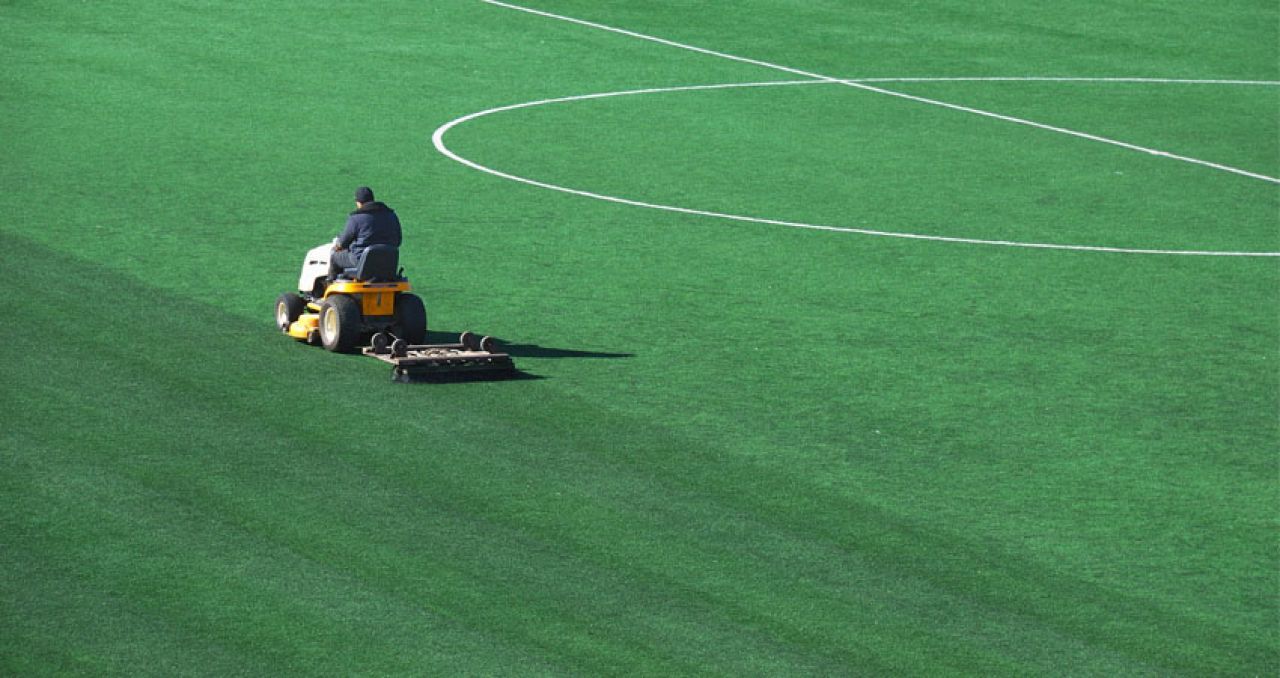
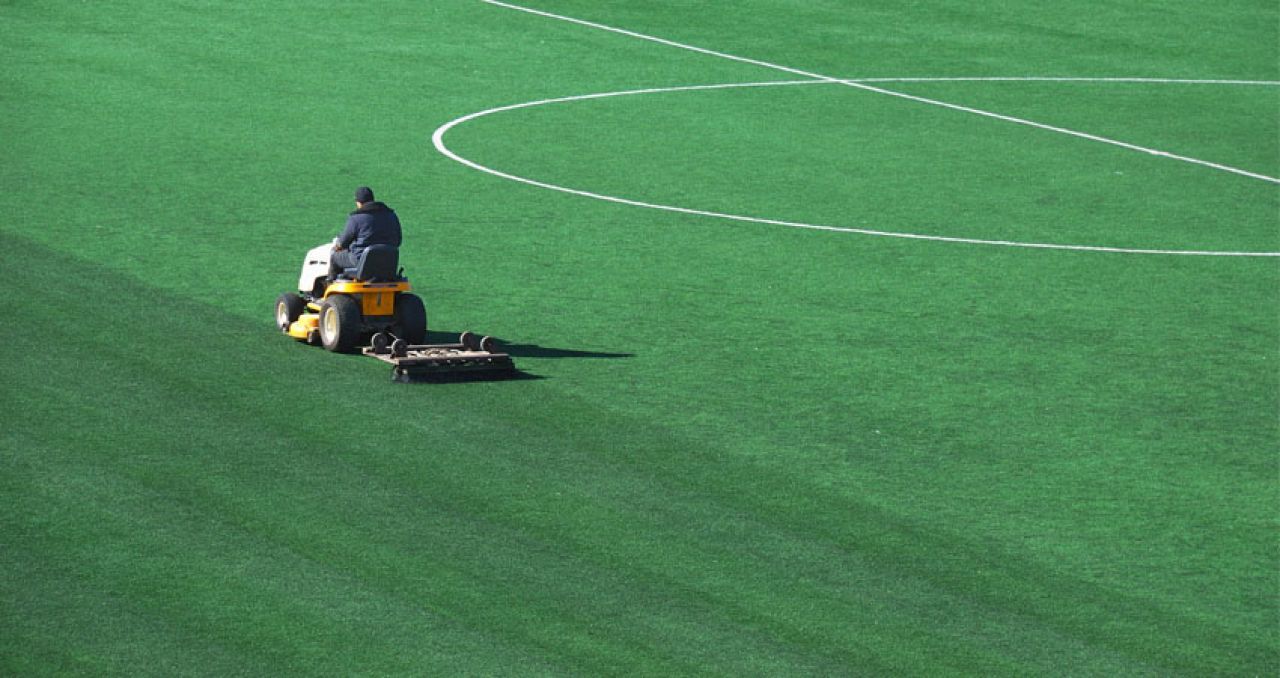
In synthetic fields, extraordinary maintenance means cleaning the channels, decompaction and performance restoration which also in this case must be equipped. However, with an increase in the intensity of the game, it was realized that the biggest problem is the compaction of the pitch which makes the surface harder. Today we are aware that we need to intervene several times during the season to alleviate compaction and restore optimal playing conditions while also promoting player safety. In the case of turf, decompaction of the soil together with other cultivation methods allows for healthier and more luxuriant growth because the roots can proliferate and make the soil softer. There is therefore a correlation between ordinary maintenance and more occasional maintenance which, with an increase in playing intensity, must be done more and more often.
Instead of extraordinary, we can therefore speak of specialist maintenance of those interventions that require specialized machinery, which are carried out occasionally, depending on the intensity of use of the field.
But even in this case, it is still difficult to set boundaries because it significantly impacts the duration of the field therefore, following the same terms as construction, on grass pitches all operations aimed at the conservation and replacement of damaged pieces fall within the scope of ordinary maintenance. Making an analogy of the tiles, the replacement of the natural grass turf of the entire field also falls within the ordinary maintenance interventions unless an innovative factor of the new turf is integrated, such as the reinforced/mixed/hybrid natural grass turf.
In synthetic turfs, replacing the system with an equivalent one falls within the scope of ordinary maintenance. Instead, interventions to replace the type of covering with one with innovative characteristics that differ significantly from the previous one fall under extraordinary maintenance. For example, by moving from a natural pitch to a hybrid pitch, or from a synthetic pitch with rubber infill to one with a more eco-friendly organic infill, maintaining the same measurements, substrates and drainage systems we are in the field of extraordinary maintenance.
When, however, the replacement of the substrate and systems is also foreseen, this constitutes a renovation intervention that goes beyond the limits of extraordinary maintenance. In this case, the replacement of the clods is a consequence of the restructuring of the field which acts on the subgrade to modify its characteristics, for example, going from a field cultivated on agricultural land to a field cultivated in sand, thus also redoing the drainage system.
Furthermore, when the field changes position or dimensions, therefore, it requires a modification to the subfloor and the drainage system, the threshold of extraordinary maintenance is exceeded and it falls into other categories (restoration or conservative rehabilitation or renovation).
On natural grass fields it doesn't make much sense to distinguish between ordinary and extraordinary maintenance operations because the deterioration of the natural grass depends on what you do on a daily basis and can happen in a very short time. From a strategic point of view, the natural grass field must be designed and built according to the frequency of use and the consequent maintenance, otherwise it falls within the scope of protection of design error.
The entirely synthetic field, on the other hand, must be redone every ten years or so and over the course of such a long time, it is expected that technological development will offer innovative characteristics, therefore, that the new system will have different characteristics compared to 10 years before but, we must be careful that, in some cases, there is no innovation. You must therefore be careful when you stipulate a maintenance contract because you are always obliged to replace damaged parts except for natural wear or aging.
The entirely synthetic pitch does not require skills in the care of natural greenery but includes a series of interventions aimed at ensuring the pitch is efficient through brushing with a minimum frequency every 20-30 hours of use by a squad of 22-25 players, the decompaction of the infill with frequency every 40-60 hours of use and the replenishment of the performance infill with annual cadence designed to maintain the free fiber at a maximum height of 15 mm above the settled infill. The decompaction of the infill, in addition to restoring the efficiency of the field, is useful for maintaining the vertical infiltration of water towards the drainage layers, limiting the horizontal flow over the covering of the infill towards the drains because the risk of damage from bad weather is high. The life cycle of the synthetic turf depends on wear and tear but also on exposure to the sun but, as soon as the fiber starts to wear out, it is necessary to replace the turf every 8-10 years (extraordinary maintenance), so the savings obtained in ordinary maintenance do not compensate for the amortization cost.
The game of football tends to concentrate greater playing activity in the goalkeeper's area and in the center of the pitch where we gather for training and often these areas are excluded from the guarantee even of synthetic pitches. If goalkeeper training takes place on fixed goals almost every day, sooner or later the sports surface requires replacement which falls within the scope of ordinary maintenance, even in the case of synthetic turf. Although on the natural pitch the earth hole forms after a few weeks, on the hybrid pitch the natural grass disappears, on the synthetic pitch there is no evidence of immediate wear but every few years it is necessary to replace the entire turf in the goalkeeper's area. In all three cases the surface becomes hard and inadequate for the safety of the goalkeeper and the players. To avoid these inconveniences, it is a good idea to have mobile goals and move them to different areas of the pitch at each training session.
The ordinary maintenance of a natural, hybrid or synthetic pitch requires the consumption of almost equivalent energy, materials and water resources and so the environmental impact is similar but, without a doubt, it guarantees greater usability and safety and reduces the risk of costly interventions. The work to replace the turf of natural grass or the synthetic turf favors and creates waste and has a more negative impact on the environment than maintenance operations because a considerable amount of time is required movement of construction and transport vehicles.
On the other hand, it is necessary to guarantee the usability of the field according to needs throughout the season so it is necessary to have a detailed design that also includes maintenance but, since there are many variables, it is good to agree on the methods and the burdens and duties to avoid failures and discussions later.
In the 2015 Paris climate agreements and in the latest commitment made by European countries, the regulatory orientation requires a concrete green solution to truly reduce CO2 emissions by at least 55% until 2030 and zero until 2050.
The hybrid project system solution allows you to combine the advantages of both surfaces: the ordinary maintenance of the hybrid field requires greater skills and consistency compared to a synthetic field but the usability of the field is assured. The greater burden on ordinary maintenance is largely offset by the reduction on extraordinary maintenance and environmental impact. Despite the intensive use of the pitch, ecological maintenance plans for the natural grass can be implemented so that the environmental impact becomes positive. The initial investment can be amortized over 20 years but the useful life of the field can continue because the system does not have a peremptory deadline, thus offering further savings to the investor and the environment; in case of replacement the field can be reused.
The hybrid system of the project is sustainable because it provides a highly usable field, with a double duration over time and mitigates the risks of climate change because it absorbs and slows down the flow of rainwater towards the drains, preventing soil erosion and damage to the sports field by aggregating the two surfaces together.
The “Campi Sicuri” project was inspired on this basis to improve the quality and safety of playing surfaces, following the principles of the circular economy with the strategic objective of promoting employment and the environment.
It is therefore necessary to invest in the installation of effective hybrid grass fields, in the maintenance of the playing surfaces and facilities as well as in the management of the entire sports center having a holistic vision of the work without distinctions between ordinary and extraordinary, otherwise the main objective will be lost.
How many times do you hear about ordinary and extraordinary maintenance? The same terms also apply when dealing with tax incentives, renovation bonuses and urban planning concessions. However, the law has never made any effort to define these terms precisely. And so, the boundaries between the two types of "maintenance" are sometimes uncertain and ambiguous, so much so that they often give rise to arguments that result in court cases. Let us then try to clarify the aspects of these hypotheses, which are extremely different also in terms of effects.
In construction, ordinary maintenance consists of repair, renovation and replacement of building finishes (doors, windows, floors). The interventions necessary to integrate or maintain the efficiency of existing technological systems, such as, for example, the electrical or heating system, are also considered "ordinary maintenance".
The guide text for identifying which works fall within ordinary maintenance and which ones fall within the other categories (extraordinary maintenance, restoration and conservative rehabilitation, building renovation) is the Consolidated Building Law. This legislation clarifies that this category includes building repair work (for example, replacement of tiles in the roof) and maintenance of efficiency (for example repair of the electrical system or replacement of the boiler).
On the other hand, in general, when an element of innovation is added to the simple replacement of a component, we move from ordinary maintenance to extraordinary maintenance. Thus, for example, anyone who replaces the old boiler with a new condensing model carries out extraordinary maintenance. Furthermore, any intervention on the walls falls under extraordinary maintenance.
On the contrary, they are ordinary maintenance interventions, the replacement of doors, fixtures, floors and bathroom fixtures.
The construction category of extraordinary maintenance includes the works and modifications necessary to renew, through replacement, even structural parts of the buildings. The creation and integration of toilet and technological services is also classified as extraordinary maintenance.
Extraordinary maintenance is a category of building interventions between ordinary maintenance and renovations. Unlike ordinary maintenance, "extraordinary" maintenance must always contain an element of innovation.
Let's take an example: if you decide to replace the windows in your home with a new model but identical to the previous one, it falls under ordinary maintenance; on the contrary, if the new window is made of different material (from wood to PVC, for example) the intervention becomes extraordinary maintenance. However, when you intervene in a more incisive way by creating new spaces (for example by adding a balcony), or by changing the intended use of a property (from home to office), you go beyond the threshold of extraordinary maintenance and fall into other categories (restoration or conservative renovation or building renovation).
The guiding legislation for identifying the exact building category is the Consolidated Building Act. However, state regulations must be integrated with regional laws and building regulations, which from an urban planning point of view can intervene and modify the authorizations necessary for some interventions.
Continuing to give some concrete examples: the renovation of bathrooms can be classified as extraordinary maintenance if, in addition to the simple replacement of bathroom fixtures or tiles, it also includes some innovations, such as, for example, moving partitions or widening a door. Extraordinary maintenance also includes the replacement of windows with changes to the shape, the installation of elevators, and the repair, with innovations, of the facade.
In principle, all energy saving interventions also fall into this category. Among others, for example, the replacement of a boiler with a condensing model, the installation of solar thermal panels for the production of hot water or photovoltaic panels, the renovation of the attics with innovations.
In turf maintenance plans, the distinction is often made between ordinary and extraordinary maintenance simply based on the frequency of interventions which is completely inadequate for a whole series of reasons. In the past, the decompaction of the soil in natural fields took place at the end of the championship together with additional reseeding and sandblasting to restore the parts damaged by playing activity but this was fine on lawns cultivated in soil and used twice a month for official matches. This distinction is also due to the fact that amateur football clubs, due to a lack of skills and means of cultivation, were not able to carry out the work directly so they had to rely on specialized companies.
In synthetic fields, extraordinary maintenance means cleaning the channels, decompaction and performance restoration which also in this case must be equipped. However, with an increase in the intensity of the game, it was realized that the biggest problem is the compaction of the pitch which makes the surface harder. Today we are aware that we need to intervene several times during the season to alleviate compaction and restore optimal playing conditions while also promoting player safety. In the case of turf, decompaction of the soil together with other cultivation methods allows for healthier and more luxuriant growth because the roots can proliferate and make the soil softer. There is therefore a correlation between ordinary maintenance and more occasional maintenance which, with an increase in playing intensity, must be done more and more often.
Instead of extraordinary, we can therefore speak of specialist maintenance of those interventions that require specialized machinery, which are carried out occasionally, depending on the intensity of use of the field.
But even in this case, it is still difficult to set boundaries because it significantly impacts the duration of the field therefore, following the same terms as construction, on grass pitches all operations aimed at the conservation and replacement of damaged pieces fall within the scope of ordinary maintenance. Making an analogy of the tiles, the replacement of the natural grass turf of the entire field also falls within the ordinary maintenance interventions unless an innovative factor of the new turf is integrated, such as the reinforced/mixed/hybrid natural grass turf.
In synthetic turfs, replacing the system with an equivalent one falls within the scope of ordinary maintenance. Instead, interventions to replace the type of covering with one with innovative characteristics that differ significantly from the previous one fall under extraordinary maintenance. For example, by moving from a natural pitch to a hybrid pitch, or from a synthetic pitch with rubber infill to one with a more eco-friendly organic infill, maintaining the same measurements, substrates and drainage systems we are in the field of extraordinary maintenance.
When, however, the replacement of the substrate and systems is also foreseen, this constitutes a renovation intervention that goes beyond the limits of extraordinary maintenance. In this case, the replacement of the clods is a consequence of the restructuring of the field which acts on the subgrade to modify its characteristics, for example, going from a field cultivated on agricultural land to a field cultivated in sand, thus also redoing the drainage system.
Furthermore, when the field changes position or dimensions, therefore, it requires a modification to the subfloor and the drainage system, the threshold of extraordinary maintenance is exceeded and it falls into other categories (restoration or conservative rehabilitation or renovation).
On natural grass fields it doesn't make much sense to distinguish between ordinary and extraordinary maintenance operations because the deterioration of the natural grass depends on what you do on a daily basis and can happen in a very short time. From a strategic point of view, the natural grass field must be designed and built according to the frequency of use and the consequent maintenance, otherwise it falls within the scope of protection of design error.
The entirely synthetic field, on the other hand, must be redone every ten years or so and over the course of such a long time, it is expected that technological development will offer innovative characteristics, therefore, that the new system will have different characteristics compared to 10 years before but, we must be careful that, in some cases, there is no innovation. You must therefore be careful when you stipulate a maintenance contract because you are always obliged to replace damaged parts except for natural wear or aging.
The entirely synthetic pitch does not require skills in the care of natural greenery but includes a series of interventions aimed at ensuring the pitch is efficient through brushing with a minimum frequency every 20-30 hours of use by a squad of 22-25 players, the decompaction of the infill with frequency every 40-60 hours of use and the replenishment of the performance infill with annual cadence designed to maintain the free fiber at a maximum height of 15 mm above the settled infill. The decompaction of the infill, in addition to restoring the efficiency of the field, is useful for maintaining the vertical infiltration of water towards the drainage layers, limiting the horizontal flow over the covering of the infill towards the drains because the risk of damage from bad weather is high. The life cycle of the synthetic turf depends on wear and tear but also on exposure to the sun but, as soon as the fiber starts to wear out, it is necessary to replace the turf every 8-10 years (extraordinary maintenance), so the savings obtained in ordinary maintenance do not compensate for the amortization cost.
The game of football tends to concentrate greater playing activity in the goalkeeper's area and in the center of the pitch where we gather for training and often these areas are excluded from the guarantee even of synthetic pitches. If goalkeeper training takes place on fixed goals almost every day, sooner or later the sports surface requires replacement which falls within the scope of ordinary maintenance, even in the case of synthetic turf. Although on the natural pitch the earth hole forms after a few weeks, on the hybrid pitch the natural grass disappears, on the synthetic pitch there is no evidence of immediate wear but every few years it is necessary to replace the entire turf in the goalkeeper's area. In all three cases the surface becomes hard and inadequate for the safety of the goalkeeper and the players. To avoid these inconveniences, it is a good idea to have mobile goals and move them to different areas of the pitch at each training session.
The ordinary maintenance of a natural, hybrid or synthetic pitch requires the consumption of almost equivalent energy, materials and water resources and so the environmental impact is similar but, without a doubt, it guarantees greater usability and safety and reduces the risk of costly interventions. The work to replace the turf of natural grass or the synthetic turf favors and creates waste and has a more negative impact on the environment than maintenance operations because a considerable amount of time is required movement of construction and transport vehicles.
On the other hand, it is necessary to guarantee the usability of the field according to needs throughout the season so it is necessary to have a detailed design that also includes maintenance but, since there are many variables, it is good to agree on the methods and the burdens and duties to avoid failures and discussions later.
In the 2015 Paris climate agreements and in the latest commitment made by European countries, the regulatory orientation requires a concrete green solution to truly reduce CO2 emissions by at least 55% until 2030 and zero until 2050.
The hybrid project system solution allows you to combine the advantages of both surfaces: the ordinary maintenance of the hybrid field requires greater skills and consistency compared to a synthetic field but the usability of the field is assured. The greater burden on ordinary maintenance is largely offset by the reduction on extraordinary maintenance and environmental impact. Despite the intensive use of the pitch, ecological maintenance plans for the natural grass can be implemented so that the environmental impact becomes positive. The initial investment can be amortized over 20 years but the useful life of the field can continue because the system does not have a peremptory deadline, thus offering further savings to the investor and the environment; in case of replacement the field can be reused.
The hybrid system of the project is sustainable because it provides a highly usable field, with a double duration over time and mitigates the risks of climate change because it absorbs and slows down the flow of rainwater towards the drains, preventing soil erosion and damage to the sports field by aggregating the two surfaces together.
The “Campi Sicuri” project was inspired on this basis to improve the quality and safety of playing surfaces, following the principles of the circular economy with the strategic objective of promoting employment and the environment.
It is therefore necessary to invest in the installation of effective hybrid grass fields, in the maintenance of the playing surfaces and facilities as well as in the management of the entire sports center having a holistic vision of the work without distinctions between ordinary and extraordinary, otherwise the main objective will be lost.
How many times do you hear about ordinary and extraordinary maintenance? The same terms also apply when dealing with tax incentives, renovation bonuses and urban planning concessions. However, the law has never made any effort to define these terms precisely. And so, the boundaries between the two types of "maintenance" are sometimes uncertain and ambiguous, so much so that they often give rise to arguments that result in court cases. Let us then try to clarify the aspects of these hypotheses, which are extremely different also in terms of effects.
In construction, ordinary maintenance consists of repair, renovation and replacement of building finishes (doors, windows, floors). The interventions necessary to integrate or maintain the efficiency of existing technological systems, such as, for example, the electrical or heating system, are also considered "ordinary maintenance".
The guide text for identifying which works fall within ordinary maintenance and which ones fall within the other categories (extraordinary maintenance, restoration and conservative rehabilitation, building renovation) is the Consolidated Building Law. This legislation clarifies that this category includes building repair work (for example, replacement of tiles in the roof) and maintenance of efficiency (for example repair of the electrical system or replacement of the boiler).
On the other hand, in general, when an element of innovation is added to the simple replacement of a component, we move from ordinary maintenance to extraordinary maintenance. Thus, for example, anyone who replaces the old boiler with a new condensing model carries out extraordinary maintenance. Furthermore, any intervention on the walls falls under extraordinary maintenance.
On the contrary, they are ordinary maintenance interventions, the replacement of doors, fixtures, floors and bathroom fixtures.
The construction category of extraordinary maintenance includes the works and modifications necessary to renew, through replacement, even structural parts of the buildings. The creation and integration of toilet and technological services is also classified as extraordinary maintenance.
Extraordinary maintenance is a category of building interventions between ordinary maintenance and renovations. Unlike ordinary maintenance, "extraordinary" maintenance must always contain an element of innovation.
Let's take an example: if you decide to replace the windows in your home with a new model but identical to the previous one, it falls under ordinary maintenance; on the contrary, if the new window is made of different material (from wood to PVC, for example) the intervention becomes extraordinary maintenance. However, when you intervene in a more incisive way by creating new spaces (for example by adding a balcony), or by changing the intended use of a property (from home to office), you go beyond the threshold of extraordinary maintenance and fall into other categories (restoration or conservative renovation or building renovation).
The guiding legislation for identifying the exact building category is the Consolidated Building Act. However, state regulations must be integrated with regional laws and building regulations, which from an urban planning point of view can intervene and modify the authorizations necessary for some interventions.
Continuing to give some concrete examples: the renovation of bathrooms can be classified as extraordinary maintenance if, in addition to the simple replacement of bathroom fixtures or tiles, it also includes some innovations, such as, for example, moving partitions or widening a door. Extraordinary maintenance also includes the replacement of windows with changes to the shape, the installation of elevators, and the repair, with innovations, of the facade.
In principle, all energy saving interventions also fall into this category. Among others, for example, the replacement of a boiler with a condensing model, the installation of solar thermal panels for the production of hot water or photovoltaic panels, the renovation of the attics with innovations.
In turf maintenance plans, the distinction is often made between ordinary and extraordinary maintenance simply based on the frequency of interventions which is completely inadequate for a whole series of reasons. In the past, the decompaction of the soil in natural fields took place at the end of the championship together with additional reseeding and sandblasting to restore the parts damaged by playing activity but this was fine on lawns cultivated in soil and used twice a month for official matches. This distinction is also due to the fact that amateur football clubs, due to a lack of skills and means of cultivation, were not able to carry out the work directly so they had to rely on specialized companies.
In synthetic fields, extraordinary maintenance means cleaning the channels, decompaction and performance restoration which also in this case must be equipped. However, with an increase in the intensity of the game, it was realized that the biggest problem is the compaction of the pitch which makes the surface harder. Today we are aware that we need to intervene several times during the season to alleviate compaction and restore optimal playing conditions while also promoting player safety. In the case of turf, decompaction of the soil together with other cultivation methods allows for healthier and more luxuriant growth because the roots can proliferate and make the soil softer. There is therefore a correlation between ordinary maintenance and more occasional maintenance which, with an increase in playing intensity, must be done more and more often.
Instead of extraordinary, we can therefore speak of specialist maintenance of those interventions that require specialized machinery, which are carried out occasionally, depending on the intensity of use of the field.
But even in this case, it is still difficult to set boundaries because it significantly impacts the duration of the field therefore, following the same terms as construction, on grass pitches all operations aimed at the conservation and replacement of damaged pieces fall within the scope of ordinary maintenance. Making an analogy of the tiles, the replacement of the natural grass turf of the entire field also falls within the ordinary maintenance interventions unless an innovative factor of the new turf is integrated, such as the reinforced/mixed/hybrid natural grass turf.
In synthetic turfs, replacing the system with an equivalent one falls within the scope of ordinary maintenance. Instead, interventions to replace the type of covering with one with innovative characteristics that differ significantly from the previous one fall under extraordinary maintenance. For example, by moving from a natural pitch to a hybrid pitch, or from a synthetic pitch with rubber infill to one with a more eco-friendly organic infill, maintaining the same measurements, substrates and drainage systems we are in the field of extraordinary maintenance.
When, however, the replacement of the substrate and systems is also foreseen, this constitutes a renovation intervention that goes beyond the limits of extraordinary maintenance. In this case, the replacement of the clods is a consequence of the restructuring of the field which acts on the subgrade to modify its characteristics, for example, going from a field cultivated on agricultural land to a field cultivated in sand, thus also redoing the drainage system.
Furthermore, when the field changes position or dimensions, therefore, it requires a modification to the subfloor and the drainage system, the threshold of extraordinary maintenance is exceeded and it falls into other categories (restoration or conservative rehabilitation or renovation).
On natural grass fields it doesn't make much sense to distinguish between ordinary and extraordinary maintenance operations because the deterioration of the natural grass depends on what you do on a daily basis and can happen in a very short time. From a strategic point of view, the natural grass field must be designed and built according to the frequency of use and the consequent maintenance, otherwise it falls within the scope of protection of design error.
The entirely synthetic field, on the other hand, must be redone every ten years or so and over the course of such a long time, it is expected that technological development will offer innovative characteristics, therefore, that the new system will have different characteristics compared to 10 years before but, we must be careful that, in some cases, there is no innovation. You must therefore be careful when you stipulate a maintenance contract because you are always obliged to replace damaged parts except for natural wear or aging.
The entirely synthetic pitch does not require skills in the care of natural greenery but includes a series of interventions aimed at ensuring the pitch is efficient through brushing with a minimum frequency every 20-30 hours of use by a squad of 22-25 players, the decompaction of the infill with frequency every 40-60 hours of use and the replenishment of the performance infill with annual cadence designed to maintain the free fiber at a maximum height of 15 mm above the settled infill. The decompaction of the infill, in addition to restoring the efficiency of the field, is useful for maintaining the vertical infiltration of water towards the drainage layers, limiting the horizontal flow over the covering of the infill towards the drains because the risk of damage from bad weather is high. The life cycle of the synthetic turf depends on wear and tear but also on exposure to the sun but, as soon as the fiber starts to wear out, it is necessary to replace the turf every 8-10 years (extraordinary maintenance), so the savings obtained in ordinary maintenance do not compensate for the amortization cost.
The game of football tends to concentrate greater playing activity in the goalkeeper's area and in the center of the pitch where we gather for training and often these areas are excluded from the guarantee even of synthetic pitches. If goalkeeper training takes place on fixed goals almost every day, sooner or later the sports surface requires replacement which falls within the scope of ordinary maintenance, even in the case of synthetic turf. Although on the natural pitch the earth hole forms after a few weeks, on the hybrid pitch the natural grass disappears, on the synthetic pitch there is no evidence of immediate wear but every few years it is necessary to replace the entire turf in the goalkeeper's area. In all three cases the surface becomes hard and inadequate for the safety of the goalkeeper and the players. To avoid these inconveniences, it is a good idea to have mobile goals and move them to different areas of the pitch at each training session.
The ordinary maintenance of a natural, hybrid or synthetic pitch requires the consumption of almost equivalent energy, materials and water resources and so the environmental impact is similar but, without a doubt, it guarantees greater usability and safety and reduces the risk of costly interventions. The work to replace the turf of natural grass or the synthetic turf favors and creates waste and has a more negative impact on the environment than maintenance operations because a considerable amount of time is required movement of construction and transport vehicles.
On the other hand, it is necessary to guarantee the usability of the field according to needs throughout the season so it is necessary to have a detailed design that also includes maintenance but, since there are many variables, it is good to agree on the methods and the burdens and duties to avoid failures and discussions later.
In the 2015 Paris climate agreements and in the latest commitment made by European countries, the regulatory orientation requires a concrete green solution to truly reduce CO2 emissions by at least 55% until 2030 and zero until 2050.
The hybrid project system solution allows you to combine the advantages of both surfaces: the ordinary maintenance of the hybrid field requires greater skills and consistency compared to a synthetic field but the usability of the field is assured. The greater burden on ordinary maintenance is largely offset by the reduction on extraordinary maintenance and environmental impact. Despite the intensive use of the pitch, ecological maintenance plans for the natural grass can be implemented so that the environmental impact becomes positive. The initial investment can be amortized over 20 years but the useful life of the field can continue because the system does not have a peremptory deadline, thus offering further savings to the investor and the environment; in case of replacement the field can be reused.
The hybrid system of the project is sustainable because it provides a highly usable field, with a double duration over time and mitigates the risks of climate change because it absorbs and slows down the flow of rainwater towards the drains, preventing soil erosion and damage to the sports field by aggregating the two surfaces together.
The “Campi Sicuri” project was inspired on this basis to improve the quality and safety of playing surfaces, following the principles of the circular economy with the strategic objective of promoting employment and the environment.
It is therefore necessary to invest in the installation of effective hybrid grass fields, in the maintenance of the playing surfaces and facilities as well as in the management of the entire sports center having a holistic vision of the work without distinctions between ordinary and extraordinary, otherwise the main objective will be lost.