Alternating natural and artificial fields

  • Published 28/02/2024   Focus on
  •  by POWERgrass

Players don't like to alternate between synthetic and natural eba, because it puts more stress on ligaments and muscles that make it difficult to adapt. Natural hybrid turfs of the past carry a greater play load during the growing season but are in poor condition during the winter and are difficult to maintain and regenerate. The POWERgrass system offers the best of both worlds with the field playable throughout the competitive season.

Intensive training throughout the year
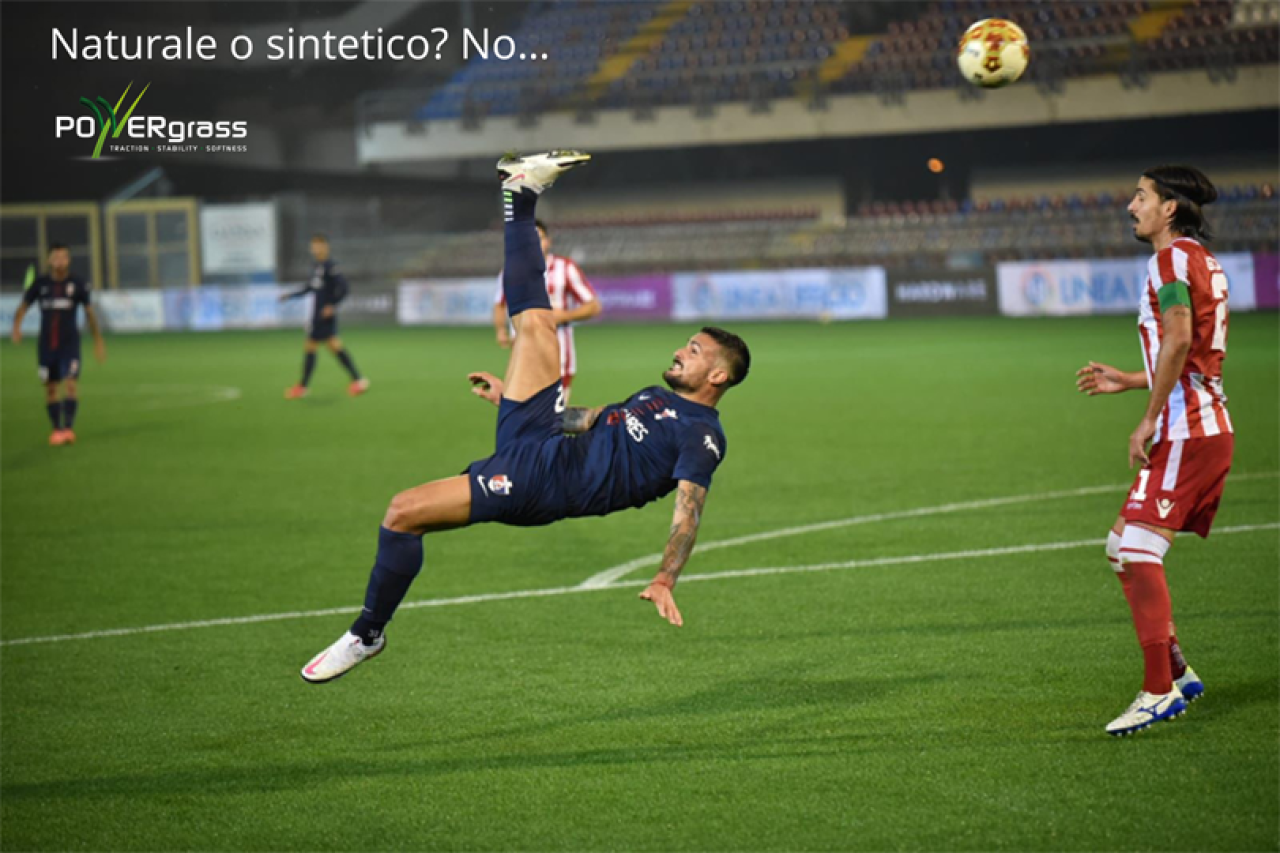
The need to reduce land consumption and maintenance costs requires the intensive use of playing fields, leading teams to train on synthetic pitches and then play the championship match in the natural grass stadium. The transformation of some stadiums into synthetic, in the last 18 years, has not been received well by the players because it has distorted the game of football and there is a perceived greater risk of injuries, back pain and muscle problems.

POWERgrass offers the possibility of playing on reinforced natural grass intensively for up to 25-30 hours per week during the grass growth period, but when the pitch is used with the same intensity during the winter the grass tends to lose its density and vigor. In this case, in the areas of greatest wear, synthetic grass tends to emerge, allowing you to continue playing until vegetative growth.

From a maintenance point of view, the objective in winter is to keep the surface clean from dead grass residues and to ventilate the surface more to make it softer for playing as natural grass contributes less and less. Even if the grass loses much of its leaf system from intensive play during the winter, in the following spring the growth of new stems will allow the vegetation to resume. In the areas of greatest wear, partial reseeding allows for rapid recovery.
Use in extreme cases with the field covered in winter

Sometimes, in some parts of the world the climate can be extreme and the winter extremely cold to be able to use the camp all year round. We have been asked several times if it is possible to maintain a hybrid surface indoors under a pressostatic balloon.

It's not an easy answer because you have to remember that grass species love sunlight which is necessary to grow except for the winter when it is dormant which basically depends on the temperature.

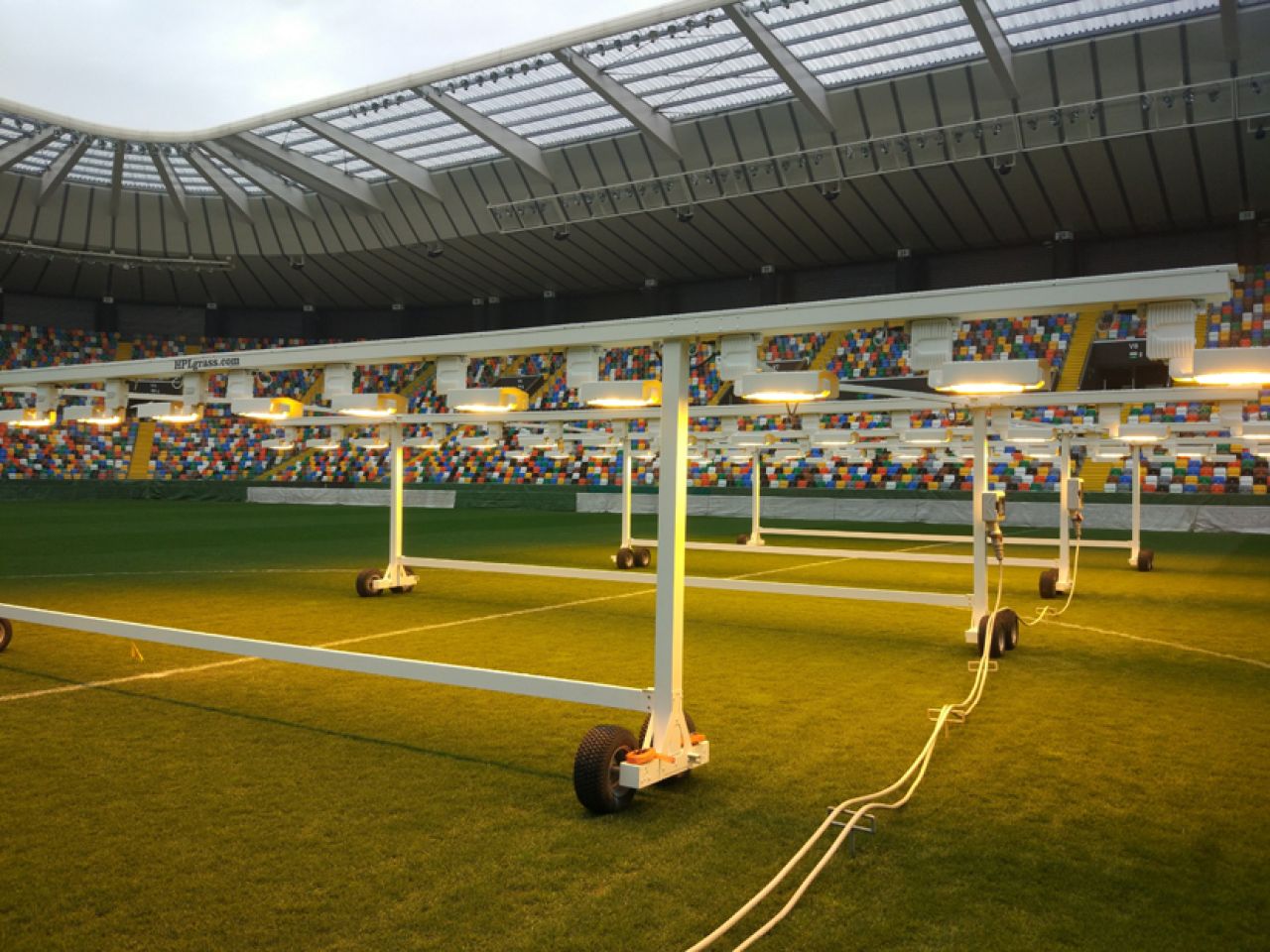
If you have to cover the field with POWERgrass it is expected that the temperature will also remain higher during the winter and the grass will consume the carbohydrates stored in the roots trying to grow but in the absence of sunlight it will collapse and die from lack of energy. This means you also need to provide artificial lighting for photosynthesis to keep the grass alive. In Italy there is LED technology which in Italy requires 10 modules to cover half the field, which by moving them manually can encourage vegetation. Energy consumption is high, so this type of solution is for professional teams with the presence of impressive roofs on the stands or the entire stadium.

For a training field however, if you want to reduce the consumption of artificial light, POWERgrass can be a solution if you agree to train on artificial turf during the winter, because it is possible to reseed the grass every spring so once the covering has been removed you can play again on reinforced natural grass. It is a concrete possibility that can be evaluated where the winter is long and very cold because, in the case of intense play, you can still lose a good part of the grass even if you are outdoors. If the summers are hot and you expect to organize a summer camp with intensive play, we recommend sowing Bermuda Ibiza grass for example and playing after 4 weeks on natural grass. In winter, when Bermuda goes dormant and turns straw-colored, it can be mowed low and scarified intensely to remove the leaves and then cover with the pressostatic tarpaulin.

Alternating natural and artificial fields

POWERgrass_opzione_rid_2

  • 28/02/2024
  • Italgreen Landscape

Players don't like to alternate between synthetic and natural eba, because it puts more stress on ligaments and muscles that make it difficult to adapt. Natural hybrid turfs of the past carry a greater play load during the growing season but are in poor condition during the winter and are difficult to maintain and regenerate. The POWERgrass system offers the best of both worlds with the field playable throughout the competitive season.

Intensive training throughout the year

The need to reduce land consumption and maintenance costs requires the intensive use of playing fields, leading teams to train on synthetic pitches and then play the championship match in the natural grass stadium. The transformation of some stadiums into synthetic, in the last 18 years, has not been received well by the players because it has distorted the game of football and there is a perceived greater risk of injuries, back pain and muscle problems.

POWERgrass offers the possibility of playing on reinforced natural grass intensively for up to 25-30 hours per week during the grass growth period, but when the pitch is used with the same intensity during the winter the grass tends to lose its density and vigor. In this case, in the areas of greatest wear, synthetic grass tends to emerge, allowing you to continue playing until vegetative growth.

From a maintenance point of view, the objective in winter is to keep the surface clean from dead grass residues and to ventilate the surface more to make it softer for playing as natural grass contributes less and less. Even if the grass loses much of its leaf system from intensive play during the winter, in the following spring the growth of new stems will allow the vegetation to resume. In the areas of greatest wear, partial reseeding allows for rapid recovery.

Use in extreme cases with the field covered in winter

Sometimes, in some parts of the world the climate can be extreme and the winter extremely cold to be able to use the camp all year round. We have been asked several times if it is possible to maintain a hybrid surface indoors under a pressostatic balloon.

It's not an easy answer because you have to remember that grass species love sunlight which is necessary to grow except for the winter when it is dormant which basically depends on the temperature.

If you have to cover the field with POWERgrass it is expected that the temperature will also remain higher during the winter and the grass will consume the carbohydrates stored in the roots trying to grow but in the absence of sunlight it will collapse and die from lack of energy. This means you also need to provide artificial lighting for photosynthesis to keep the grass alive. In Italy there is LED technology which in Italy requires 10 modules to cover half the field, which by moving them manually can encourage vegetation. Energy consumption is high, so this type of solution is for professional teams with the presence of impressive roofs on the stands or the entire stadium.

For a training field however, if you want to reduce the consumption of artificial light, POWERgrass can be a solution if you agree to train on artificial turf during the winter, because it is possible to reseed the grass every spring so once the covering has been removed you can play again on reinforced natural grass. It is a concrete possibility that can be evaluated where the winter is long and very cold because, in the case of intense play, you can still lose a good part of the grass even if you are outdoors. If the summers are hot and you expect to organize a summer camp with intensive play, we recommend sowing Bermuda Ibiza grass for example and playing after 4 weeks on natural grass. In winter, when Bermuda goes dormant and turns straw-colored, it can be mowed low and scarified intensely to remove the leaves and then cover with the pressostatic tarpaulin.

Condividi su

Categorie

Tags

Archivio


Alternating natural and artificial fields

Focus on / 28/02/2024

Players don't like to alternate between synthetic and natural eba, because it puts more stress on ligaments and muscles that make it difficult to adapt. Natural hybrid turfs of the past carry a greater play load during the growing season but are in poor condition during the winter and are difficult to maintain and regenerate. The POWERgrass system offers the best of both worlds with the field playable throughout the competitive season.

Intensive training throughout the year

The need to reduce land consumption and maintenance costs requires the intensive use of playing fields, leading teams to train on synthetic pitches and then play the championship match in the natural grass stadium. The transformation of some stadiums into synthetic, in the last 18 years, has not been received well by the players because it has distorted the game of football and there is a perceived greater risk of injuries, back pain and muscle problems.

POWERgrass offers the possibility of playing on reinforced natural grass intensively for up to 25-30 hours per week during the grass growth period, but when the pitch is used with the same intensity during the winter the grass tends to lose its density and vigor. In this case, in the areas of greatest wear, synthetic grass tends to emerge, allowing you to continue playing until vegetative growth.

From a maintenance point of view, the objective in winter is to keep the surface clean from dead grass residues and to ventilate the surface more to make it softer for playing as natural grass contributes less and less. Even if the grass loses much of its leaf system from intensive play during the winter, in the following spring the growth of new stems will allow the vegetation to resume. In the areas of greatest wear, partial reseeding allows for rapid recovery.

Use in extreme cases with the field covered in winter

Sometimes, in some parts of the world the climate can be extreme and the winter extremely cold to be able to use the camp all year round. We have been asked several times if it is possible to maintain a hybrid surface indoors under a pressostatic balloon.

It's not an easy answer because you have to remember that grass species love sunlight which is necessary to grow except for the winter when it is dormant which basically depends on the temperature.

If you have to cover the field with POWERgrass it is expected that the temperature will also remain higher during the winter and the grass will consume the carbohydrates stored in the roots trying to grow but in the absence of sunlight it will collapse and die from lack of energy. This means you also need to provide artificial lighting for photosynthesis to keep the grass alive. In Italy there is LED technology which in Italy requires 10 modules to cover half the field, which by moving them manually can encourage vegetation. Energy consumption is high, so this type of solution is for professional teams with the presence of impressive roofs on the stands or the entire stadium.

For a training field however, if you want to reduce the consumption of artificial light, POWERgrass can be a solution if you agree to train on artificial turf during the winter, because it is possible to reseed the grass every spring so once the covering has been removed you can play again on reinforced natural grass. It is a concrete possibility that can be evaluated where the winter is long and very cold because, in the case of intense play, you can still lose a good part of the grass even if you are outdoors. If the summers are hot and you expect to organize a summer camp with intensive play, we recommend sowing Bermuda Ibiza grass for example and playing after 4 weeks on natural grass. In winter, when Bermuda goes dormant and turns straw-colored, it can be mowed low and scarified intensely to remove the leaves and then cover with the pressostatic tarpaulin.

Pubblicato il 16 Sep, 2026