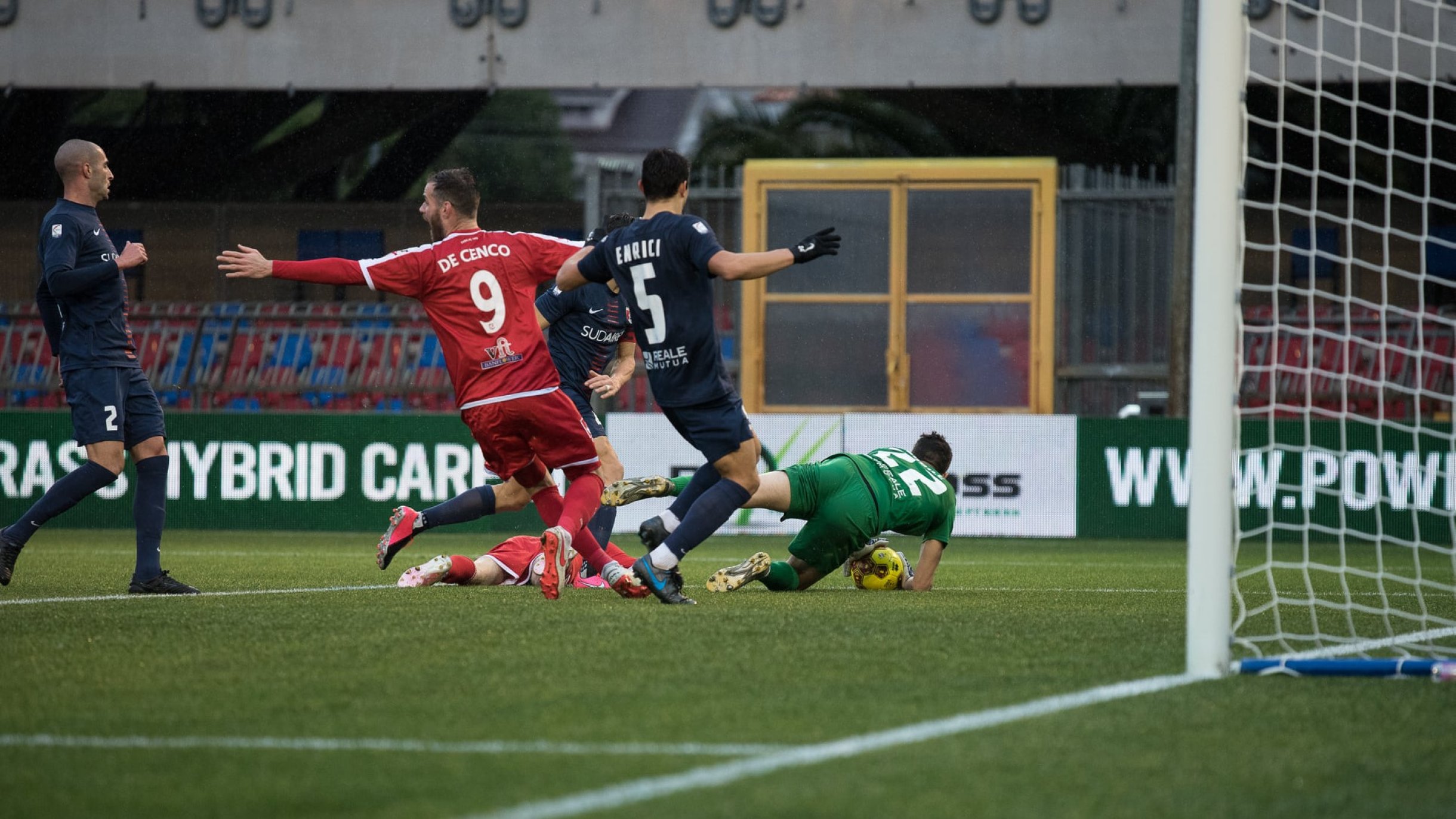
The perfect pitch for the 2026 FIFA Cup
In search of excellence in the perfect field, POWERgrass could not be missing!
And here with the first results they confirm that our hybrid system is the most uniform in the tests of the Universities of Michigan and Tennessee 900 km away, with two different climates, achieving FIFA's first objective!
When the numbers speak for themselves
COMMENTS AND CONSIDERATIONS
Measurements were performed on the systems before simulating game traffic and indicate that all systems exceed FIFA testing requirements.
However, we must keep in mind that all hybrid grass systems in these tests consist of a shallow root layer that has to cope with several batches providing high standards of performance. Therefore, we must ensure that performance characteristics remain uniform across fields located in different climate zones, from Canada to Mexico. Furthermore, it is very important that each pitch maintains performance characteristics uniform from the first to the last match of the World Cup.
POWERgrass is indicated in number #8 and we don't know which system the other numbers refer to, but by observing the measurements we can make some considerations. Also keep in mind that the volumetric water content will have a direct impact on the hardness of the surface, as these characteristics have a direct correlation that deserves attention.
1. Surface hardness
These measurements are taken with the 2.25 kg Clegg hammer, taking the average of the first fall at three different points on the same sample. This is the most important Key Performance Index (KPI) and, when it comes to hybrid grass systems, even more so, as some provide a hard surface from the start, or become hard after just a few hours of use.
Continuing with the tests, we believe that the measurements, after the application of the trampling which simulates the game for a certain number of hours, will show significant differences. This is because some hybrid turfs have a hard backing and, in some cases, the infill layer is also very limited, so compaction will occur more quickly and the field will become hard.
In tables 1 and 2, the systems that approach or exceed the upper ideal range of 85 Nm are highlighted with an orange background because, in some cases, one match is enough to harden the field.
2. The volumetric water content (VWC)
These measurements are taken with the TDR350 at 3.8 cm. This is the amount of soil moisture present in the root zone. To have a complete understanding of this value, two more measurements are needed: the VWC at "field capacity" and especially the "wilting point". Field capacity is the amount of water that is retained by capillary forces in the root zone, after the excess water has drained into the stone layer. The wilting point is the amount of water still present in the root zone but not available for absorption by the plant. This last fact is more important to know because, when the air temperature exceeds 24°C, by maintaining the VWC above the wilting point, we can ensure a sufficient quantity of water for the growth of the grass, but also to prevent heat from accumulating in the sand-based root zone. This will result in reduced temperatures in the root zone during the summer and less frost damage in the winter. As is known, good management practice should also measure other characteristics, of which the second most important, after VWC, is the temperature in the root zone.
In this test it is measured because it directly affects the hardness of the surface, but also indirectly, as it affects the health of the grass and therefore the bounce of the ball and the resistance to rotation.
The correlation between VWC and surface hardness
The correlation between these measurements is important to provide sufficient VWC for grass growth and ideal softness, as some teams may prefer a softer pitch for more technical play, while others prefer a harder pitch for those who wish to run faster.
The wetter the pitch, the softer it becomes, but this is not a great advantage for the health of the grass. By providing a soft pitch with a reduced amount of irrigation water, you will achieve healthier grass management and more resilient grass plants, as there is no need to irrigate the pitch to reduce hardness. Healthier grass will have a better impact on other ball bounce and spin resistance characteristics.
3. Rotational resistance of the grass.
To verify the quality of artificial grass pitches, rotational resistance according to the FIFA range of 25-50 Nm was used. In the past these values were also accepted as a reference for natural grass. However, modern turf species and cultural practices have improved the quality of the grass, suggesting higher values for measuring tensile strength, as can also be seen at both sites.
In the UK the preferred range is 30-65 Nm for natural/hybrid grass, because greater twisting force improves stud grip and player stability during acceleration, deceleration and changes of direction. Therefore, we suggest a range between 25 and 65 Nm to combine the two schools of thought which also include artificial turf pitches.
Rotational torque is measured with an instrument with four studs under a disk that is pressed into the ground with a certain force. Then, by rotating the disc 90 degrees until one stud reaches the groove of the previous one, the instrument measures the peak resistance to the force of the grass before giving way. There are many factors that can influence the measurements, such as the density of the grass, the water content in the grass canopy, and the man operating the instrument. Therefore, more than other characteristics, it is necessary to take it into account as an orientation, for a better understanding. For this reason, a wider scale of ideal measurements is acceptable, ranging from 30 to 60 Nm.
In the following graphs we report the temperatures recorded in relation to duration and rainfall in East Lansing MSU and Knoxville UT.


Conclusions
- POWERgrass's measurements of surface hardness and ball bounce are very similar at both sites over 900 km apart. The provision of uniform KPIs in different climatic conditions is the first objective that FIFA technicians wish to achieve.
- All tests were performed before any foot traffic was applied. POWERgrass measurements of surface hardness are very stable, at the lower end of the ideal range of 70 Gmax. Therefore, the system can withstand numerous matches before requiring the necessary ventilation when exceeding the upper ideal range of 85 Gmax.
- POWERgrass will also work best in areas where summer temperatures can exceed 24°C for many hours a day. This is because we can keep the volumetric water content (VWC) in the root zone as low as possible, which not only allows for significant water savings, but also ensures optimal growing conditions and minimizes heat stress on the roots, without compromising the softness of the playing field.
Attachments
Insights
The perfect FIFA 2026 pitch
In search of excellence in the perfect field, POWERgrass could not be missing! And now with the first results they confirm...
Show moreThe perfect FIFA 2026 pitch
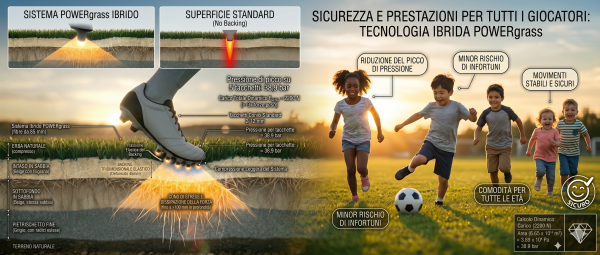
Sport and Suburbs 2026
It is aimed at municipalities with over 5000 inhabitants, also in associated form, with a focus on the recovery of...
Show more