The biggest problem encountered in the maintenance of turf for sports fields is soil compaction. This compression of the particles between them leads to the formation of a denser, poorly draining mass with little capacity for gas exchange useful for the supply of oxygen for the root system. As a consequence, there is a general decline in the turf, its vigor and its ability to recover following damage resulting from wear.
Soil compaction and its consequent negative effects can be reduced by creating a substrate for the root system (top-soil) with a high sand content of appropriate granulometry and good physical and chemical characteristics. The consequence of using a substrate with a high sand content is poor water retention capacity, but using U.S.G.A. specifications this problem is minimized.
In a top soil with a high sand content, the nutritional elements are easily leached as there is a low cation exchange capacity, particularly in the years immediately following construction. This potential problem can be reduced with the use of slow-release fertilizers and/or foliar fertilizations.
The evaluations are carried out on various top-soil mixtures with different percentages of the various components, until the one that complies with the standard parameters of each component to be used in the mixture is found, the correct percentages by volume are then provided.
The crushed stone used for drainage and the drainage layer in contact with the sand must also be subjected to grain size analysis and compatibility with the top soil. Along with physical determinations of the sand, chemical determinations such as salt content, pH, P and K levels are also necessary. Sometimes, especially in arid and semi-arid regions, analysis for the determination of sodium is also necessary. For the physical-chemical determination of the mix it is necessary to send the samples to specialized equipped laboratories which issue a report of compliance with U.S.G.A. regulations.
The U.S.G.A. System for the creation of intensively used lawns should not be considered the best system ever, but rather the best system that can be used at this time. Furthermore, it should not be forgotten that it is a system that has been tested for over 60 years on tens of thousands of greens and sports fields and has always provided excellent results all over the world.
The characteristics of the top soil
Once the suitable top soil has been created, it must be subjected to laboratory tests. the first analysis concerns water infiltration which must be at least 360 mm/h. Laboratory tests are carried out on compacted topsoil without turf.
Top-soil mixtures subjected to percolation tests for 8 hours and then drained at a tension of 40 cm of water should have a porosity between 35 and 55%. Of the total porosity, the macro-porosity must be between 15 and 30% and the micro-porosity between 15 and 25%.
Top-soil mixtures having sand as the main component should have an apparent density between 1.1 and 1.6 g/cm³. The water retained by the soil and not drained is the part of the water that is used for the growth of grass. In the laboratory, the top soil should have a water retention capacity per 40 cm equal to 12-25% of the weight of the soil dried in the oven at 105/111 °C. The ideal value of water retention capacity is 18%, i.e. 1.8 mm of water retained for every 10 mm of soil. The pH must be between 5.5 and 8, with the optimal value between 6 and 6.5.
The preferred electrical conductivity range is 0 to 1 millimhos/cm, values less than 4 are acceptable.
The exchangeable sodium percentage (ESP) value must be less than 15, with preference for the lower ones.
The quality of the sand
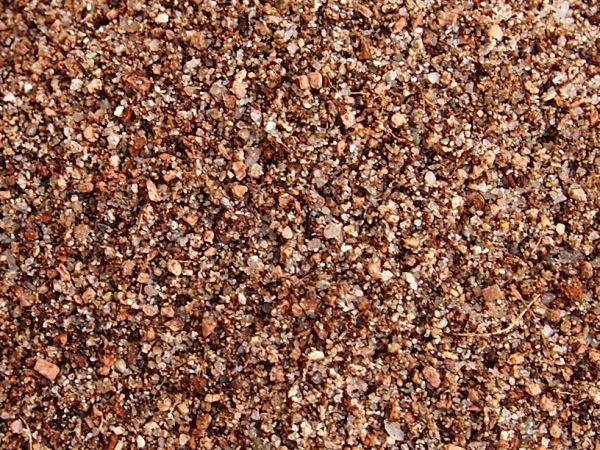
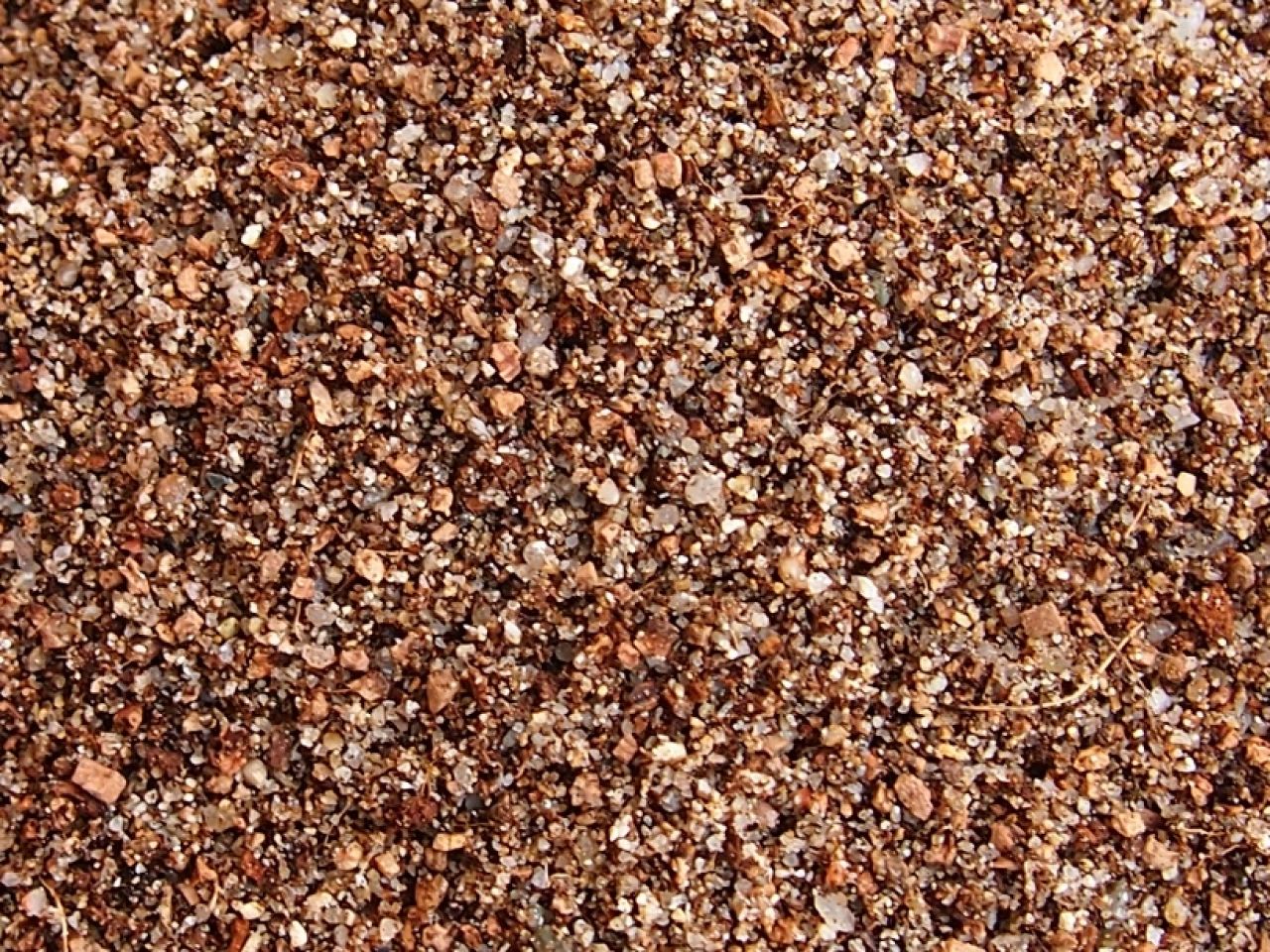
The quality of the sand, the main constituent of the mixture, is of great importance. It is recommended to use washed, screened sand of a siliceous nature. Calcareous sands and/or sands with too high pH should be avoided. The shape of the individual particle must not be rounded but rather angular. From the point of view of the distribution of the grain size fractions, see the following table.
Name
Grain size (mm)
Recommendations (% by weight)
Fine gravel
2.0-3.4 mm
No more than 10% of the total, including a maximum of 3% of fine gravel (better without)
Very coarse sand
1.0-2.0 mm
Coarse sand
0.5-1.0 mm
At least 60% of the sand particles must be included in this range
Medium sand
0.25-0.50 mm
Fine sand
0.15-0.25 mm
No more than 20% of particles must be included in this range
Very fine sand
0.05-0.15 mm
No more than 5%
Limo
0.002-0.05mm
No more than 5%
Agrilla
< 0.002 mm
No more than 3%
Total fine particles
Very fine sand + silt + clay
Less than or equal to 10%
The quality of the organic component
Various types of organic components have been used in the past which have provided graduated and different responses in terms of effectiveness. The ideal organic matter should be well decomposed, well fractionated and have 10% ash content, with an acceptable maximum of 15%. Furthermore, it should be well chopped but not pulverized because it could create water infiltration problems. Sphagnum peat and coco, well chopped and with an organic substance content of 85/90%, represent the most commonly used mixing material.
Additional sources of organic matter can include rice husks, ground bark, sawdust or compost, provided they are tested by an authorized laboratory. In reference to compost, it is essential that it is at least one year old; furthermore, being particularly subject to variations depending on the starting material and origin even within the same batch, it requires careful controls and also verification of the existence of possible phyto-toxic effects for the turf.
The quality of the mineral components
The changes made in 2004 provide for the possibility of using some porous inorganic materials as soil improvers for the top soil, as an alternative or complementary to peat. Porous ceramics, diatoms and zeolite can be mixed together with peat or can even replace it, as long as the grain size ratios and other parameters required by the USGA specifications for the top-soil mix are respected. However, it must be considered that there are large differences within these products and that at the moment there is a lack of long-term experience on their use, therefore it is necessary to rely on expert suppliers who can testify to positive experiences.
The biggest problem encountered in the maintenance of turf for sports fields is soil compaction. This compression of the particles between them leads to the formation of a denser, poorly draining mass with little capacity for gas exchange useful for the supply of oxygen for the root system. As a consequence, there is a general decline in the turf, its vigor and its ability to recover following damage resulting from wear.
Soil compaction and its consequent negative effects can be reduced by creating a substrate for the root system (top-soil) with a high sand content of appropriate granulometry and good physical and chemical characteristics. The consequence of using a substrate with a high sand content is poor water retention capacity, but using U.S.G.A. specifications this problem is minimized.
In a top soil with a high sand content, the nutritional elements are easily leached as there is a low cation exchange capacity, particularly in the years immediately following construction. This potential problem can be reduced with the use of slow-release fertilizers and/or foliar fertilizations.
The evaluations are carried out on various top-soil mixtures with different percentages of the various components, until the one that complies with the standard parameters of each component to be used in the mixture is found, the correct percentages by volume are then provided.
The crushed stone used for drainage and the drainage layer in contact with the sand must also be subjected to grain size analysis and compatibility with the top soil. Along with physical determinations of the sand, chemical determinations such as salt content, pH, P and K levels are also necessary. Sometimes, especially in arid and semi-arid regions, analysis for the determination of sodium is also necessary. For the physical-chemical determination of the mix it is necessary to send the samples to specialized equipped laboratories which issue a report of compliance with U.S.G.A. regulations.
The U.S.G.A. System for the creation of intensively used lawns should not be considered the best system ever, but rather the best system that can be used at this time. Furthermore, it should not be forgotten that it is a system that has been tested for over 60 years on tens of thousands of greens and sports fields and has always provided excellent results all over the world.
The characteristics of the top soil
Once the suitable top soil has been created, it must be subjected to laboratory tests. the first analysis concerns water infiltration which must be at least 360 mm/h. Laboratory tests are carried out on compacted topsoil without turf.
Top-soil mixtures subjected to percolation tests for 8 hours and then drained at a tension of 40 cm of water should have a porosity between 35 and 55%. Of the total porosity, the macro-porosity must be between 15 and 30% and the micro-porosity between 15 and 25%.
Top-soil mixtures having sand as the main component should have an apparent density between 1.1 and 1.6 g/cm³. The water retained by the soil and not drained is the part of the water that is used for the growth of grass. In the laboratory, the top soil should have a water retention capacity per 40 cm equal to 12-25% of the weight of the soil dried in the oven at 105/111 °C. The ideal value of water retention capacity is 18%, i.e. 1.8 mm of water retained for every 10 mm of soil. The pH must be between 5.5 and 8, with the optimal value between 6 and 6.5.
The preferred electrical conductivity range is 0 to 1 millimhos/cm, values less than 4 are acceptable.
The exchangeable sodium percentage (ESP) value must be less than 15, with preference for the lower ones.
The quality of the sand
The quality of the sand, the main constituent of the mixture, is of great importance. It is recommended to use washed, screened sand of a siliceous nature. Calcareous sands and/or sands with too high pH should be avoided. The shape of the individual particle must not be rounded but rather angular. From the point of view of the distribution of the grain size fractions, see the following table.
Name
Grain size (mm)
Recommendations (% by weight)
Fine gravel
2.0-3.4 mm
No more than 10% of the total, including a maximum of 3% of fine gravel (better without)
Very coarse sand
1.0-2.0 mm
Coarse sand
0.5-1.0 mm
At least 60% of the sand particles must be included in this range
Medium sand
0.25-0.50 mm
Fine sand
0.15-0.25 mm
No more than 20% of particles must be included in this range
Very fine sand
0.05-0.15 mm
No more than 5%
Limo
0.002-0.05mm
No more than 5%
Agrilla
< 0.002 mm
No more than 3%
Total fine particles
Very fine sand + silt + clay
Less than or equal to 10%
The quality of the organic component
Various types of organic components have been used in the past which have provided graduated and different responses in terms of effectiveness. The ideal organic matter should be well decomposed, well fractionated and have 10% ash content, with an acceptable maximum of 15%. Furthermore, it should be well chopped but not pulverized because it could create water infiltration problems. Sphagnum peat and coco, well chopped and with an organic substance content of 85/90%, represent the most commonly used mixing material.
Additional sources of organic matter can include rice husks, ground bark, sawdust or compost, provided they are tested by an authorized laboratory. In reference to compost, it is essential that it is at least one year old; furthermore, being particularly subject to variations depending on the starting material and origin even within the same batch, it requires careful controls and also verification of the existence of possible phyto-toxic effects for the turf.
The quality of the mineral components
The changes made in 2004 provide for the possibility of using some porous inorganic materials as soil improvers for the top soil, as an alternative or complementary to peat. Porous ceramics, diatoms and zeolite can be mixed together with peat or can even replace it, as long as the grain size ratios and other parameters required by the USGA specifications for the top-soil mix are respected. However, it must be considered that there are large differences within these products and that at the moment there is a lack of long-term experience on their use, therefore it is necessary to rely on expert suppliers who can testify to positive experiences.
The biggest problem encountered in the maintenance of turf for sports fields is soil compaction. This compression of the particles between them leads to the formation of a denser, poorly draining mass with little capacity for gas exchange useful for the supply of oxygen for the root system. As a consequence, there is a general decline in the turf, its vigor and its ability to recover following damage resulting from wear.
Soil compaction and its consequent negative effects can be reduced by creating a substrate for the root system (top-soil) with a high sand content of appropriate granulometry and good physical and chemical characteristics. The consequence of using a substrate with a high sand content is poor water retention capacity, but using U.S.G.A. specifications this problem is minimized.
In a top soil with a high sand content, the nutritional elements are easily leached as there is a low cation exchange capacity, particularly in the years immediately following construction. This potential problem can be reduced with the use of slow-release fertilizers and/or foliar fertilizations.
The evaluations are carried out on various top-soil mixtures with different percentages of the various components, until the one that complies with the standard parameters of each component to be used in the mixture is found, the correct percentages by volume are then provided.
The crushed stone used for drainage and the drainage layer in contact with the sand must also be subjected to grain size analysis and compatibility with the top soil. Along with physical determinations of the sand, chemical determinations such as salt content, pH, P and K levels are also necessary. Sometimes, especially in arid and semi-arid regions, analysis for the determination of sodium is also necessary. For the physical-chemical determination of the mix it is necessary to send the samples to specialized equipped laboratories which issue a report of compliance with U.S.G.A. regulations.
The U.S.G.A. System for the creation of intensively used lawns should not be considered the best system ever, but rather the best system that can be used at this time. Furthermore, it should not be forgotten that it is a system that has been tested for over 60 years on tens of thousands of greens and sports fields and has always provided excellent results all over the world.
The characteristics of the top soil
Once the suitable top soil has been created, it must be subjected to laboratory tests. the first analysis concerns water infiltration which must be at least 360 mm/h. Laboratory tests are carried out on compacted topsoil without turf.
Top-soil mixtures subjected to percolation tests for 8 hours and then drained at a tension of 40 cm of water should have a porosity between 35 and 55%. Of the total porosity, the macro-porosity must be between 15 and 30% and the micro-porosity between 15 and 25%.
Top-soil mixtures having sand as the main component should have an apparent density between 1.1 and 1.6 g/cm³. The water retained by the soil and not drained is the part of the water that is used for the growth of grass. In the laboratory, the top soil should have a water retention capacity per 40 cm equal to 12-25% of the weight of the soil dried in the oven at 105/111 °C. The ideal value of water retention capacity is 18%, i.e. 1.8 mm of water retained for every 10 mm of soil. The pH must be between 5.5 and 8, with the optimal value between 6 and 6.5.
The preferred electrical conductivity range is 0 to 1 millimhos/cm, values less than 4 are acceptable.
The exchangeable sodium percentage (ESP) value must be less than 15, with preference for the lower ones.
The quality of the sand
The quality of the sand, the main constituent of the mixture, is of great importance. It is recommended to use washed, screened sand of a siliceous nature. Calcareous sands and/or sands with too high pH should be avoided. The shape of the individual particle must not be rounded but rather angular. From the point of view of the distribution of the grain size fractions, see the following table.
Name
Grain size (mm)
Recommendations (% by weight)
Fine gravel
2.0-3.4 mm
No more than 10% of the total, including a maximum of 3% of fine gravel (better without)
Very coarse sand
1.0-2.0 mm
Coarse sand
0.5-1.0 mm
At least 60% of the sand particles must be included in this range
Medium sand
0.25-0.50 mm
Fine sand
0.15-0.25 mm
No more than 20% of particles must be included in this range
Very fine sand
0.05-0.15 mm
No more than 5%
Limo
0.002-0.05mm
No more than 5%
Agrilla
< 0.002 mm
No more than 3%
Total fine particles
Very fine sand + silt + clay
Less than or equal to 10%
The quality of the organic component
Various types of organic components have been used in the past which have provided graduated and different responses in terms of effectiveness. The ideal organic matter should be well decomposed, well fractionated and have 10% ash content, with an acceptable maximum of 15%. Furthermore, it should be well chopped but not pulverized because it could create water infiltration problems. Sphagnum peat and coco, well chopped and with an organic substance content of 85/90%, represent the most commonly used mixing material.
Additional sources of organic matter can include rice husks, ground bark, sawdust or compost, provided they are tested by an authorized laboratory. In reference to compost, it is essential that it is at least one year old; furthermore, being particularly subject to variations depending on the starting material and origin even within the same batch, it requires careful controls and also verification of the existence of possible phyto-toxic effects for the turf.
The quality of the mineral components
The changes made in 2004 provide for the possibility of using some porous inorganic materials as soil improvers for the top soil, as an alternative or complementary to peat. Porous ceramics, diatoms and zeolite can be mixed together with peat or can even replace it, as long as the grain size ratios and other parameters required by the USGA specifications for the top-soil mix are respected. However, it must be considered that there are large differences within these products and that at the moment there is a lack of long-term experience on their use, therefore it is necessary to rely on expert suppliers who can testify to positive experiences.