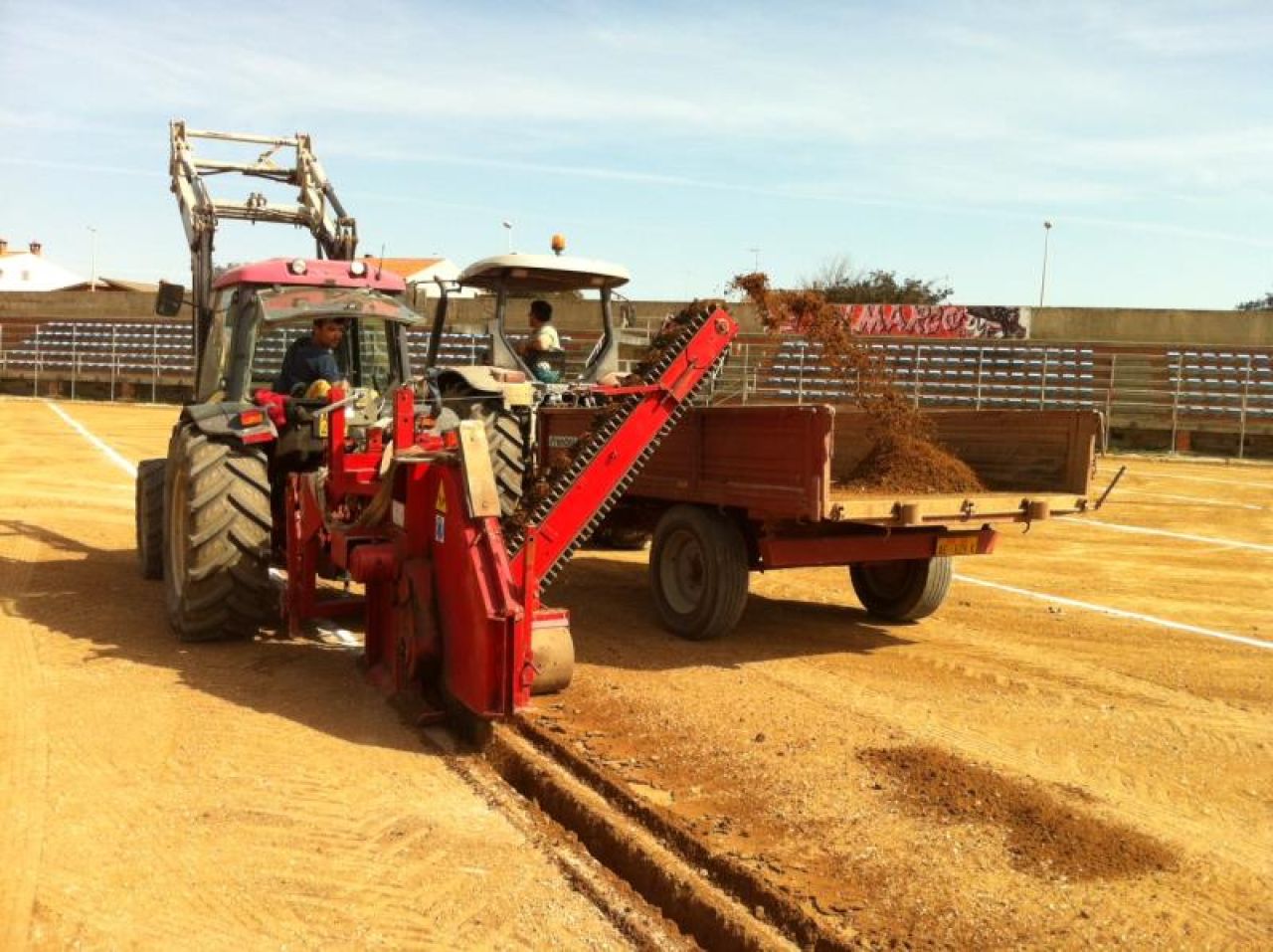
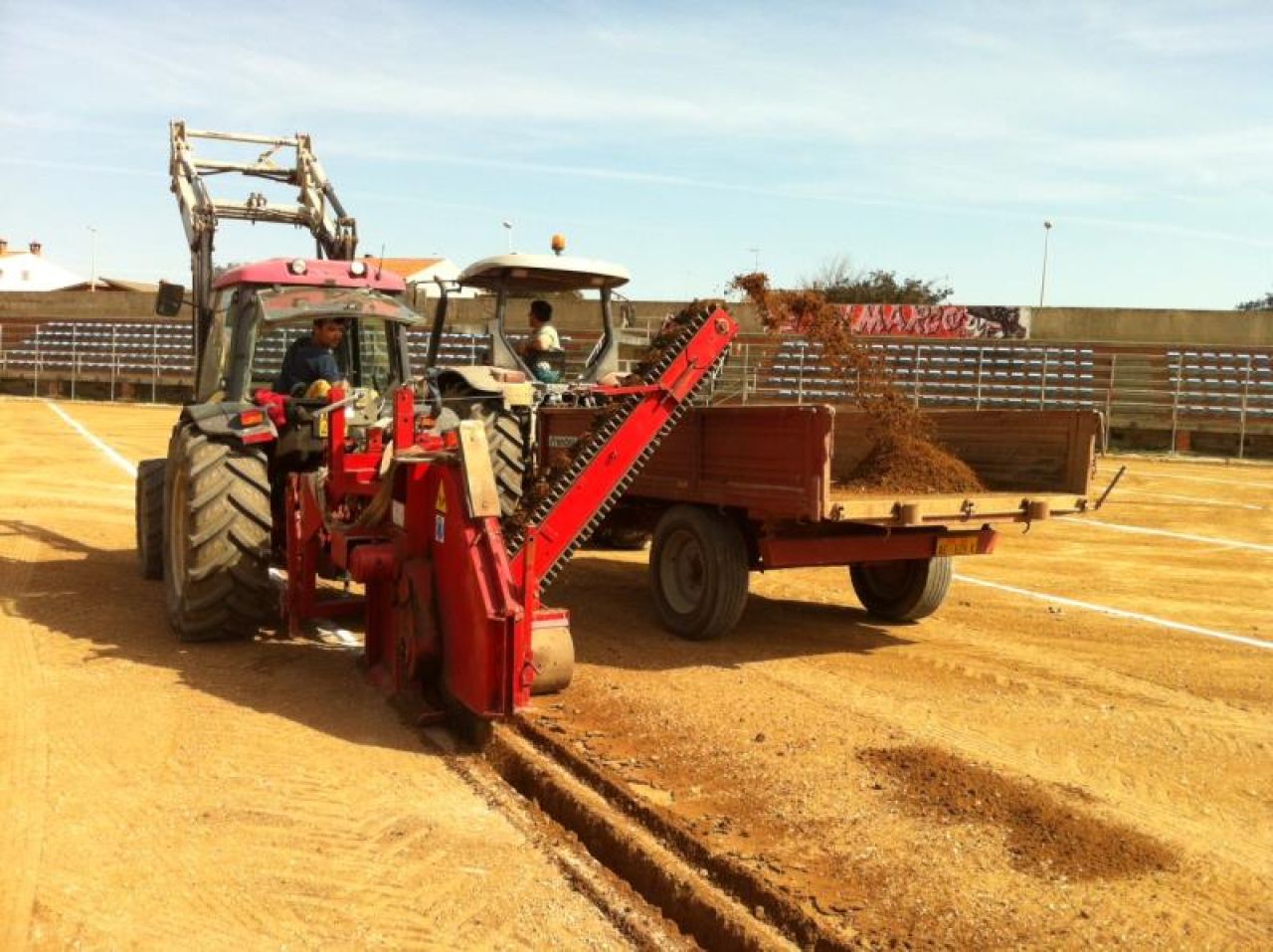
In modern playgrounds it is essential to create an effective drainage network. Immediately after leveling the land and creating the irrigation system, the rainwater drainage network must remove excess water to maintain the air/water balance in the growing medium.
A good rule is to create a drainage network in the ground with trenches connected to each other to channel excess rainwater which flows by gravity until it is discharged into the sewer system. Drainage pipes filled with crushed stone up to the top must be installed in the trenches. In the event of low rainfall, the water that reaches the drains is dispersed in the trenches, slowly filtering into the ground before even entering the pipes so it does not burden the sewer system. As the intensity of the rain increases, the water level in the trenches increases and the excess water enters the micro-perforated pipes and then flows to the sewer. The system is very effective but in some cases attention must be paid to the risk of raising the underground water table because the water can also rise through the pipes temporarily flooding the field.
Layers of crushed stone and sand of various thicknesses based on the project objectives must be installed above the drainage network. These layers must be highly draining in the case of modern fields so that rainwater filters quickly and then reaches the existing soil and is channeled into drainage trenches.
Within the ground, water moves vertically thanks to the forces of gravity but also horizontally due to capillary forces. Therefore, understanding the movement of water in the ground is important in order to create a functional drainage system to allow the infiltration of water from the surface to the drainage network.
The drainage network system with connected trenches is a technique used in numerous sports field constructions in Italy. In the past, in most cases a filter layer of mixed sand and gravel was installed above the drainage trenches, followed by a layer of soil to grow natural grass. As is known, soil is composed of a part of solid minerals such as sand, silt and clay and a part of empty spaces or pores where water and air circulate and biological activity develops. The pores are divided into micro-pores and macro-pores based on size and if the ratio between them is 1:1 then the medium is filtering and vital because all biological processes take place regularly.
After a certain number of games, the puddles that form on the surface highlight the poor infiltration capacity of the ground. The main cause is the intensive trampling of the soil which compresses the macro-pores on the surface when the soil is excessively wet, destructuring it and producing mud. Soil with a high silt and clay content is more prone to constipation; the number of macro-pores where water drains and biological processes are significantly reduced.
To facilitate the infiltration of water it is necessary to till the soil several times a year and in most cases create a micro-drains system to prevent it from stagnating on the surface.
In modern playgrounds it is essential to create an effective drainage network. Immediately after leveling the land and creating the irrigation system, the rainwater drainage network must remove excess water to maintain the air/water balance in the growing medium.
A good rule is to create a drainage network in the ground with trenches connected to each other to channel excess rainwater which flows by gravity until it is discharged into the sewer system. Drainage pipes filled with crushed stone up to the top must be installed in the trenches. In the event of low rainfall, the water that reaches the drains is dispersed in the trenches, slowly filtering into the ground before even entering the pipes so it does not burden the sewer system. As the intensity of the rain increases, the water level in the trenches increases and the excess water enters the micro-perforated pipes and then flows to the sewer. The system is very effective but in some cases attention must be paid to the risk of raising the underground water table because the water can also rise through the pipes temporarily flooding the field.
Layers of crushed stone and sand of various thicknesses based on the project objectives must be installed above the drainage network. These layers must be highly draining in the case of modern fields so that rainwater filters quickly and then reaches the existing soil and is channeled into drainage trenches.
Within the ground, water moves vertically thanks to the forces of gravity but also horizontally due to capillary forces. Therefore, understanding the movement of water in the ground is important in order to create a functional drainage system to allow the infiltration of water from the surface to the drainage network.
The drainage network system with connected trenches is a technique used in numerous sports field constructions in Italy. In the past, in most cases a filter layer of mixed sand and gravel was installed above the drainage trenches, followed by a layer of soil to grow natural grass. As is known, soil is composed of a part of solid minerals such as sand, silt and clay and a part of empty spaces or pores where water and air circulate and biological activity develops. The pores are divided into micro-pores and macro-pores based on size and if the ratio between them is 1:1 then the medium is filtering and vital because all biological processes take place regularly.
After a certain number of games, the puddles that form on the surface highlight the poor infiltration capacity of the ground. The main cause is the intensive trampling of the soil which compresses the macro-pores on the surface when the soil is excessively wet, destructuring it and producing mud. Soil with a high silt and clay content is more prone to constipation; the number of macro-pores where water drains and biological processes are significantly reduced.
To facilitate the infiltration of water it is necessary to till the soil several times a year and in most cases create a micro-drains system to prevent it from stagnating on the surface.
In modern playgrounds it is essential to create an effective drainage network. Immediately after leveling the land and creating the irrigation system, the rainwater drainage network must remove excess water to maintain the air/water balance in the growing medium.
A good rule is to create a drainage network in the ground with trenches connected to each other to channel excess rainwater which flows by gravity until it is discharged into the sewer system. Drainage pipes filled with crushed stone up to the top must be installed in the trenches. In the event of low rainfall, the water that reaches the drains is dispersed in the trenches, slowly filtering into the ground before even entering the pipes so it does not burden the sewer system. As the intensity of the rain increases, the water level in the trenches increases and the excess water enters the micro-perforated pipes and then flows to the sewer. The system is very effective but in some cases attention must be paid to the risk of raising the underground water table because the water can also rise through the pipes temporarily flooding the field.
Layers of crushed stone and sand of various thicknesses based on the project objectives must be installed above the drainage network. These layers must be highly draining in the case of modern fields so that rainwater filters quickly and then reaches the existing soil and is channeled into drainage trenches.
Within the ground, water moves vertically thanks to the forces of gravity but also horizontally due to capillary forces. Therefore, understanding the movement of water in the ground is important in order to create a functional drainage system to allow the infiltration of water from the surface to the drainage network.
The drainage network system with connected trenches is a technique used in numerous sports field constructions in Italy. In the past, in most cases a filter layer of mixed sand and gravel was installed above the drainage trenches, followed by a layer of soil to grow natural grass. As is known, soil is composed of a part of solid minerals such as sand, silt and clay and a part of empty spaces or pores where water and air circulate and biological activity develops. The pores are divided into micro-pores and macro-pores based on size and if the ratio between them is 1:1 then the medium is filtering and vital because all biological processes take place regularly.
After a certain number of games, the puddles that form on the surface highlight the poor infiltration capacity of the ground. The main cause is the intensive trampling of the soil which compresses the macro-pores on the surface when the soil is excessively wet, destructuring it and producing mud. Soil with a high silt and clay content is more prone to constipation; the number of macro-pores where water drains and biological processes are significantly reduced.
To facilitate the infiltration of water it is necessary to till the soil several times a year and in most cases create a micro-drains system to prevent it from stagnating on the surface.