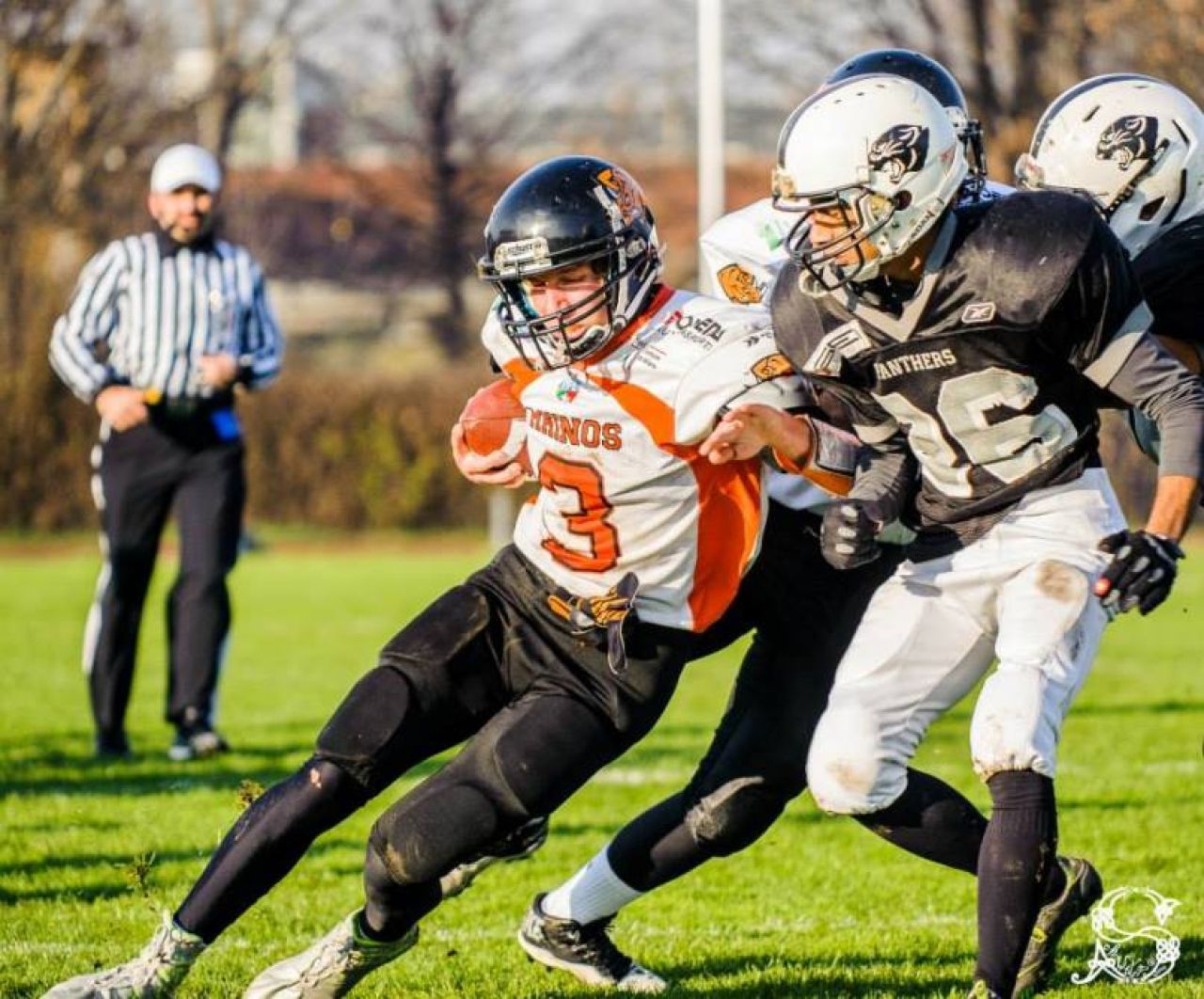
The POWERgrass hybrid system, with constant and relatively low maintenance, offers the best playing experience compared to natural grass because the field is always playable, for many hours during the week, without holes. The investment in the POWERgrass system and maintenance method offers savings of over 30% compared to any other sports surface because its lifespan is estimated to be over 20 years. The system is sustainable because it has a positive environmental impact, prevents soil erosion and does not require replacement if maintained and renewed appropriately.
Nowadays the most prestigious playing fields are made of natural grass or reinforced natural grass (hybrid) while those of intensive use are made of synthetic grass. The construction of the natural fields is carried out according to the guidelines of the USGA, DIN and FIFA standards but without any mandatory criteria. Synthetic pitches, on the other hand, have been the subject of in-depth studies by FIFA in its QUALITY PROGRAM which has divided and established very precise criteria on two levels: FIFA QUALITY and FIFA QUALITY PRO. The Italian Football Federation (FGIC) has acquired the FIFA rules and also developed them with regards to the background; has also made compliance with them mandatory so that they are certified (approved) for use in national championships. Today in Italy there are LND standard or LND Professional quality criteria.
In all playing fields built according to USGA, DIN, FIFA, LND etc. standards, nowadays there are some characteristics that are monitored during the construction phase and in the subsequent maintenance phase to guarantee 1) rainwater drainage because otherwise the game becomes difficult in the event of the presence of numerous puddles, 2) the flatness of the surface because any depressions can deviate the trajectory of the ball while surface irregularities they slow down the game when the ball bounces instead of rolling regularly and 3) the repair of holes in natural or reinforced natural grass fields and/or damage or gaps in synthetic grass fields to avoid the risk of ankle and knee sprains due to field conditions and offer greater confidence to the players.
For playing purposes, in addition to the visible requirements (drainage, flatness, absence of holes/drainages), in recent years, research into synthetic grass fields has standardized some characteristics on the quality of the playing surface which concern 4) the softness of the field, 5) thestabilityof the sports surface, and 6) the tensile strength of the turf, characteristics that are monitored exclusively on synthetic grass fields simply because, on natural grass fields, these characteristics vary greatly during the competitive season so it is difficult to certify parameters for a certain period.
Although synthetic grass pitches have made notable progress in terms of quality, they do not seem to convince professional players, but the problem of natural pitches becomes even more complex because there are no reference standards. In fact, very often, the complaints of a visiting team have no weight and, in the host club's attempt to justify itself, the problem is attributed to gratuitous controversy, possibly due to the poor performance of the opposing team.
On a natural/synthetic/hybrid grass pitch, the softness, stability, bounce and rolling of the ball can be easily measured but the traction of the surface seems to be the most important aspect because during the match the player accelerates, decelerates and changes direction continuously so the interaction of the player's shoes with the sports surface is essential to support his weight and avoid slips and falls due to the playing surface. On the one hand, players very often complain about the conditions of the playing field but, on the other hand, it is difficult to measure object parameters.
In our work, we are always in contact with managers who have been players and these complaints are the main topic when we discuss the conditions of the field, in particular the type of sports surface to be created, also based on the experiences they have had in the various fields on which they played.
Curious as always, we tried to delve deeper into and analyze these complaints in relation to the technical characteristics of the pitch and its maintenance and we were able to note some essential aspects.
When the pitch is hard players experience back pain. Various studies have been conducted and the industry has developed testing techniques such as Clegg's hammer, which offers the possibility of measuring the hardness of the sports surface with extreme ease. However, it is believed that on synthetic turf pitches with rubber infill "the elastic return that acts like a grinding wheel on the player's back" deserves greater investigation.
On the interaction of the player's shoes with the sports surface, once again, tests are only carried out on synthetic grass. One test concerns the slipperiness of the surface using an instrument that simulates the player's foot with a shoe which, by kicking on the synthetic turf up to the stopping point, provides measurements, while on the tensile resistance a round plate with studs similar to those of the shoes is used; by progressively rotating the plate, the maximum force exerted to rotate 45° is measured.
According to some studies, during the player's rotational action, ankle and knee sprains are more frequent on synthetic grass fields because it seems to cause excessive grip on the player's shoe, while natural grass tends to yield to the player's rotational force, just like the safety pin of an engine shaft. Some attribute this "greater grip" to the fact that synthetic grass is made with less resilient fibres, after 2-3 seasons, they tend to remain "lying" on the surface and therefore significantly increase friction and resistance to rotation, in particular with the increase in temperature which seems like a sensible explanation. They argue that this risk can be reduced if the synthetic pitch is properly packed and brushed frequently, lifting the artificial fibres. On the other hand, the alternative of a natural grass field which fills with holes after a few hours of play requires expensive maintenance interventions to restore them because the irregularity of the surface constitutes a greater danger which causes distortions.
Notwithstanding that an irregular natural grass surface is more dangerous than a synthetic pitch, the biggest problem on synthetic grass is not the excessive "cleat grip" on the synthetic fibres, also because the player does not perform rotational actions on himself like a dancer. On the contrary, the biggest problem seems to be the slipperiness of the surface due to poor grip of the cleat because a) the infill material has no consistency precisely because the infill is loose granular material and b) when the fibers are "lying" on the surface the cleat does not penetrate sufficiently so it slips more especially when the surface is wet.
The testimonies of some young players made us reflect because, during training, we recorded a) greater speed during running, and b) less slipperiness during acceleration, deceleration and changes of direction. Other adult players complain that when they play on artificial turf,their ligaments burn. These recurring testimonies led us to reflect on the possible causes; the only plausible explanation is the grip of the studs on the sports surface. His stability with every game action depends on the player's grip on the surface.
A synthetic grass pitch, despite being in excellent condition, does not have enough grip because, even if it were to sink completely, the infill granules are dissolved between the fibres, so the playing surface has no cohesion. The player feels this instability and when he runs the ligaments are stressed more to support his balance. Professional players are the first to notice this difference and often categorically refuse to play on a synthetic grass pitch.
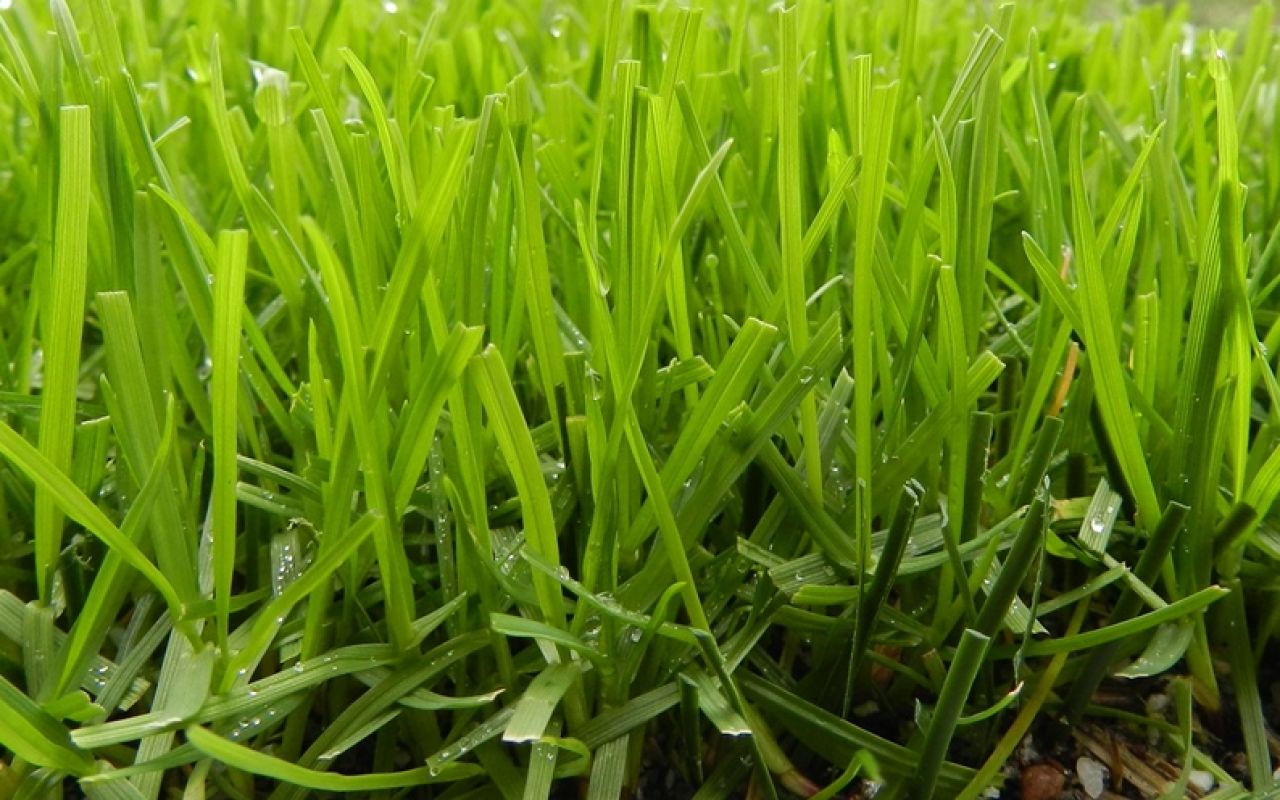
A natural grass field, in its optimal state, allows the studs to sink into the surface and slide less, thanks to the roots of the natural grass which aggregate the growth substrate. However, modern pitches are built on sandy substrates to promote drainage and reduce compaction and suffocate the roots but, on the other hand, when the weather conditions are adverse the roots are weak and superficial and the player's action tends to detach the clods of natural grass. In addition to the huge costs of restoring the holes, by losing grip the player is subject to a greater risk of falls and sprains.
The POWERgrass hybrid field solution offers greater safety to the player because it aggregates the sand substrate thanks to its fibers and because it offers horizontal support for anchoring the roots. The player can make more use of his energy during game action and becomes familiar with the surface because he knows that there will be no dangerous holes. Reducing the formation of holes also significantly reduces the cost of post-lot restoration as well as additional sowing and fertilization.
More investigation is necessary to observe the stability of the playing surface and the interaction of the players' studs to better understand the problem and study measurable parameters in all types of playing fields. What is certain today is the fact that more and more players feel the difference in the slipperiness of the surface, without considering that everyone loves playing on natural grass also because the bounce of the ball is predictable.
The need therefore arises for a playing field with natural grass with greater stability and traction, for a high number of hours, with reduced maintenance, playable almost "always" and this is what POWERgrass offers today.
Training on the POWERgrass hybrid grass, players feel the stability, traction and comfort that the mixed surface offers, so they can practice intensely, to improve their performance during the game!
Training and playing on POWERgrass hybrid grass for 4-6 hours a day is a fact of life in around 30 installations!
The POWERgrass hybrid system, with constant and relatively low maintenance, offers the best playing experience compared to natural grass because the field is always playable, for many hours during the week, without holes. The investment in the POWERgrass system and maintenance method offers savings of over 30% compared to any other sports surface because its lifespan is estimated to be over 20 years. The system is sustainable because it has a positive environmental impact, prevents soil erosion and does not require replacement if maintained and renewed appropriately.
Nowadays the most prestigious playing fields are made of natural grass or reinforced natural grass (hybrid) while those of intensive use are made of synthetic grass. The construction of the natural fields is carried out according to the guidelines of the USGA, DIN and FIFA standards but without any mandatory criteria. Synthetic pitches, on the other hand, have been the subject of in-depth studies by FIFA in its QUALITY PROGRAM which has divided and established very precise criteria on two levels: FIFA QUALITY and FIFA QUALITY PRO. The Italian Football Federation (FGIC) has acquired the FIFA rules and also developed them with regards to the background; has also made compliance with them mandatory so that they are certified (approved) for use in national championships. Today in Italy there are LND standard or LND Professional quality criteria.
In all playing fields built according to USGA, DIN, FIFA, LND etc. standards, nowadays there are some characteristics that are monitored during the construction phase and in the subsequent maintenance phase to guarantee 1) rainwater drainage because otherwise the game becomes difficult in the event of the presence of numerous puddles, 2) the flatness of the surface because any depressions can deviate the trajectory of the ball while surface irregularities they slow down the game when the ball bounces instead of rolling regularly and 3) the repair of holes in natural or reinforced natural grass fields and/or damage or gaps in synthetic grass fields to avoid the risk of ankle and knee sprains due to field conditions and offer greater confidence to the players.
For playing purposes, in addition to the visible requirements (drainage, flatness, absence of holes/drainages), in recent years, research into synthetic grass fields has standardized some characteristics on the quality of the playing surface which concern 4) the softness of the field, 5) thestabilityof the sports surface, and 6) the tensile strength of the turf, characteristics that are monitored exclusively on synthetic grass fields simply because, on natural grass fields, these characteristics vary greatly during the competitive season so it is difficult to certify parameters for a certain period.
Although synthetic grass pitches have made notable progress in terms of quality, they do not seem to convince professional players, but the problem of natural pitches becomes even more complex because there are no reference standards. In fact, very often, the complaints of a visiting team have no weight and, in the host club's attempt to justify itself, the problem is attributed to gratuitous controversy, possibly due to the poor performance of the opposing team.
On a natural/synthetic/hybrid grass pitch, the softness, stability, bounce and rolling of the ball can be easily measured but the traction of the surface seems to be the most important aspect because during the match the player accelerates, decelerates and changes direction continuously so the interaction of the player's shoes with the sports surface is essential to support his weight and avoid slips and falls due to the playing surface. On the one hand, players very often complain about the conditions of the playing field but, on the other hand, it is difficult to measure object parameters.
In our work, we are always in contact with managers who have been players and these complaints are the main topic when we discuss the conditions of the field, in particular the type of sports surface to be created, also based on the experiences they have had in the various fields on which they played.
Curious as always, we tried to delve deeper into and analyze these complaints in relation to the technical characteristics of the pitch and its maintenance and we were able to note some essential aspects.
When the pitch is hard players experience back pain. Various studies have been conducted and the industry has developed testing techniques such as Clegg's hammer, which offers the possibility of measuring the hardness of the sports surface with extreme ease. However, it is believed that on synthetic turf pitches with rubber infill "the elastic return that acts like a grinding wheel on the player's back" deserves greater investigation.
On the interaction of the player's shoes with the sports surface, once again, tests are only carried out on synthetic grass. One test concerns the slipperiness of the surface using an instrument that simulates the player's foot with a shoe which, by kicking on the synthetic turf up to the stopping point, provides measurements, while on the tensile resistance a round plate with studs similar to those of the shoes is used; by progressively rotating the plate, the maximum force exerted to rotate 45° is measured.
According to some studies, during the player's rotational action, ankle and knee sprains are more frequent on synthetic grass fields because it seems to cause excessive grip on the player's shoe, while natural grass tends to yield to the player's rotational force, just like the safety pin of an engine shaft. Some attribute this "greater grip" to the fact that synthetic grass is made with less resilient fibres, after 2-3 seasons, they tend to remain "lying" on the surface and therefore significantly increase friction and resistance to rotation, in particular with the increase in temperature which seems like a sensible explanation. They argue that this risk can be reduced if the synthetic pitch is properly packed and brushed frequently, lifting the artificial fibres. On the other hand, the alternative of a natural grass field which fills with holes after a few hours of play requires expensive maintenance interventions to restore them because the irregularity of the surface constitutes a greater danger which causes distortions.
Notwithstanding that an irregular natural grass surface is more dangerous than a synthetic pitch, the biggest problem on synthetic grass is not the excessive "cleat grip" on the synthetic fibres, also because the player does not perform rotational actions on himself like a dancer. On the contrary, the biggest problem seems to be the slipperiness of the surface due to poor grip of the cleat because a) the infill material has no consistency precisely because the infill is loose granular material and b) when the fibers are "lying" on the surface the cleat does not penetrate sufficiently so it slips more especially when the surface is wet.
The testimonies of some young players made us reflect because, during training, we recorded a) greater speed during running, and b) less slipperiness during acceleration, deceleration and changes of direction. Other adult players complain that when they play on artificial turf,their ligaments burn. These recurring testimonies led us to reflect on the possible causes; the only plausible explanation is the grip of the studs on the sports surface. His stability with every game action depends on the player's grip on the surface.
A synthetic grass pitch, despite being in excellent condition, does not have enough grip because, even if it were to sink completely, the infill granules are dissolved between the fibres, so the playing surface has no cohesion. The player feels this instability and when he runs the ligaments are stressed more to support his balance. Professional players are the first to notice this difference and often categorically refuse to play on a synthetic grass pitch.
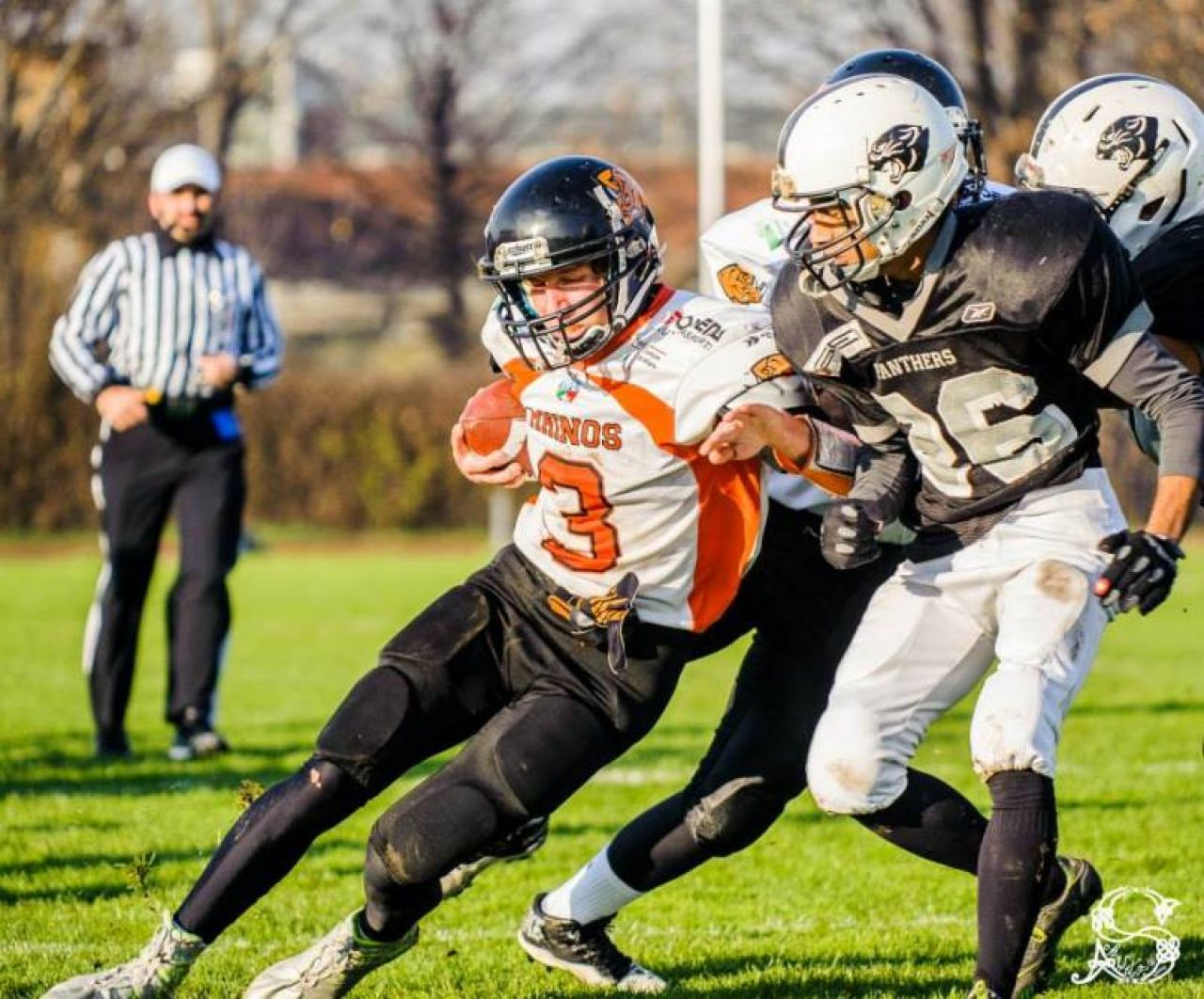
A natural grass field, in its optimal state, allows the studs to sink into the surface and slide less, thanks to the roots of the natural grass which aggregate the growth substrate. However, modern pitches are built on sandy substrates to promote drainage and reduce compaction and suffocate the roots but, on the other hand, when the weather conditions are adverse the roots are weak and superficial and the player's action tends to detach the clods of natural grass. In addition to the huge costs of restoring the holes, by losing grip the player is subject to a greater risk of falls and sprains.
The POWERgrass hybrid field solution offers greater safety to the player because it aggregates the sand substrate thanks to its fibers and because it offers horizontal support for anchoring the roots. The player can make more use of his energy during game action and becomes familiar with the surface because he knows that there will be no dangerous holes. Reducing the formation of holes also significantly reduces the cost of post-lot restoration as well as additional sowing and fertilization.
More investigation is necessary to observe the stability of the playing surface and the interaction of the players' studs to better understand the problem and study measurable parameters in all types of playing fields. What is certain today is the fact that more and more players feel the difference in the slipperiness of the surface, without considering that everyone loves playing on natural grass also because the bounce of the ball is predictable.
The need therefore arises for a playing field with natural grass with greater stability and traction, for a high number of hours, with reduced maintenance, playable almost "always" and this is what POWERgrass offers today.
Training on the POWERgrass hybrid grass, players feel the stability, traction and comfort that the mixed surface offers, so they can practice intensely, to improve their performance during the game!
Training and playing on POWERgrass hybrid grass for 4-6 hours a day is a fact of life in around 30 installations!
The POWERgrass hybrid system, with constant and relatively low maintenance, offers the best playing experience compared to natural grass because the field is always playable, for many hours during the week, without holes. The investment in the POWERgrass system and maintenance method offers savings of over 30% compared to any other sports surface because its lifespan is estimated to be over 20 years. The system is sustainable because it has a positive environmental impact, prevents soil erosion and does not require replacement if maintained and renewed appropriately.
Nowadays the most prestigious playing fields are made of natural grass or reinforced natural grass (hybrid) while those of intensive use are made of synthetic grass. The construction of the natural fields is carried out according to the guidelines of the USGA, DIN and FIFA standards but without any mandatory criteria. Synthetic pitches, on the other hand, have been the subject of in-depth studies by FIFA in its QUALITY PROGRAM which has divided and established very precise criteria on two levels: FIFA QUALITY and FIFA QUALITY PRO. The Italian Football Federation (FGIC) has acquired the FIFA rules and also developed them with regards to the background; has also made compliance with them mandatory so that they are certified (approved) for use in national championships. Today in Italy there are LND standard or LND Professional quality criteria.
In all playing fields built according to USGA, DIN, FIFA, LND etc. standards, nowadays there are some characteristics that are monitored during the construction phase and in the subsequent maintenance phase to guarantee 1) rainwater drainage because otherwise the game becomes difficult in the event of the presence of numerous puddles, 2) the flatness of the surface because any depressions can deviate the trajectory of the ball while surface irregularities they slow down the game when the ball bounces instead of rolling regularly and 3) the repair of holes in natural or reinforced natural grass fields and/or damage or gaps in synthetic grass fields to avoid the risk of ankle and knee sprains due to field conditions and offer greater confidence to the players.
For playing purposes, in addition to the visible requirements (drainage, flatness, absence of holes/drainages), in recent years, research into synthetic grass fields has standardized some characteristics on the quality of the playing surface which concern 4) the softness of the field, 5) thestabilityof the sports surface, and 6) the tensile strength of the turf, characteristics that are monitored exclusively on synthetic grass fields simply because, on natural grass fields, these characteristics vary greatly during the competitive season so it is difficult to certify parameters for a certain period.
Although synthetic grass pitches have made notable progress in terms of quality, they do not seem to convince professional players, but the problem of natural pitches becomes even more complex because there are no reference standards. In fact, very often, the complaints of a visiting team have no weight and, in the host club's attempt to justify itself, the problem is attributed to gratuitous controversy, possibly due to the poor performance of the opposing team.
On a natural/synthetic/hybrid grass pitch, the softness, stability, bounce and rolling of the ball can be easily measured but the traction of the surface seems to be the most important aspect because during the match the player accelerates, decelerates and changes direction continuously so the interaction of the player's shoes with the sports surface is essential to support his weight and avoid slips and falls due to the playing surface. On the one hand, players very often complain about the conditions of the playing field but, on the other hand, it is difficult to measure object parameters.
In our work, we are always in contact with managers who have been players and these complaints are the main topic when we discuss the conditions of the field, in particular the type of sports surface to be created, also based on the experiences they have had in the various fields on which they played.
Curious as always, we tried to delve deeper into and analyze these complaints in relation to the technical characteristics of the pitch and its maintenance and we were able to note some essential aspects.
When the pitch is hard players experience back pain. Various studies have been conducted and the industry has developed testing techniques such as Clegg's hammer, which offers the possibility of measuring the hardness of the sports surface with extreme ease. However, it is believed that on synthetic turf pitches with rubber infill "the elastic return that acts like a grinding wheel on the player's back" deserves greater investigation.
On the interaction of the player's shoes with the sports surface, once again, tests are only carried out on synthetic grass. One test concerns the slipperiness of the surface using an instrument that simulates the player's foot with a shoe which, by kicking on the synthetic turf up to the stopping point, provides measurements, while on the tensile resistance a round plate with studs similar to those of the shoes is used; by progressively rotating the plate, the maximum force exerted to rotate 45° is measured.
According to some studies, during the player's rotational action, ankle and knee sprains are more frequent on synthetic grass fields because it seems to cause excessive grip on the player's shoe, while natural grass tends to yield to the player's rotational force, just like the safety pin of an engine shaft. Some attribute this "greater grip" to the fact that synthetic grass is made with less resilient fibres, after 2-3 seasons, they tend to remain "lying" on the surface and therefore significantly increase friction and resistance to rotation, in particular with the increase in temperature which seems like a sensible explanation. They argue that this risk can be reduced if the synthetic pitch is properly packed and brushed frequently, lifting the artificial fibres. On the other hand, the alternative of a natural grass field which fills with holes after a few hours of play requires expensive maintenance interventions to restore them because the irregularity of the surface constitutes a greater danger which causes distortions.
Notwithstanding that an irregular natural grass surface is more dangerous than a synthetic pitch, the biggest problem on synthetic grass is not the excessive "cleat grip" on the synthetic fibres, also because the player does not perform rotational actions on himself like a dancer. On the contrary, the biggest problem seems to be the slipperiness of the surface due to poor grip of the cleat because a) the infill material has no consistency precisely because the infill is loose granular material and b) when the fibers are "lying" on the surface the cleat does not penetrate sufficiently so it slips more especially when the surface is wet.
The testimonies of some young players made us reflect because, during training, we recorded a) greater speed during running, and b) less slipperiness during acceleration, deceleration and changes of direction. Other adult players complain that when they play on artificial turf,their ligaments burn. These recurring testimonies led us to reflect on the possible causes; the only plausible explanation is the grip of the studs on the sports surface. His stability with every game action depends on the player's grip on the surface.
A synthetic grass pitch, despite being in excellent condition, does not have enough grip because, even if it were to sink completely, the infill granules are dissolved between the fibres, so the playing surface has no cohesion. The player feels this instability and when he runs the ligaments are stressed more to support his balance. Professional players are the first to notice this difference and often categorically refuse to play on a synthetic grass pitch.
A natural grass field, in its optimal state, allows the studs to sink into the surface and slide less, thanks to the roots of the natural grass which aggregate the growth substrate. However, modern pitches are built on sandy substrates to promote drainage and reduce compaction and suffocate the roots but, on the other hand, when the weather conditions are adverse the roots are weak and superficial and the player's action tends to detach the clods of natural grass. In addition to the huge costs of restoring the holes, by losing grip the player is subject to a greater risk of falls and sprains.
The POWERgrass hybrid field solution offers greater safety to the player because it aggregates the sand substrate thanks to its fibers and because it offers horizontal support for anchoring the roots. The player can make more use of his energy during game action and becomes familiar with the surface because he knows that there will be no dangerous holes. Reducing the formation of holes also significantly reduces the cost of post-lot restoration as well as additional sowing and fertilization.
More investigation is necessary to observe the stability of the playing surface and the interaction of the players' studs to better understand the problem and study measurable parameters in all types of playing fields. What is certain today is the fact that more and more players feel the difference in the slipperiness of the surface, without considering that everyone loves playing on natural grass also because the bounce of the ball is predictable.
The need therefore arises for a playing field with natural grass with greater stability and traction, for a high number of hours, with reduced maintenance, playable almost "always" and this is what POWERgrass offers today.
Training on the POWERgrass hybrid grass, players feel the stability, traction and comfort that the mixed surface offers, so they can practice intensely, to improve their performance during the game!
Training and playing on POWERgrass hybrid grass for 4-6 hours a day is a fact of life in around 30 installations!