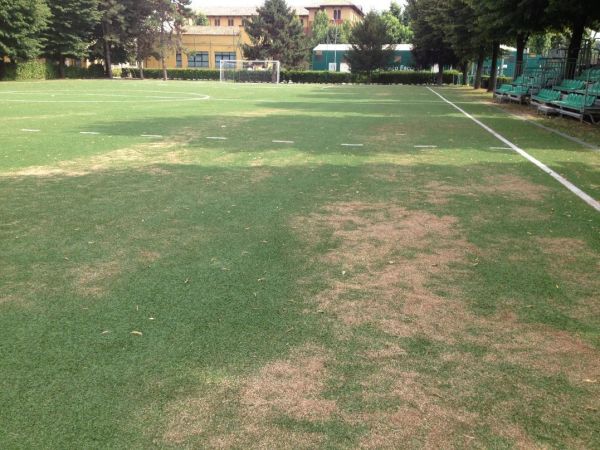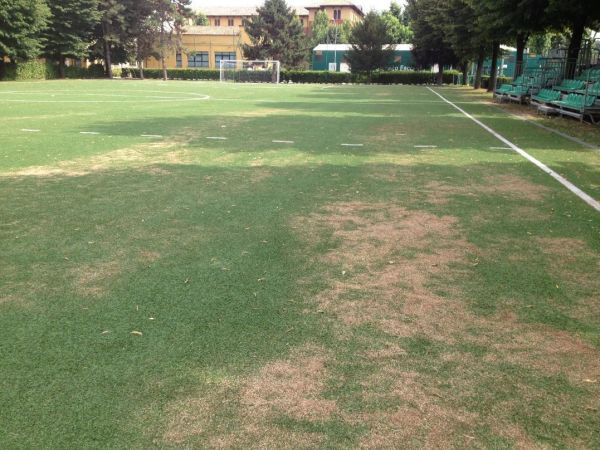
Natural grass pitches built on a clay bottom require less maintenance than sand ones but the risk of matches being postponed is very high because no drainage system in the clay bottom can remove excess water quickly. Playing in moderate rain produces mud on the surface between the drains and the natural grass is gradually suffocated. During a rainy winter it is easy to damage the natural grass due to excess mud and playing on wet ground causes numerous depressions to form.
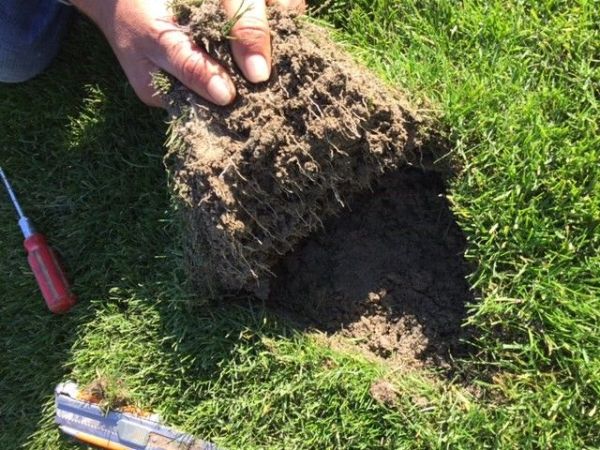
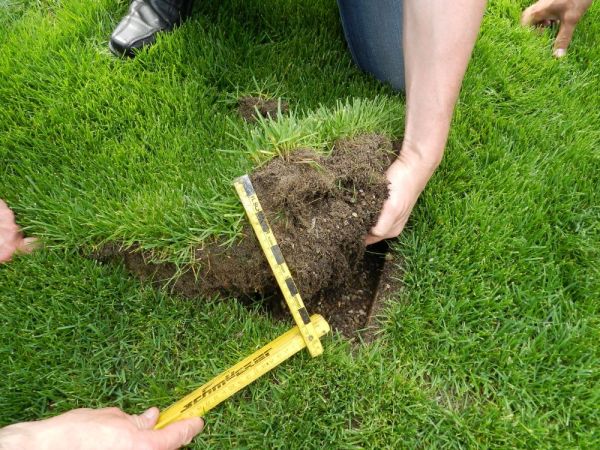
On natural grass fields built on a sand base according to USGA or DIN standards, as happens today in stadiums, it is possible to play in the rain without the formation of mud, but the cost of maintenance increases in particular because the cohesion of the sand is poor and the natural surface is less resistant to tears from the players. During the winter the roots are superficial and it is easy to lift the clods of natural grass forming dangerous holes; restoring the holes significantly increases the cost of maintenance.
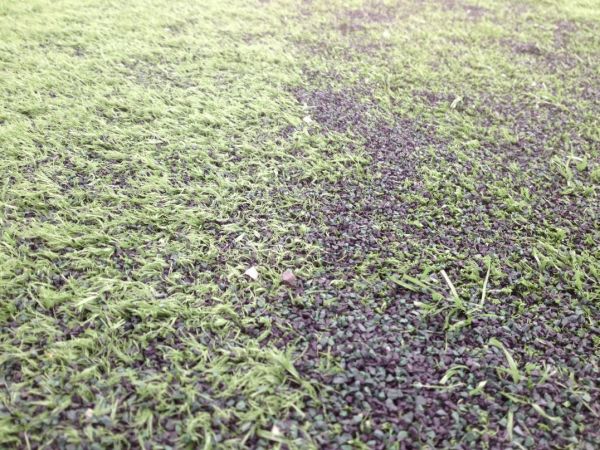
On synthetic grass fields with sand infill + ennobled rubber it is theoretically possible to play "always". The cost of maintenance is reduced compared to natural grass fields because it is sufficient to brush the infill on average twice a week, till and clean the infill once a year, integrating a small part of the removed rubber, but the amortization of the investment and the provision for the replacement of the synthetic turf system at the end of its life cycle is more expensive in the annual balance sheet of the field.
On synthetic grass fields with sand infill + ennobled rubber + organic vegetable infill it is possible to play with greater stability on the ground which tends to simulate natural grass. The cost of ordinary maintenance is further reduced because the infill is more "stable" so it is brushed once a week, but extraordinary interventions to break up the infill are necessary at least 3 times a year, the cleaning of the infill remains unchanged but the replenishment of the organic vegetal part is the most important expense and the overall cost of maintenance is equivalent to a natural grass pitch while the cost for depreciation of the pitch remains high and the provision for the replacement of the synthetic turf system at the end of its life cycle.
Synthetic grass fields made with infill made entirely of organic vegetable material (coconut, cork, rice husk, corn cob, or pine bark) are currently the most expensive system on the market and the replenishment of the organic vegetable infill makes this solution less suitable if medium and long-term savings are an objective to be pursued.
The cost of the POWERgrass hybrid pitch including the amortization of the initial investment, the provision for the replacement of the system prudently calculating over twenty years, maintenance and water consumption, with the same number of real hours of play, offers a cost equivalent to a synthetic pitch. With an investment in professional machines for ordinary maintenance and the purchase of fertilizers, seeds and paint for the white lines, the consumption of drinking water for irrigation is significantly reduced annually, the costs of extraordinary maintenance are almost eliminated and the risk of damage from bad weatherwhich causes flooding is prevented.