FAQ 09 Resilience to frost and heat
What happens with temperature changes? How does POWERgrass behave in the event of frost or heat?
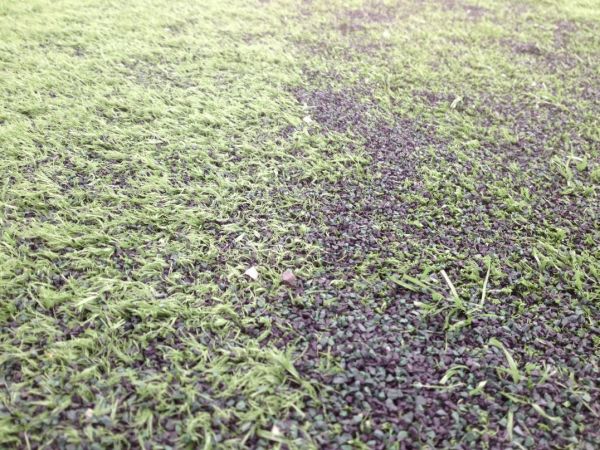
Temperature changes also cause serious limitations to entirely synthetic grass playing fields; For example, those with organic vegetal infill fear frost even more than natural grass fields because they retain an excess of water in the infill material, while rubber ones overheat in summer which is a strong limitation for the use of the field during daylight hours.
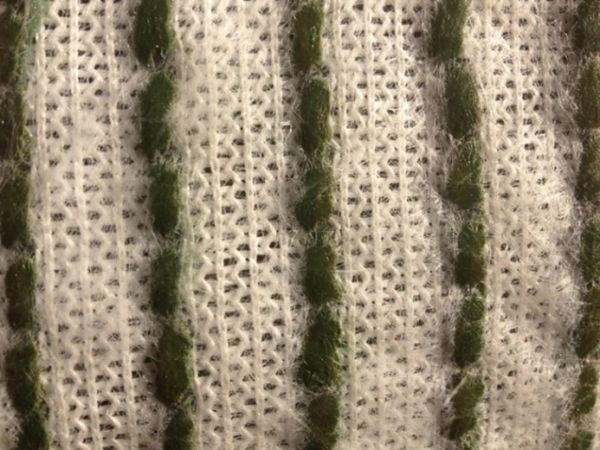
POWERgrass tolerates frost better than natural grass fields because the natural grass cover and the presence of non-woven geotextile in the artificial support are "a double blanket" that retains heat in the plant substrate.
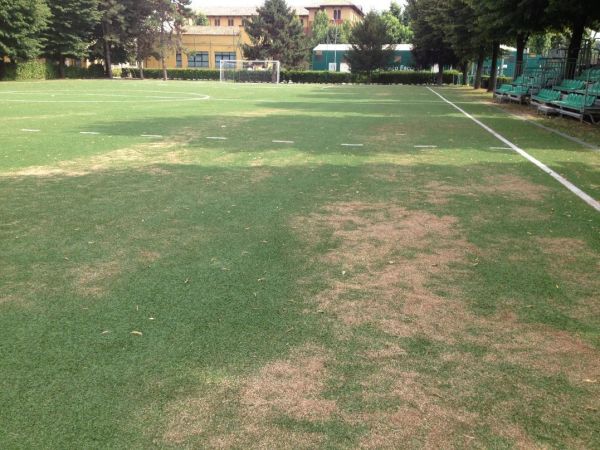
When the frost persists, it is possible to notice a loss of color and a reduction in the density of the turf but, in spring, the recovery of the natural grass is rather rapid while the synthetic grass present in POWERgrass remains stable without interrupting playing activity. In any case, to reduce the effect of frost, it is recommended to reduce the humidity in the growing substrate and the hours of play when the ground is frozen.
Remember that pre-winter and summer fertilization with potassium is of fundamental importance to obtain the green appearance and the turf resistant to trampling and environmental stress.
If a heating system is used, it is possible to save significantly on the calories needed to remedy the frost because the insulating effect of the non-woven geotextile helps to retain heat. Furthermore, the electric heating system allows use to be reduced to real needs based on the geographical area with minimal system maintenance with easy on/off management.
Many people think that integrating synthetic grass with natural lawn causes an increase in temperature. This is because some hybrid systems tend to collapse as soon as the thermometer exceeds certain limits, but this happens if the artificial fibers are lying on the surface or worse buried in the substrate in large quantities which causes a hardening of the surface and a reduction in air circulation. In POWERgrass, the fibers are in an upright position and represent 1.65% of the surface area. Furthermore, we use a very open backing which, together with the gentle cork which increases the porosity of the sandy substrate, offers greater air circulation in the growth substrate, greater water retention and an insulating effect which allows to mitigate temperature changes during the day. The management of water through an automatic irrigation system and, possibly, the management of air through a sub-aeration system allow the air/water/temperature to be balanced in the growth substrate.