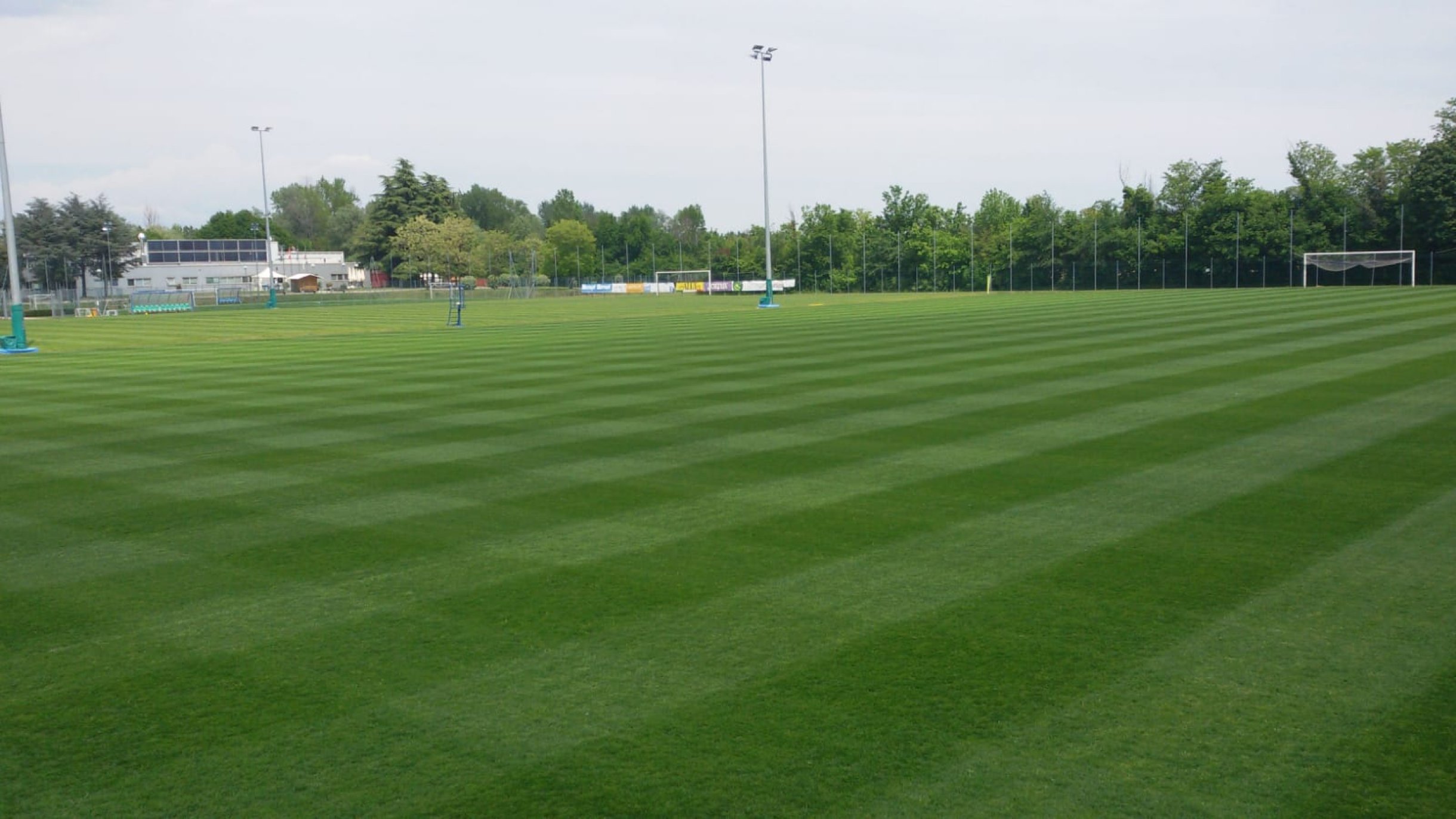
CS Bruno de Marchi from Pordenone
The Bruno di Marchi sports center is now equipped with a hybrid field
The Bruno di Marchi sports center in Pordenone today has an innovative 11-a-side football pitch, made of reinforced natural grass or rather hybrid grass because it is possible to play with or without natural grass. The dimensions of the playing area are 105x60 m. they offer the opportunity to play on a real professional pitch, so much so that it was used by the first team for athletic training after the first lockdown period in spring 2020 which brought them one step away from Serie A.
The Municipality was far-sighted and opted for an innovative solution which involves the creation of an innovative hybrid grass playing surface to guarantee the safety of the players, improving their performance. The POWERgrass hybrid system is often installed in professional stadiums because it offers the possibility of using the field for training where the match is played with opponents, thus increasing the chances of victory.
The hybrid system combines the comfort of natural grass with the resistance of synthetic grass offering more play, more safety and more environment. The hybrid system created perfectly integrates natural grass with synthetic grass and offers a resistant and high-performance field capable of hosting professional events at an international level. The hybrid pitch can be used for matches and training up to 20-25 hours a week during the entire growth period of the turf. During the winter the pitch is playable even if the natural grass reduces its density but starts to grow again in the spring. In this hybrid system, the natural grass suffers less thermal stress caused by winter frost or summer heat.
The hybrid system allows a longer life with simple maintenance but you need to understand how to manage the water for irrigation. It is a perfect symbiosis because, while the natural grass is reinforced by the fibers that protrude on the surface and by the mesh to anchor its roots, in turn, the synthetic fibers are protected by the natural grass from exposure to the sun's UV rays which causes the plastic material to age prematurely. Therefore, it lasts well over 50% compared to an entirely synthetic pitch and the guarantee is extended to 12 years even if, in reality, the pitch lasts longer and has no real expiry date.
Our follow-up service aims to educate workers so that they learn how to correctly carry out maintenance in an innovative field where the demands are very high. The camp was followed by the POWERgrass technical staff after the delivery of the camp, in May 2018, to provide training and information to maintenance workers for approximately two years. In particular, our team also actively intervened in the period of September 2019 with additional sowing and other cultivation operations to directly understand how interventions are carried out on natural grass and also followed the management of water for irrigation remotely. The follow up service was carried out free of charge until mid-September 2020 and the pitch was in optimal conditions as coach Attilio Tesser testified in the interview he gave us.
The POWERgrass system
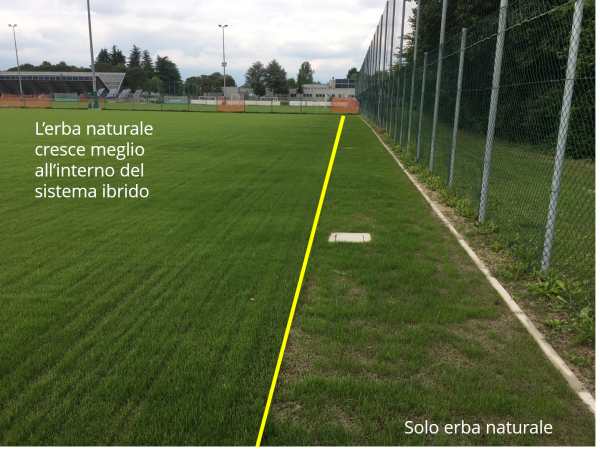
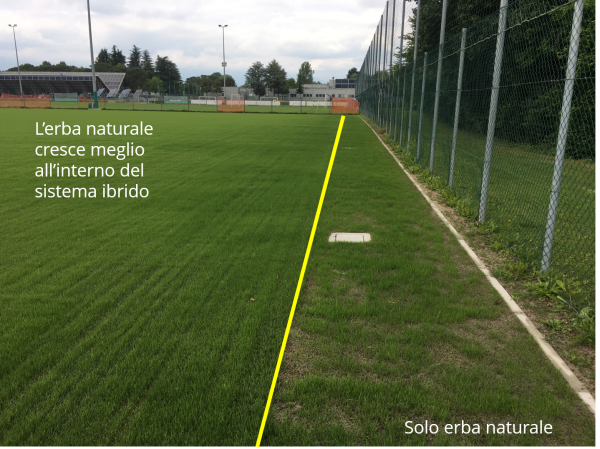
The POWERgrass hybrid field is high-performance able to host numerous professional events with a significant saving on maintenance costs compared to a natural grass field because, first of all, holes do not form. POWERgrass is an innovative hybrid grass system that has integrated natural grass into a patented synthetic turf. Synthetic grass reinforces natural grass in an invisible and imperceptible way to the player. Natural grass grows better in the system because it finds a better water balance and its roots are protected from thermal stress (hot/cold). In a short time, natural grass becomes predominant, occupying over 97% of the surface, offering sports performance designed for the most demanding professionals. At the same time, the hybrid system is easy to maintain and guarantees a field that is always playable.
The hybrid system involves the creation of a sandy subfloor because it allows the grass to breathe, does not form mud and offers the possibility of playing in the rain. The hybrid field is much more resistant to trampling which is the main cause of the compaction that suffocates the roots in fields built on agricultural land.
Immediately after installation it is possible to play on the synthetic fibers but, to obtain the best comfort that only natural grass can provide, wait up to 4-5 weeks for the microthermal grasses to establish or 6-8 weeks for the macrothermal grasses. Microthermal grasses ideally grow in the temperature range of 15-25°C and macrothermal grasses at 24-32°C, so if possible, adjust the intensity of your training program throughout the day to these temperatures to provide more comfort for players and less damage to the grass. If the pitch is used excessively outside the growing season, you can expect to lose some of the density of the grass until the growing conditions are suitable for the type of grass selected, and new shoots emerge from the crowns of the plants, so, within a few weeks, the pitch turns back into natural grass in the same way as it is in nature.
Ecological maintenance and circular economy
In the POWERgrass hybrid system it is much easier to apply ecological maintenance with a positive environmental impact, in line with the principles of the Circular Economy:
- Providing a system with over 20 years of life is a much longer lifespan than any other type of pitch, because the synthetic fibers are protected by the natural grass from exposure to the sun's UV rays, which causes premature aging of the plastic, so the warranty is also 50% longer than a fully synthetic pitch.
- Thus optimizing resources over time but also thanks to the use of renewable and recycled materials such as cork, compost and natural organic fertilizers.
- There is no waste production if the grass clippings are left on the ground or collected for compost and the entire system is reusable for less intensive use or recyclable on the same area of the pitch by shredding the synthetic grass at the end of its life cycle to also reinforce the sandy subfloor.
- Water consumption for irrigation is reduced because evaporation is less and the capacity of the water field is greater below the support. The system also mitigates heat and frost stress while preserving roots and soil biology. Under the supportwater efficiency is greaterand the cooling capacity of the plant is more effective because it helps maintain leaf temperatures below 25.5°C for cool season grasses and below 30°C for warm season grasses which is the critical point to better support heat stress.
- Sequestering carbon in the soil because lawns are known to be able to sequester anywhere from 25.4 to 204.3 g C/m2/year (Zirkle et al., 2011) and this hybrid system is optimizing photosynthesis potential for greater carbon sequestration by teaching regenerative agriculture. Our goal is that, within two years, the system benefits from its own soil biology and we can reduce inputs.
- Providing circular job opportunities for specialized ecological maintenance while gaining extensive knowledge and principles to use for regenerative agriculture while also producing healthier food.
The POWERgrass hybrid system reduces the risk due to unexpected climate changes, expensive extraordinary maintenance and has almost no expiry date.
- Compared to a natural field, the risk of erosion from flooding is limited because the hybrid layer binds the soil over the entire surface of the field. Any human error, biotic or abiotic stress on natural grass can be recovered with a few maintenance interventions within a few weeks and therefore, does not involve sudden risks that require expensive maintenance interventions.
- Compared to a synthetic pitch, it does not require reinstatement of the filling or peremptory replacement of the pitch within 8/10 years. The hybrid system is always renewable, even when the synthetic fibers are consumed because, over time, it progressively becomes more simply more natural with less reinforcement by the synthetic fibers.
The characteristics of the hybrid system
The POWERgrass synthetic turf includes 88,200 resistant and resilient synthetic mono-filaments per square meter. The synthetic fibers are thermofixed to a support of a uniform network with 320,000 three-dimensional and interconnected holes per square meter which guarantees gas exchange and acts as an anchoring point for the roots. The support also includes a light non-woven fabric which reduces the evaporation of water under the support and, in addition, offers an insulating effect to the underlying roots.
After installation, the synthetic fibers protrude to the surface by 20-25 mm, to protect the crowns of the plants from intensive trampling. During germination the synthetic fibers shade the surface against the sun's UV-B rays, preventing the shoots from drying out. The roots penetrate the support from the first growth period, they find balanced humidity and are therefore protected from drying out and from temperature changes in summer and winter.
The hybrid project system establishes a new meaning to the word "hybrid field" where it is necessary to use it immediately playing on synthetic grass because the fibers all protrude on the surface or playing on reinforced natural grass which grows vigorously between the fibers of the synthetic turf with numerous mutual advantages.
The hybrid design system combines the comfort of natural grass with the resistance of synthetic grass, offering more play, more safety and a 12-year guarantee.
Reduced maintenance with positive environmental impact
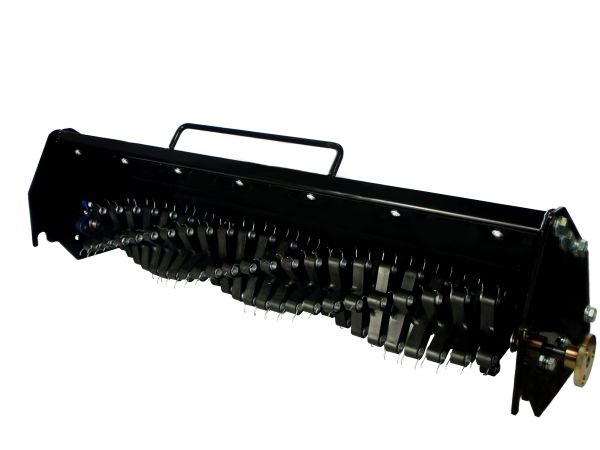
During the Covid-19 lock-down we raised the quality bar of the POWERgrass hybrid grass system by integrating the HEALgreen maintenance method. A method that adheres to the Circular Economy (Legislative Decree 50/2016, art. 95, paragraph 6 letter c) with the strategic objective of promoting specialized employment for maintenance with a positive environmental impact. The method is based on the teachings of regenerative agriculture for the care of turf. The method brings notable benefits because it involves the most appropriate use of mineral nutrients and biological physio-activators and the reduction of the use of pesticides, until their complete elimination. The growth of turf for sports use has as its main limitation the intensive trampling because it compresses the porosity, altering the physical properties of the soil, limiting the gaseous exchange between the soil and the air. However, by aerating the surface and lightening the soil regularly, the gas exchange (CO2 ⇄ O2) necessary for biological processes is guaranteed. In the draining and well-aerated substrate the microorganisms proliferate and mineralize forms of nutrients inaccessible to plants, both those present in the soil and those supplied with fertilizers. During the days sunny, by frequently cutting the natural grass and letting the grass settle on the ground, a part of the nutrients re-enter the circle thanks to biological activity.
From an environmental point of view, there are numerous reasons to use the HEALgreen method which can be summarized as follows:
- capture fine dust, thus purifying the air,
- sequester carbon from the air while emitting more oxygen,
- reduce the air temperature thanks to more efficient cooling,
- prevent pollution of underground aquifers by filtering rainwater
- reduce mosquitoes during the summer months,
- reduce the use of fertilizers and eliminate pesticides or herbicides
- reduce the overall cost for a healthier city life.
Only through soil regeneration, can we have a positive environmental impact. Maintaining all green spaces with regenerative agriculture is the only method to combat pollution in our cities. It is everyone's responsibility which pays off in our health by also offering a prestigious aesthetic appearance.
In the POWERgrass hybrid grass-based system it is easier to maintain natural grass in an ecological way, refreshing the air temperature, purifying the air we breathe and filtering the water we drink.
World map of POWERgrass fields
 POWERgrass hybrid field
 Synthetic grass field
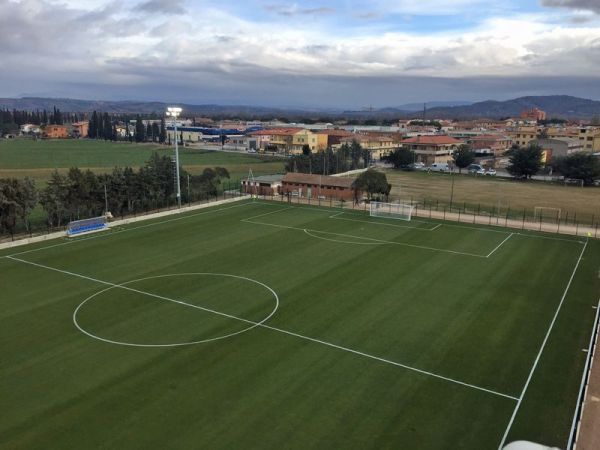
G3 football field, IT
Via Adda in Grosseto
IT hybrid field
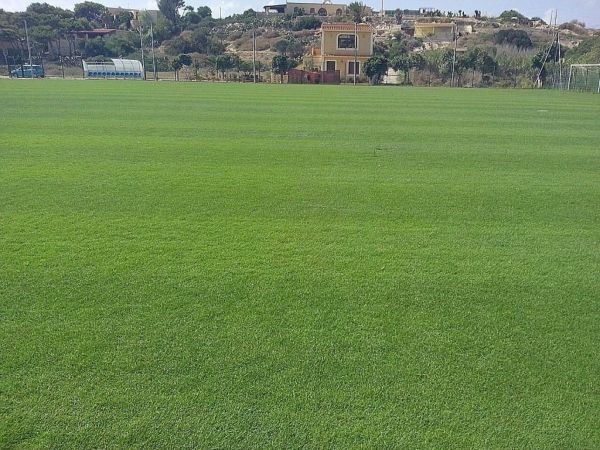
Stadium
Lampedusa
Football pitch
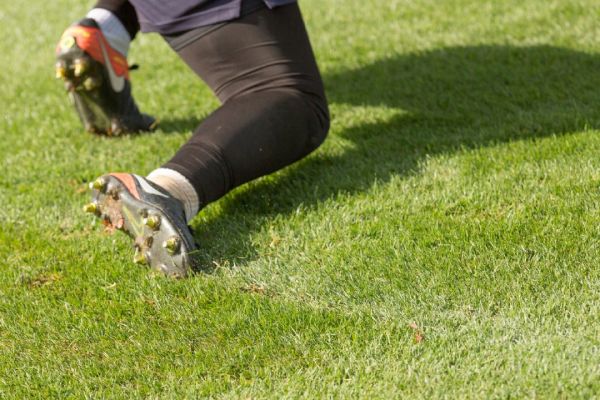
Football and rugby field
Bisham Abbey UK
Hybrid football and rugby
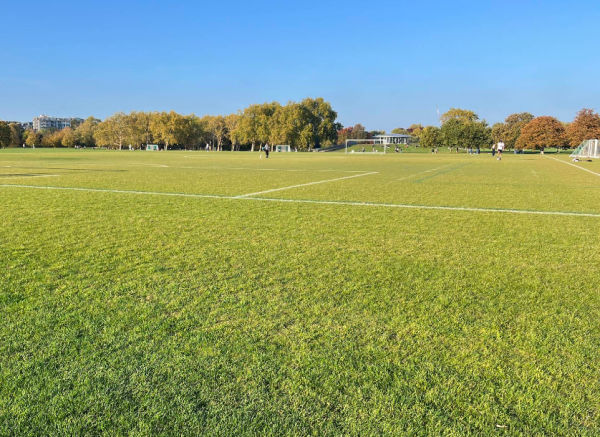
Regent's Park
LondonUK
An indoor hybrid football pitch in London's central park
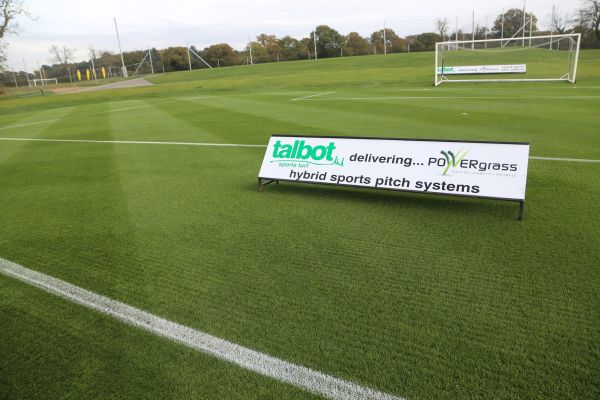
Training area
Derby County
PRO Goalkeeper Training, UK
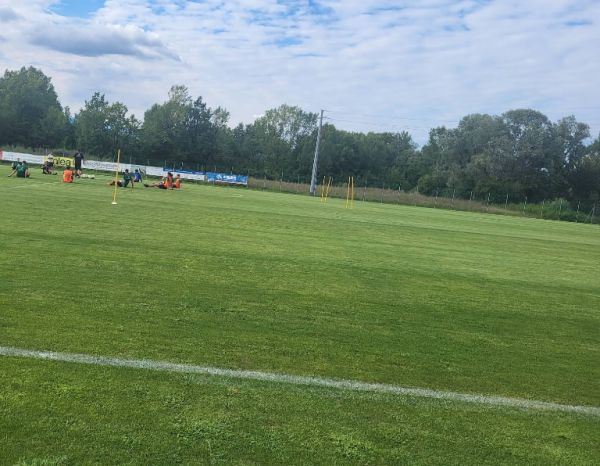
CS Bruno De Marchi
Pordenone
PRO training camp
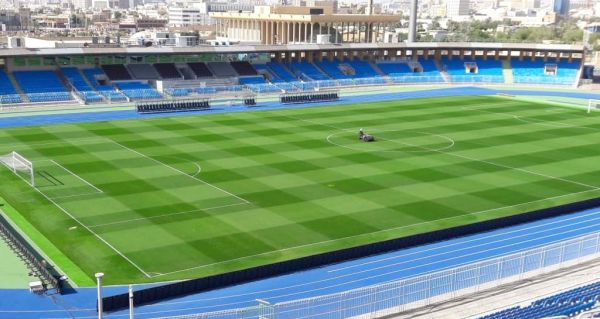
Price Faisal Bin Fahd Stadium
Riyadh
PRO Stadium, KSA
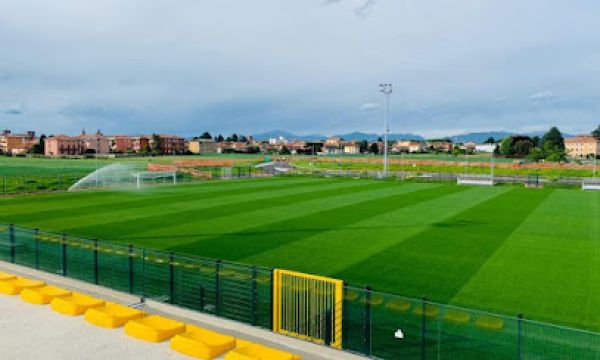
Sport Village Cislago
Cislago, Sports Avenue (VA)
football field, IT
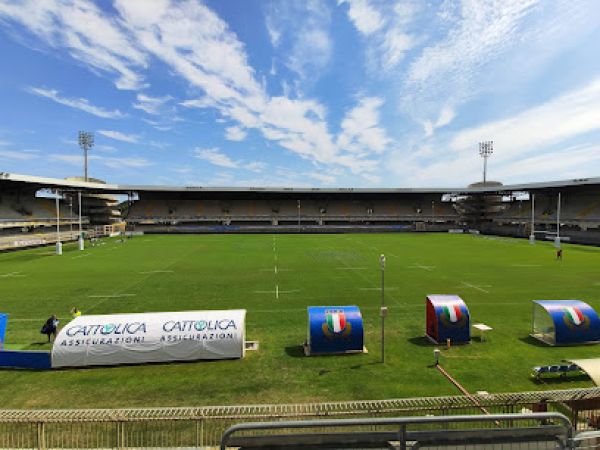
Palm Riviera
San Benedetto del Tronto
PRO football stadium, IT
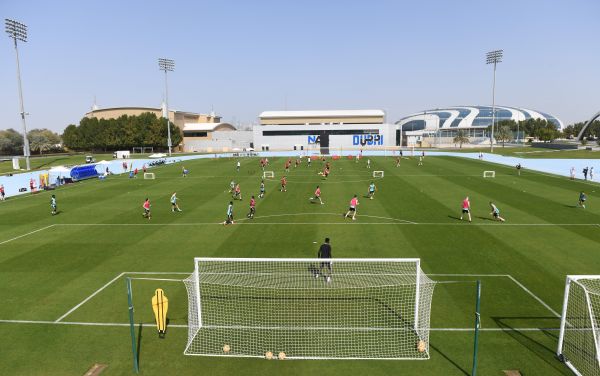
NAS Dubai
Dubai
Nine-a-side football pitch, UAE
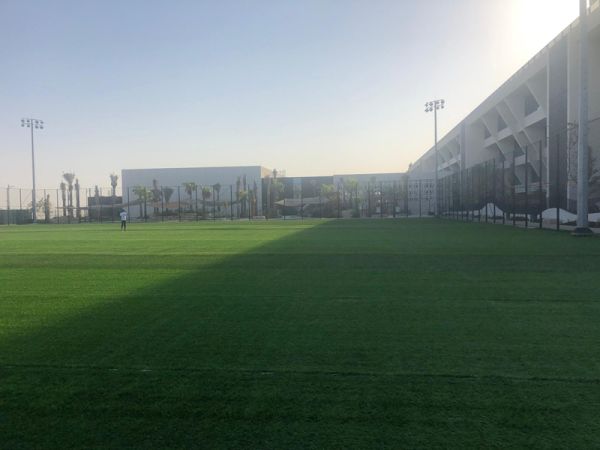
RGS Dubai
Dubai
Football field, UAE
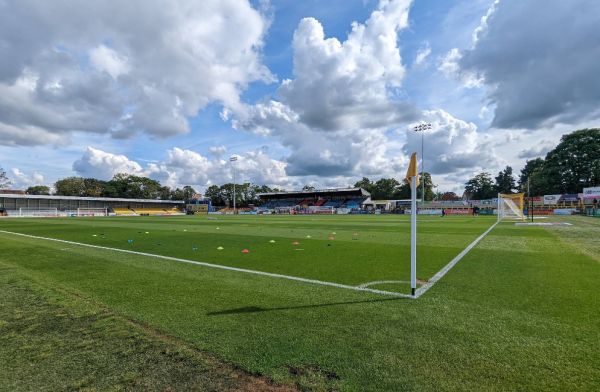
Sutton United FC
Sutton
PRO football stadium, UK
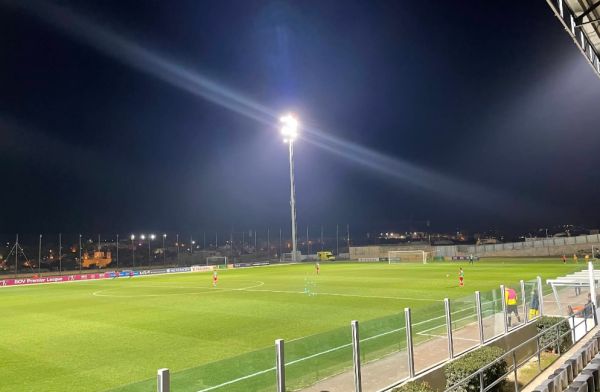
Hibernians Corradin
Paola
PRO Football and Rugby Stadium, MT
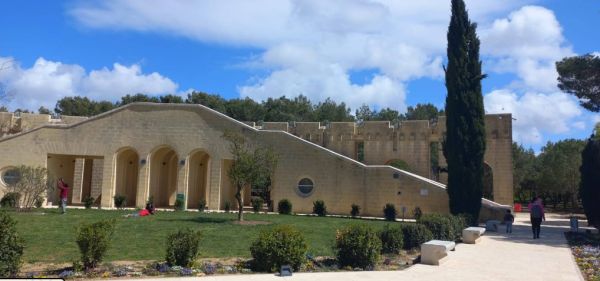
Ta' Qali
Attard, Malta
Green area for concerts, MT
Write to Us
For any kind of request write to us.