
FAQ 04 The SBR rubber paradox
A study published in Basel highlighted that some types of rubber can pass the test
A study published in Basel highlighted that some types of rubber can pass the test if exposed to the reagent for 24 hours but if the test is extended to 21 days the zinc released into the water exceeds 2.5 times the WHO maximum value. What would happen if the 21-day published test in Basel was applied?
The paradox of SBR rubber used in synthetic grass pitches
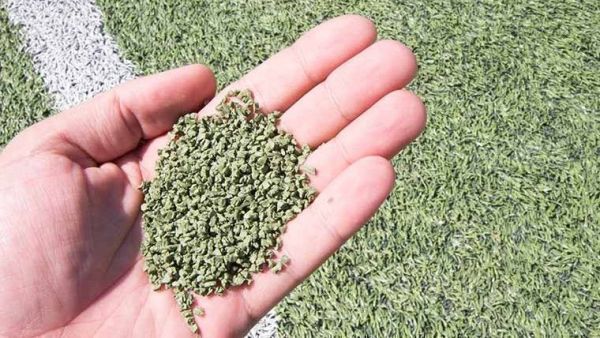
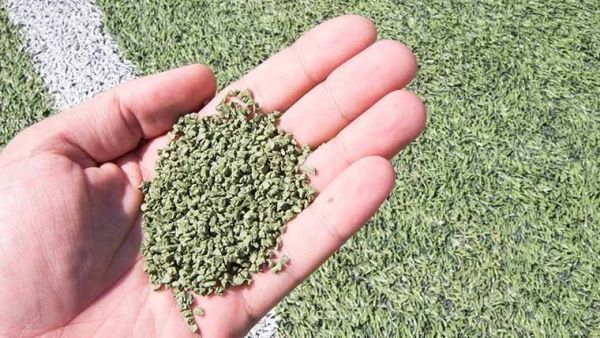
Zinc is a chemical element that has several applications, including rubber. In particular, Zinc Oxide (ZnO) is a compound that is used in the production of tires because it acts as a vulcanization activator and as a reinforcing agent in SBR elastomers.
During the process of recycling old tires to obtain granulate for synthetic fields, the surface area of the zinc increases due to the crushing of the rubber, exposing it more to atmospheric agents. This phenomenon involves a significant increase in the release of zinc into water and soil. Recent laboratory analyzes on rubber waste and sand taken from old synthetic turf fields have revealed high concentrations of zinc, leading to the classification of such waste as eco-toxic, falling into the HP14 category.
This evidence is in contrast with the current regulations on the marketing of second-life tires, since suppliers can provide "eco-compatibility certificates" at the time of purchase. This raises concerns and makes it difficult to understand the regulatory paradox, which deserves further attention.
The impact of zinc and PAHs on aquatic life and soil organisms
End-of-life tires are used for a variety of purposes, including sports fields and playground surfaces. However, several substances used in the production of tires may be a source of concerns related to human health or negative effects on the environment. In this context, it is necessary to verify whether this approach has the desired effect in a broader context. While the negative effects on human health have been thoroughly studied and the legislation is currently under review, the impact on aquatic or soil organisms has not been sufficiently studied. One study published in PMC on March 30, 2022dealed with the exposure of aquatic and soil organisms to granulated rubber, using the analysis of concentrations of heavy metals and polycyclic aromatic hydrocarbons. The results obtained refer to substantial concerns related to the contamination of fresh waters in particular, since the higher concentrations of zinc (7 mg · L−1) and polycyclic aromatic hydrocarbons (58 mg · kg−1) inhibit the growth of aquatic organisms, in particular Desmodesmus subspicatus and Lemna minor. The test performed with soil organisms also highlights significant concerns related to earthworm mortality. The knowledge gained can be considered a roadmap for a coherent approach to the implementation of the circular economy, which involves a number of problems that have so far been insufficiently described.
The risk to players' health
A recently published review of polycyclic aromatic hydrocarbons and metalloids reviews and consolidates the existing literature on granular rubber used as a filler in artificial turf and its adverse health effects, along with recommendations for future research. A search of PubMed, Web of Science, Scopus, Embase, and Google Scholar was conducted to find studies on exposure to granular rubber in synthetic turf infill materials. The research focused on laboratory epidemiological and toxicological studies (including exposure simulation studies and animal studies), as well as government reports. Non-English studies and studies involving injuries (musculoskeletal injuries and burns) were not considered. Eighteen laboratory studies examined the concentrations of PAHs present in the rubber infill of synthetic turf. The total PAH level detected in the samples ranged from 0.4 mg/kg to 3196 mg/kg. PAH levels were influenced by the age of the synthetic turf, with older synthetic turf fields containing lower concentrations (compared to newly laid turf). The synthetic grass fields composed of rubber granules derived from industrial waste had a lower PAH composition than those with granules derived from end-of-life tyres.
In the six studies that examined the metal content and composition of rubber granules from post-consumer tires, the highest average concentrations were aluminum (5382 mg/kg), zinc (5165 mg/kg), and iron (489.6 mg/kg). Minor differences in heavy metal concentrations were found in newly installed synthetic turf compared to older synthetic turf and synthetic sports fields exposed to direct sunlight (compared to indoors). Two epidemiological studies of synthetic turf rubber infill were conducted (one ecological study and one cross-sectional study), which found no significant associations between exposure to synthetic turf andthe incidence of leukemia, non-Hodgkin's lymphoma, and Hodgkin's lymphoma.
Similarly, a metabolomic study of athletes' urine samples taken before and after playing on synthetic turf and two studies simulating dermal, ingestion and inhalation exposure concluded that there was no elevated health risk associated with playing on synthetic turf. Currently, evidence of a direct association between synthetic turf use and adverse health effects is very limited. Considering the ubiquitous use of synthetic turf globally and the paucity of epidemiological studies, it is critical that further research based on longitudinal studies and more robust exposure assessments be conducted to improve our understanding of the potential health risks associated with exposure to synthetic turf infill.
In summary, the current body of research does not offer definitive or universally accepted conclusions. Some studies suggest potential health harms from ingesting zinc found in tire rubber, while others indicate that the risk is negligible. Consequently, there remains a question of urgent research with results that do not justify alarmism but require continued investigation and vigilance.
Regulatory orientation and market implications
For now we can only make conjectures since we are not experts on waste management, but it actually seems possible that there are differences in the testing protocols, between those used for the purchase of tire rubber granules and those for its disposal because the latter is more regulated. If this were the case, it would be necessary to standardize testing protocols to ensure that the results are truly comparable.
In fact, if the 21-day exposure test to the reagent, published in Basel in March 2022, were to be applied to the purchase of rubber, it would be discovered that the rubber in question does not exceed the safety limits for the release of zinc as initially thought. This could have important implications for the safety and health of synthetic turf fields and may require research into and adoption of safer alternatives to recycled rubber used as filler.
At present, it is certain that the cost of disposing of the rubber infill removed from synthetic turf fields has tripled compared to 2020 and has become more complex. This increase is also due to the recent ban on the export of plastic waste to countries without an adequate waste management protocol. If, as is likely, during the analysis of the infill (sand and SBR rubber) removed from the synthetic field it is classified in the HP14 category, it is necessary to take the waste to the incinerator incurring costs that can approach 1,000 euros per tonne.
The principle of self-defense
The principle of self-protection is based on the need to protect the public interest and the health of citizens. It allows the competent authorities to intervene in situations of potential risk, even when scientific evidence is not conclusive. This principle is particularly relevant in areas such as public health and environmental safety, where damage can be serious and irreversible.
In the specific case of synthetic grass playing fields, local and national authorities find themselves having to balance the use of recycled materials, which promote sustainability and the circular economy, with concerns related to the health of young athletes who use these facilities so, in recent years, several studies have been conducted to evaluate the toxicity of recycled rubber. However, the results have been mixed. Some studies have highlighted the presence of toxic substances in worrying concentrations, while others have concluded that there is no significant risk to the health of athletes. This lack of scientific consensus has fueled public debate and led to calls for more rigorous regulation.
Divergences in study results have led to different reactions from institutions. In some countries, authorities have taken precautionary measures, suspending the use of recycled rubber on playgrounds until more definitive evidence on its safety is available. In other cases, continued use has been promoted, arguing that the water saving benefits outweigh the potential risks.
Sports organizations and parents' associations have often called for greater transparency and rigor in safety testing, underlining the importance of ensuring a safe playing environment for children. This has led to increasing pressure on the authorities to implement the principle of self-protection, adopting preventive measures and promoting safer alternatives. Among these, the most significant is that of the American doctors who advise against synthetic grass which we talked about in our blog.

Insights






FAQ 12
Environmental regulations and the field
Write to Us
For any kind of request write to us.