The Emilia Romagna region has allocated 24 million euros from the Development and Cohesion Fund for the redevelopment of regional sports centres. The tender includes two lines of investment. Line A is intended for Local Authorities: by presenting a project with a value equal to or greater than 300 thousand euros, it is possible to obtain a contribution of 70%, up to a maximum of 500 thousand euros. Line B is aimed at interventions by public bodies that also involve private entities. In this case, the contribution paid can reach up to 1.5 million euros.
Eligible subjects and contributions
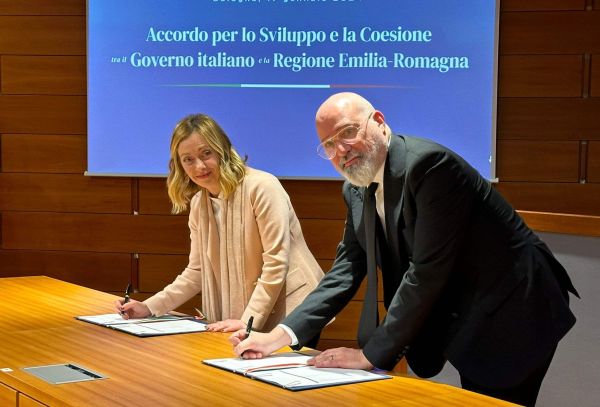
The tender is aimed at Local authorities of Emilia-Romagna (the Municipalities, the Unions of Municipalities, the Provinces and the Metropolitan City of Bologna), for the implementation of interventions on publicly owned plants.
a) For Line Adedicated to interventions carried out directly by the beneficiary local authorities through tenders:
- a contribution equal to a maximum of 70% of the eligible expenses; increased to 85% for local authorities within the Internal Areas and for entirely mountainous Municipalities;
- a maximum grantable amount not exceeding €500,000.00 for each beneficiary.
b) For Line B aimed at interventions that involve private entities in the following forms: 1) Public Private Partnership (PPP) envisaged by Title IV of the Contracts Code (Legislative Decree 36/2023), of a contractual type, with the exception of the availability contract and finance leasing contract as defined by the Public Contracts Code. 2) Interventions to be carried out on public assets by local authorities, with the contribution of private capital, provided that the same, at the time of awarding, is greater than 10% of the total amount and for a value of no less than 500 thousand euros.
- a contribution not exceeding 1/3 (one third) of the total cost of the work;
- the contribution cannot exceed the capital amount borne by the Local Authority;
- a maximum grantable amount of €1,500,000 for each beneficiary.
The grant granted can be cumulated with other public grants granted for the same eligible expenses, up to a maximum of 100% of the expenditure but cannot, however, be cumulated with other public grants granted by the Emilia-Romagna Region pursuant to previous tenders for sports facilities.
Fundable projects
Interventions relating to publicly owned sports facilities, including those located within schools, attributable to the following areas of intervention are eligible for funding under this notice:
- the construction of new sports facilities or the expansion of existing facilities, in order to increase the offer of spaces available to users;
- the redevelopment of existing structures, such as functional recovery, renovation, extraordinary maintenance, improvement and seismic adaptation, energy efficiency, making the systems safe, in order to qualify and increase the level of service offered and make the structures more efficient;
- the creation of green areas and equipped outdoor spaces, intended for sports practice, in order to accompany sports practice outdoors and independently.
The interventions can freely concern one or more of the areas of intervention listed above.
The interventions must concern a single sports facility (intended as a set of one or more sports activity spaces of the same or different type, which have the related spaces and ancillary services in common) or a single sports complex (a set of several contiguous sports facilities having common constituent elements, ancillary spaces and/or services).
The interventions may also concern, in the case of a contract, a single functional lot of a more complex intervention on a sports facility or complex, provided that this ensures functionality, usability and feasibility regardless of the implementation of the rest of the complex of interventions.
The interventions must include, under penalty of inadmissibility, a minimum eligible investment of no less than €300,000.00.
How to participate
The applications must be completed, validated and sent to the Emilia-Romagna Region exclusively electronically, via a specific IT platform available at the web address fsc.regione.emilia-romagna.it by completing the forms available there.
Applications for contributions must be digitally signed by the Legal Representative of the Organization or by a person delegated by him.
Applications can be submitted starting from 10.00 am on 30 September 2024 and until 5.00 pm on 28 November 2024.
Each local authority may submit only one application relating to a single sports facility or complex.
Criteria and minimum score equal to or greater than 50 points
Next, we list the maximum score for each criterion, accompanied by some suggestions to better align with the objectives according to our interpretation. Applications that achieve a score of less than 50 points will be considered ineligible, including any reward score.
A. Quality, innovation and coherence: max 15 points
The completeness and clarity of presentation of the project, its coherence with the aims of the tender and the presence of innovative technological solutions will be evaluated.
B. Strategic nature of the plant with respect to needs: max 15 points
The index of provision of facilities of the same type present in the reference territorial basin will be evaluated with respect to the resident population, favoring the less well-endowed territories.
is ideal for schools because it is without physical contact.American Football which in the "flag" version
9. Bocce on the grass "lawn bowl" which is ideal for the elderly.
C. Environmental and energy sustainability: max 25 points
The adoption of technological solutions aimed at improving environmental sustainability will be evaluated, including the use of products and materials with environmental certifications or the obtaining of environmental certifications for the building, to reduce the environmental footprint, reduce climate-altering emissions also through the use of renewable energy and limit energy and material consumption, such as that of water resources.
In the case of energy requalification interventions on existing buildings, the reduction in energy consumption and the reduction in emissions of climate-changing gases will be assessed through the performance data of the APE simulations (pre- and post-intervention) attached to the application. In the case of newly constructed buildings, the post-intervention energy performance indicated in the APE simulation will be taken into account.
For the purposes of environmental sustainability, the following data will also be assessed, if present: expected savings on water resources, for example for use in swimming pools, toilets, irrigation of equipped and unequipped green areas; coverage of final energy consumption satisfied by means of systems installed as part of the proposed intervention.
Q. Security and accessibility: max 25 points
The adaptation of the system to the regulations relating to safety and accessibility will be assessed, in particular for the reduction of seismic risk, fire safety, the presence of defibrillators, the accessibility of disabled people both as users and the public and the adaptation to CONI regulations, where required.
E. Design level: max 10 points
The presentation, at the time of application, of an already approved executive project will be evaluated.
F. Spending timetable: max 10 points
The speed of the spending timetable will be evaluated.
Attachments

Insights
The perfect FIFA 2026 pitch
In search of excellence in the perfect field, POWERgrass could not be missing! And now with the first results they confirm...
Show moreThe perfect FIFA 2026 pitch
Sport and Suburbs 2026
It is aimed at municipalities with over 5000 inhabitants, also in associated form, with a focus on the recovery of...
Show more